Now, Back to Phillip Barraud from Angoulême, from the time of his arrival in England. There are many records of the spelling of Philip’s name, Phillip, Phillippe, Philippe etc, but for convenience, I shall use Philip, and the name Barraud is also spelt as Barreau, Barraud, Barrau, Barrow etc…and eventually Barrand.
To begin with, we know that Philip Barraud who came to England was a son of Philippe Barraud and Catherine Poisson and he was born in Angoulême in France about 1680. He had 2 sisters, Anne-Marie and Marie. He came to England as a Huguenot refugee around 1700 and was naturalised in London in 1704. Philip worked as a merchant, probably dealing in general goods for the South Seas Market and also had connections with the East India Company, and it is known that he had a warehouse in Buttolph’s Wharf on the River Thames just to the east side of London Bridge and almost next to the Customs House. One of the city gates, known as St Botolph's Gate, stood near the wharf and gave access to the north end of Old London Bridge. Description of the wharfs in 1700 - “Shortly before getting to the riverbank you pass the church of St. Botolph on your right. You keep heading south and soon reach the Lyon Key, a loading dock on the river Thames. There are piles of boxes being unloaded by crane from a ship that has just returned with its cargo. Close by is Buttolphe Wharf (sic). From here you can catch a wharf ferry across the river heading for your destination on the opposite bank. Glancing to your right will afford you a close-up view of London Bridge, the only walkway across the Thames. There is quite a crowd of people walking across it.”
The wharf was one of the twenty Legal Quays of the Port of London, designated in the Act of Frauds of 1559. They were given state authorisation to serve as official landing and loading points for traders. Botolph Wharf was one of the oldest of London's riverside wharves and dates back to Anglo-Saxon times. It had been part of the old Roman waterfront. One of the city gates, known as St Botolph's Gate, stood near the wharf and gave access to the north end of Old London Bridge. By the mid-18th century the East India Company had a warehouse there where the firm imported oranges and lemons from Cyprus and Spain, raisins, figs and sultanas from Greece and Spain and almonds from the Balearics. These were then shipped out from the river or carted by road to grocers all over Britain. Botolph’s Wharf appears to have survived the Great Fire as it is listed on Vertue’s 1723 reconstruction of post-fire London.
Philip Barraud lived in Laurence Poutney Lane off Cannon Street which is just 200 yards from the warehouse. He also had an office or “shop” in the Royal Exchange between Threadneedle Street and Cornhill and there he took orders from other merchants wishing to send goods or book a passage to other ports in the world. The Royal Exchange was on two floors around an open courtyard with warehouses in the cellar for spices, pepper and wine, and the ground floor was the merchant’s walk where trading took place from 12 noon until 2pm.
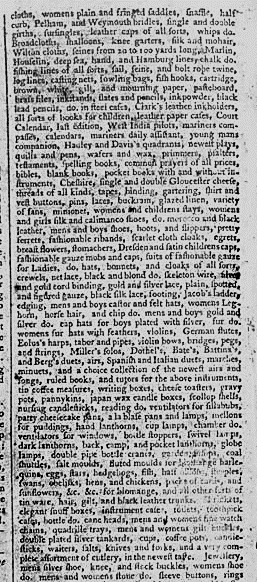
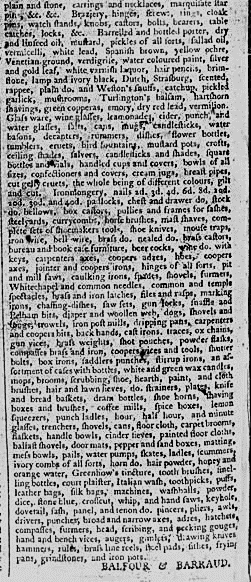
One of his sons, Daniel who emigrated to the United States was a partner in a general merchant company called Balfour and Barraud, and their motto was “dealer in anything and everything” and it seems logical to assume that Daniel would have been taught his business from friends of his father.
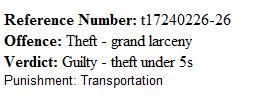
The frequency of trade and the abundance of goods at Botolph’s Wharf made it, like most London wharves, susceptible to theft. One notable example occurred in 1724, when a man named Robert Hambleton was accused of stealing a barrel of raisins weighing 107 pounds. When Hambleton was caught carrying the cumbersome prize, he pleaded drunkenness, claiming he accidentally kicked the barrel in his intoxicated stupor and simply picked it up to get it out of the way. Unsurprisingly, the jury found him guilty of grand larceny (Old Bailey Online, 1724-02).
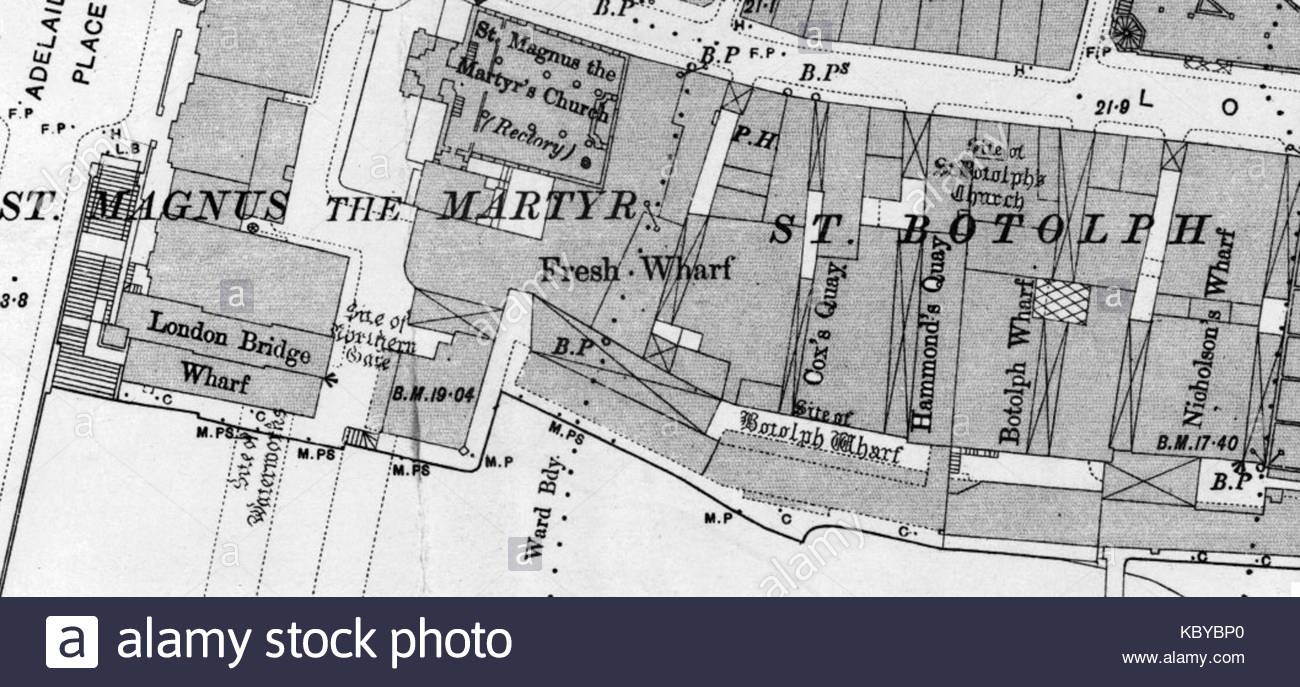
River Thames showing St. Botolph’s Wharfe
Old Bailey Records
Robert Hambleton, Theft - grand larceny, 26th February 1724.
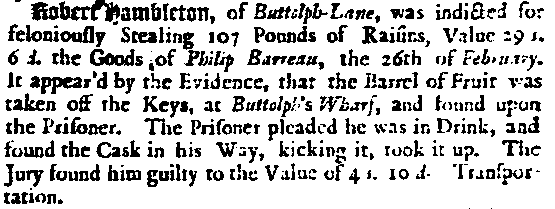
Robert Hambleton, of Buttolph-Lane, was indicted for feloniously stealing 107 pounds of raisins, value 29s. 6d. the goods of Philip Barreau, the 26th of February. It appear'd by the evidence, that the barrel of fruit was taken off the keys, at Buttolph's Wharf, and found upon the prisoner. The prisoner pleaded he was in drink, and found the cask in his way, kicking it, took it up. The jury found him guilty to the value of 4s.10d. Transportation.
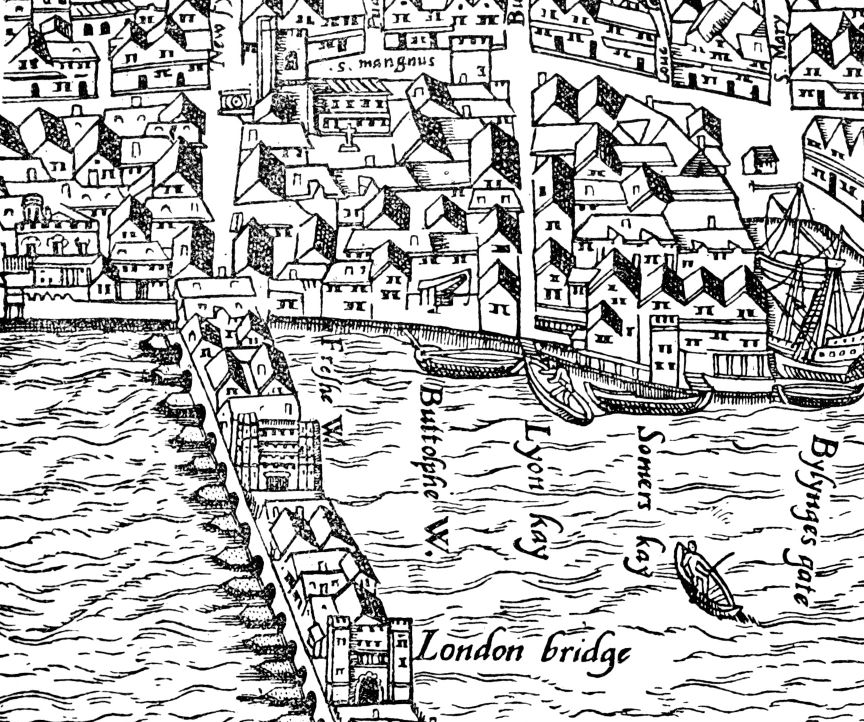
Map of 1633 showing Laurence Poutney Lane, Buttolph’s Wharfe Customs House
Philip Barraud married his 1st wife, Catherine Susanne Strang – or Strange, (also a Huguenot) on the 7th August, 1707 at the French Huguenot Church near Covent Garden in Soho, with witnesses including David and Maria (sic) Strang, most likely Catherine’s brother and his wife. Catherine Strang was a daughter of David and Mary Strang and another of their daughters Elizabeth, married Huguenot Peter Bonnin in 1699 who was also from the Angoulême area of France, and was also naturalised in England in 1699/1700. David Strang was also a merchant living in Greenwich with connections to Lisbon in Portugal and almost certainly a son of David Strand (snr) and Mary Strang and therefore a brother to Catherine Strang, the wife of Philip Barraud. David Strang died in 1719, and Mary Strang (his mother) died in 1733 and both made wills. Peter Bonnin was also a merchant but, after his wife Elizabeth Strang died, his 2nd marriage was to a Jane Stepney whose family were also wealthy merchants in the wine business, and Peter Bonnin became heavily involved in wine dealing. The connection to Peter Bonnin is the mention of Barrauds in his will.
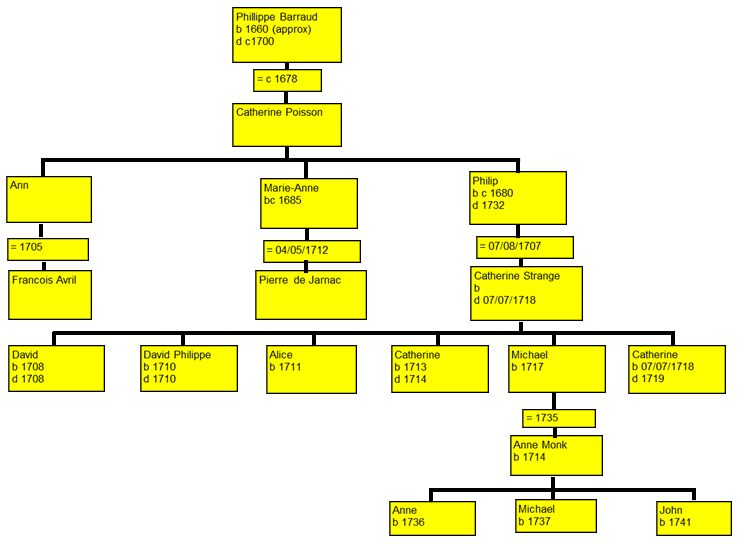
Philip Barraud and Catherine Strang had six children (see page 24) and these were David, (b 1708) but he must have died in infancy as their next child was also baptised as David Philippe on the 20th May, 1710, and as nothing more is known about these two sons, they must have both died in infancy. The next child was Alice, and she was baptised on the 21st November, 1711, followed by another daughter, Catherine in 1713 (who died in infancy), a son Michael born in 1717 and finally another daughter, Catherine, born in 1718 but who died in 1719. Of these 6 children only the daughter (Alice b 1711) and the son (Michael b 1717) survived infancy. The surname is written as “Barraud” “Barrow” and “Barraw” in the Church records. At the time of the children up to 1713, they lived in Laurence Poutney Lane (near what is now Cannon Street Station) close to London Bridge in London. Philip Barraud and Catherine Strang(e) then moved to Greenwich in about 1713 perhaps as a better location for his occupation as a merchant and to be closer to other Huguenot merchants but he may also have decided to move because of the large number of rats that swarmed along the riverbank each evening and into the nearby streets. Their house was newly built situated in Greenwich High Street almost opposite St. Alphege Church. It is known that Philip Barraud had interests in “The Old South Sea” so he was probably a merchant in overseas goods to South America. This was until the collapse of the South Sea Market in 1720 and many speculators and Politicians were disgraced through insider dealings, and by accepting huge bribes. Although a great many suffered financial ruin, Philip Barraud however seems to have survived the turmoil well, as he was still trading in London in 1724 to have goods stolen from Buttolph’s Wharf and was still in business in 1729 and owing his own vessel. He dealt with goods which originated from South America and Mexico.
June 12th 1729
The Lords of the Treasury to the Commissioners of Customs:
Signifying Her Majestys pleasure, dated at the Council Board at Kensington, 1729, June 10, allowing the petition of Philip Barrand (sic), merchant, owner of the ship "St. George" now under quarantine at Standgate Creek, to discharge at the end of the declared quarantine, without further detantion, on account of a box of clothes belonging to Captain Richard Hoe, who died at Patras of a malignant fever at a time it was said the plague in the Morea, which box is ordered to be destroyed. ibid,pp 372-3 For inquiry into the value of a box of apparel on board the “St. George,” from Zante, burned for fear of infection. Petition granted For the “St. George” [to discharge] from Venice with several cases of stuffs, beads, books, and pictures.
From 1712-1896, Stangate Creek at Medway was used for quarantining ships. All parcels had to be aired on the ships deck before being sent or used.
Catherine Strang(e), (Philip’s wife) died on 7th July, 1718 following childbirth with Catherine, their youngest daughter, and was buried in Greenwich on 12th July, 1718.
Five years passed until Philip married his 2nd wife, Frances Prevost (also a Huguenot) in 1723 and they had 7 children and, according to the Barraud Book by Enid Barraud, Frances Prevost was the sister of William Prevost who married Ann Angibaud on the 18th April, 1706. On the marriage details, William's name is written in the latin version of William - "Guillaume". Presumably, William was of "full age" and therefore aged 21 or over when he married Ann(e) Angibaud so that would have made his DOB around 1685.
There are three family trees on Ancestry.co.uk - "Carse-Thorn" "Wright/Day/Barraud/Grace" and "Doyle" who all suggest that William Prevost was the father of Frances Prevost. They have the birth date of Frances as between 1698 and 1705 and also mention she was born in France. A number of other minor researchers have since followed this line. All three also have the death date of William Prevost as July, 1761 which is also the date given in Miss E.M. Barraud’s book however, the fact that William Prevost mentioned in his will "my sister Frances Barraud" certainly rules out the suggestion that he was Frances's father. There are no records to show whether Frances was older or younger than William Prevost.
It seems that William Prevost had a son William (b1719), and also a daughter Elizabeth. Elizabeth married the Rev. John James Majendie in 1753, and had 3 children, Henry William, Suzanne and Lewis. Henry married Ann Routledge (No known relation to the Ann Routledge’s family that married John Barrand, as I explain later). Rev. Majendie was a canon of Windsor and there are positive links with the Barraud and Majendie families dating back to the days in Angoulême.
The fact that William Prevost mentions Frances as his sister in his will, rules out the suggestion that he was Frances's father as, if she was his daughter, she would definately have needed William Prevost's permission to marry in 1723 and she could only have been aged 16 in 1723 when she married Phillip Barraud as William married in 1706. Certainly 1706 was the correct date of the marriage of William Prevost and Anne Angibaud and, if Frances Prevost was considerably younger than William, she was probably born about 1700 and therefore must have been about 23 at the time of her marriage. There is no indication of Frances’s age in her burial records although she died 6 years after making her will in 1772.
Note: The female age of concent had been twelve since the Statutes of Westminster in the thirteenth century; in 1576, intercourse with a girl under the age of ten was classed a felony, with a girl aged between ten and twelve a misdemeanour. The age of concent was raised to thirteen in 1885. Historically there has never been a male age of concent for heterosexual sex.
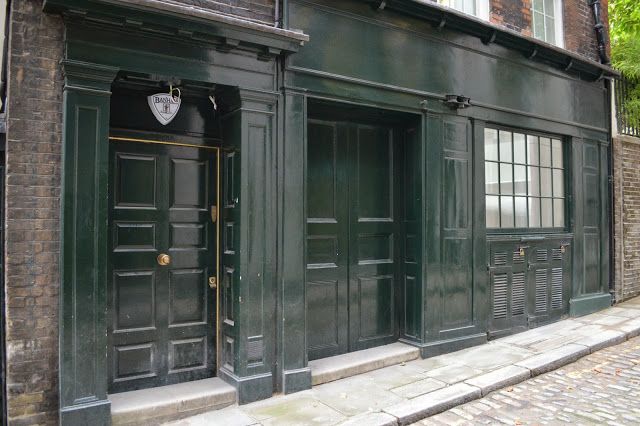
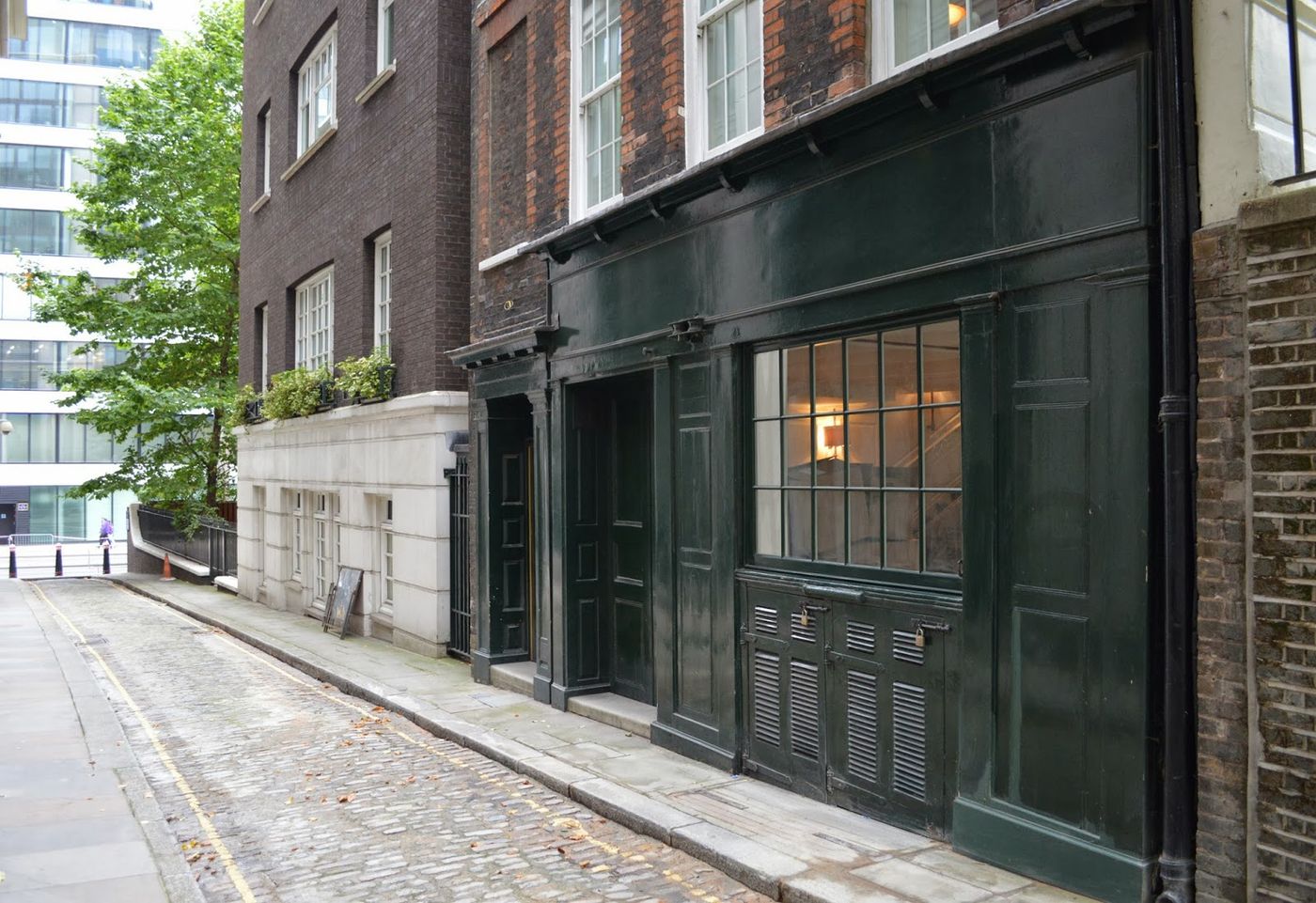
Typical of a Merchant’s House on Laurence Poutney Lane in London
Laurence Pountney Lane runs through the centre of the present conservation area. Until the early 19th century it was known as Green Lettuce Lane, a corruption of Green Lattice Lane after the gates that once closed it from Cannon Street.
| Name: | Mr Guillaume Prevost |
| Event Type: | Marriage |
| Marriage Date: | 18 Apr 1706 |
| Marriage Place: | Westminster, Middlesex, England |
| Spouse: | Anne Angibaud |
| Denomination: | French Protestant |
| Piece Title: | Piece 4609: Swallow Street Chapel (French Protestant), 1690-1709 |
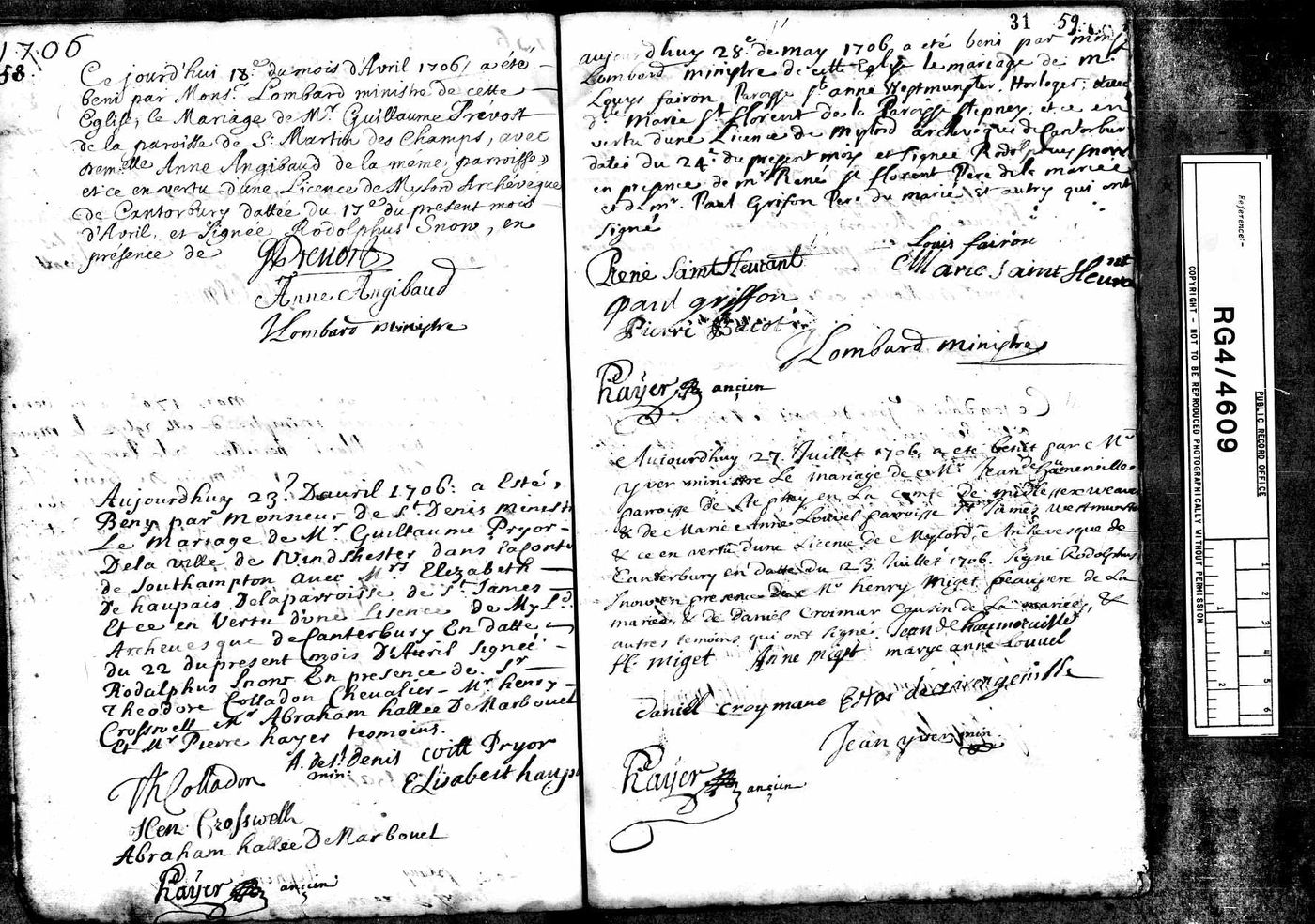
Certainly Frances Prevost’s brother, William Prevost became a prominent engraver in London. By the 1730s, William Prevost must have been quite successful in his profession, as he took on several apprentices. It is known that in 1732, William Prevost took on Moses Maingett and the citations states "Will Prevost of St. Giles in the Fields, engraver - apprentice Moses, son of Daniel Griffiths.””24th March 1732". and then on the 2nd January, 1737, he took on another apprentice "Willm Prevost of St. Giles in the Fields, Middlesex - engraver - apprentice John, son of John Leignes of St. Martins Lane" (John Leignes was born in 1724, the son of John Leignes and Mary Ann Neutte or Reutte)
Brifly, the seven children of Philip Barraud and his 2nd wife, Frances Prevost were:
(1) Philip, was born in 1724, and he married Anne Marchant, the daughter of Andrew Marchant, a prominent London watchmaker and his wife Anne (nee Bacot) on 19th July, 1749 in the Huguenot Church in Castle Street, Drury Lane by licence granted on 6th July 1749 as Ann Marchant was aged only 17 at the time. Their address was given as Shelton Street, Drury Lane, but this was also known as Castle Street. (see below)
One of the witnesses was William Prevost, who was most likely to be William Prevost’s son and therefore Philip's cousin. Philip Barraud and Anne Marchant had 5 children, and it seems only the eldest, Frances Mary survived. Philip Barraud who became an engraver must surely have learnt his trade from his uncle William Prevost when the Barraud family was living in King Street in Soho with him from 1743, and Philip eventually had his own premises at 5, Castle Street, near Tottenham Court Road in 1763, then at Newman Street, next at Oxford Road, and then at Goodge Street in 1778 at the time of his mothers death. Finally he had premises at 27, Rathbone Place, just north of Oxford Street in 1780. The Tottenham Court address is known to be correct and that was where he is registered in the professional records as “Philip Barraud – Watch case engraver in relief – Tottenham Court Road”
He seems to have mainly engraved items for other people however, and most likely for his brother Francis-Gabriel Barraud. Ann Marchant died in 1789, and when Philip Barraud died 10 years later in 1799, the “Gentlemans’ Magazine” gave an address of Bloomsbury Square.
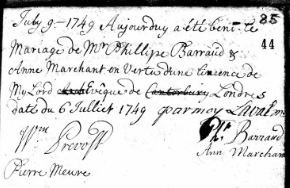
Marriage of Philip Barraud and Anne Marchant 1749
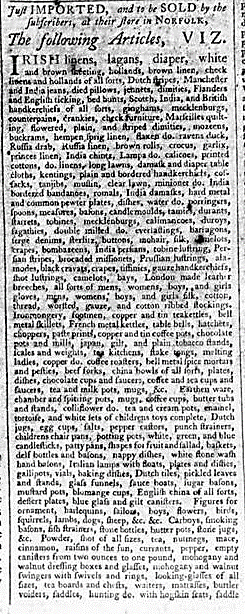
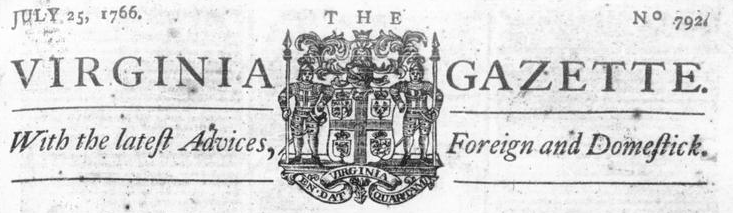
(2) Daniel, was born in 1725, and he emigrated to the USA and married Catherine Curle. Daniel Barraud became a successful merchant, partnering in a Company, Balfour & Barraud. The store sold sundries, tobacco, linens and pots, and even offered rewards for the capture of runaway slaves. (see below) The merchants did business with George Washington and also shipped goods to England. Daniel Barraud and his wife Catherine Curle had nine children, but only four made it to adulthood. His eldest daughter, Sarah (nicknamed Sally) married Robert Taylor, the mayor of Norfolk (Virginia), and their son became General Robert Barraud-Taylor who commanded all American forces in the Norfolk area during the war between England and the Colonies, and defeated the British Fleet at Craney Island on the 22nd June, 1813. In the battle, not a single American casualty was reported. For success in this battle, Robert Taylor was known as the “Saviour of Norfolk”.
A son, of Daniel Barraud, Philip Barraud, became a well-known surgeon during the American Revolution and the War of 1812. He kept his practice in Williamsburg but moved to Norfolk to run the Navy's hospital. Colonial Williamsburg maintains Philip Barraud's old house, and the College of William and Mary keep the family papers. He purchased a wide swath of land along the Lafayette River, where he built his "country" house, calling it "Glenair." Philip and his wife had a number of children, including Daniel Cary Barraud and Mira (or Myra) Barraud. Daniel Cary Barraud also became a physician and he graduated from Virginia Military Institute and became a respected lawyer in Norfolk. He had a number of children, including a son, Philip St. George, and daughters Mira Rosa (or Myra) and Mary Augusta, and they lived at least for a time in that house along the river before the family moved to Richmond.
They retained ownership of Glenair, and when Daniel Cary died in 1908, the children ended up in a court battle over ownership. Philip St. George, it seemed, ran off with another woman while facing indictment for forgery and embezzlement and the children then sued Philip's wife, Sally, for ownership, but a judge ruled in favour of Sally.
After Sally died, the property returned to Mira and the surviving children. In the 1920s, they sold the land to the city of Norfolk and it became known as Barraud Park, the first recreational area for blacks.
Because of segregation, blacks were not allowed at the larger and more developed Lafayette Park further up the street. The Barraud family hasn't lived in Norfolk for about a century and today, no Barrauds are in the phone book, and none can be found living there. The Barraud family has this park, an avenue and a neighbourhood named after them, yet Norfolk has few records explaining exactly who these Barrauds were.
The 23-acre Barraud Park at one time had a small zoo. It now has a small amphitheater, basketball, football, tennis and baseball areas, and a pier, and is home to the city's boxing arena.
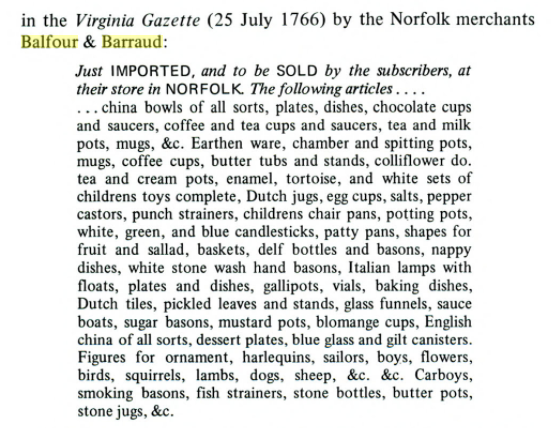
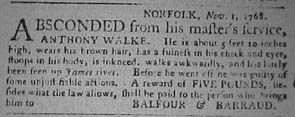
NORFOLK, Nov. 1, 1768. ABSCONDED from his master's service, ANTHONY WALKE.
He is about 5 feet 10 inches high, wears his brown hair, has a fulness in his cheek and eyes, stoops in his body, is inkneed, walks awkwardly, and has lately been seen up James river.
Before he went off he was guilty of some unjustifiable actions. A reward of FIVE POUNDS, besides what the law allows, shall be paid to the person who brings him to BALFOUR & BARRAUD.
(3) Abraham, born in 1726, and died in 1728.
(4) Francis-Gabriel, was born on the 20th January, 1727 in Greenwich and although he must have lived in King Street with William Prevost, he was apprenticed in 1741 to John Neale, the well-known instrument, watch and toy maker of Leadenhall Street in London. John Neale also taught the use of celestial globes and was closely associated with scientific instruments and he financed the publication of the Uranographia Britannica, an engraved chart of stars until 1750 and went bankrupt after engraving 52 plates, and only very few printings had been made. John Neale suffered double bankruptcy in 1750 and again in 1758 and he died shortly afterwards.
After Neale was declared bankrupt, the copper plates were sequestered by the London Courts of Chancery and the project was abruptly terminated. It was not until 1785, long after the death of Neale that the library was auctioned and according to the auction catalogue, which survives in the Whipple Museum, Cambridge, three near-complete atlases were sold, together with an unknown number of pre-printed star charts.
Francis-Gabriel became a noted watchmaker in his own right, and he married Magdelaine Crespin (b 13th June 1729) (daughter of Paul Crespin and Mary Branboeuf) who were also Huguenots. Paul Crespin was a renowned London silversmith and he was brought up in the City of London. He opened a workshop in Old Compton Street, Soho, in 1720, from which he kept in close touch with the latest fashions in France and supplied silverware to wealthy clients in England. He also supplied a silver bath to the king of Portugal, and part of a dinner service to Catherine the Great.
In 1751 while he was at King Street in Soho, Francis-Gabriel had 3 children: Paul Philip, Francis-Elias and John. Enid Barraud was unable to find any record of Francis-Gabriel’s marriage to Magdelaine Crespin, but records do exist to show the marriage was on the 8th September, 1751 at St. Martins-In-The-Fields, London. Magdelaine’s correct name was “Magdalen Benigna Crespin”. Francis-Gabriel became a renowned London watchmaker, and founded the firm of Barrauds in 1750, just prior to his marriage. Shortly after his marriage, he moved to Great St. Andrews Street in the 7-dials area of St. Giles where he is first mentioned as being a watchmaker before taking premises at 7, Shoe Lane in Holborn and finally to 8, Wine Office Court in Fleet Street. Miss E. Barraud’s book suggests that Frances-Gabriel was still at Great St. Andrews Street until about 1778, but other records show he had the premises in Wine Office Court from 1759-1794. On 16th November, 1758 at his new premises in Shoe Lane, he apprenticed a John Partridge and on 15th December, 1767, he apprenticed a James Bootle and also his own son Paul Philip Barraud as watchmakers. Francis-Gabriel died in 1795 at the age of 68 and was buried at St. Brides, Fleet Street. Magdelen (nee Crespin), his wife also died in 1795 but she died at the address of her son, Paul Philip in Camden and was buried also at St. Brides, Fleet Street. Francis-Gabriel did not make a will, and Paul Philip (his eldest son) administered the estate, as Magdelen had previously stated she did not want any legal rights in the estate. The order was granted on 24th March, 1795, but the total involved was less than £1,000. Francis-Gabriel’s death in 1795 was noted in the Gentleman’s Magazine under “Obituary of remarkable persons”.
Note: Lewis Crespin, a son of Paul Crespin and Mary Branboeuf (and therefore Magdelaine’s brother) became a jeweller and lived in Rathbone Place, the same street as Philip Barraud (see above) the brother of Francis-Gabriel Barraud. It should be mentioned that the Barrands as we will see, stayed in many of the same streets as the Barrauds and, as a close family, it must seem logical therefore that they must have had regular contact with each other.
7-Dials was built as a desirable area but descended into shops selling second and third hand goods, a unique cluster of shops selling "every rarity of pigeon, fowl and rabbit, together with rare birds such as hawks, owls and parrots, love birds and other species native and foreign".
The 19th century saw an influx of Irish workers into the area, attracted by cheap lodgings. It was reported in "London Labour & The London Poor", 1861: "In many houses in Monmouth Street there is a system of sub-letting among journeymen. In one room lodged a man and his wife, 4 children and 2 single young men. A child was actually delivered in a room while the men kept at their work - they never lost an hours work!"

Marriage Record of Francis-Gabriel Barraud and Magdalen Crespin (St. Annes – Westminster)
The children of Francis-Gabriel Barraud and Magdelaine Crespin:
Paul Philip Barraud, their first son was born in 1752 at Great St. Andrews Street in 7-dials, and he married Harriet Chapman the daughter of an English family, and he set up home in the Kennington area of Lambeth, south of the Thames where Harriet’s family lived. It maybe a coincidence that Michael Barraud (b 1717) the eldest son of Phillip Barraud also lived in the Kennington area of Lambeth in 1740. Michael Barraud was Paul Philip’s uncle. Paul Philip and Harriet Chapman had 7 children, all baptised at St. Mary’s Church in Lambeth.
He took premises at 86, Cornhill in 1796 and that was described as the second shop from the Royal Exchange and, in 1808 he then bought the lease of No: 85 Cornhill, next door where he is described as a clockmaker, and finally at No: 41 Cornhill (see below) and it may well be that he lived there, but continued to pay rent on the premises in Lambeth. He also paid rent on premises in Coleman Street, London in 1800. Certainly, also he bought Park Hill House in Stanmore Road, East Croydon in 1814 and he also paid ground rent for this house in Croydon from 1816 to 1820 and it is at this address in Croydon that he died on the 26th August, 1820. Both Enid Barraud and Cedric Jagger were unable to find the final resting place of Paul Philip Barraud, whether it was in Croydon where he died, in Lambeth with his wife Harriet, or even in the City of London. I have however located a record from the IGI which suggests his burial was in fact in Croydon (see below). Paul Philip is by far the most reputable Barraud clock, watch and chronometer maker of his time, and many books have been written about him over the years. Paul Philip Barraud is recorded as becoming a Liveryman of the Clockmakers Company in 1796, appointed a Master in 1810, admitted to Freedom of the City of London and the Clockmakers Company, Court of Assistants 1806, Junior Warden 1807, Renter Warden 1808, Senior Warden 1809, Master of Clockmakers Company 1810 and again appointed master in 1811. He is listed as a fine watch and chronometer maker who worked in partnership with W. Howells and G. Jamisen for making Mudge’s timekeepers. He had two sons; Frederick Joseph (worked 1806-25) and John (worked from 1811), and with whom he formed a Company partnership in 1811 which lasted until his death in 1820. The firm was continued by his son taking John Richard Lund into partnership in 1838 and the business was finally wound up in 1925.
Finally, it must be mentioned that Paul Philip Barraud apprenticed a William Turpin in 1809. (He must surely have been related to Mary Turpin, the wife of John Barraud and who was his aunt.) Although I have not actively pursued William Turpin’s life, the best guess is that William Turpin was born on 10th June, 1793, and baptised 21st July, 1793, the son of William Turpin and Elizabeth (?) in St. Pancras, London. He had sisters, Henrietta, born in 1796, and Sarah born in 1809 and three brothers; Barnard, born in 1799, John, born in 1802 and Charles born in 1806.
Francis-Elias the second son of Francis-Gabriel was born in 1754 also in 7-dials and baptised on the 30th December, 1754, but no further records exist of him, therefore it is assumed he died in infancy, but I cannot find any burial record. The name Elias was also given to Paul Crespin’s son and he was therefore Magdelaine’s brother.
John, Francis-Gabriel’s youngest son (born 1756 and died unknown) was described as “A Gent” living in Kennington Lane in Lambeth, and he married Elizabeth Durand, the daughter of another watchmaking Huguenot family and they had 7 children. There are records of a John Barraud 1780-1788 (but without an address) as a watchmaker and watchseller (for the China Market), and it seems extremely likely that this is the same John.
Shelton Street (Where Ann Marchant lived)
Until 1877, Shelton Street was originally known as Castle Street and it stretched from Drury Lane in the east to 7-dials in the west. At the time of Philip Barraud’s marriage to Anne Marchant in 1759, crime and poverty was rife on Shelton Street, and most perpetrators of thefts and robberies were given a one-way ticket to Australia but for more serious crimes, execution was more likely.
Shelton Street in the mid 1700s was typical of many of the streets of London and was surfaced with large stones or pebbles with a central gutter (or kennel) making it uneven. It was just about wide enough for a horse and cart to pass eitherway and with just enough room for a single person to walk on the kerb but, as only a few vehicles used this street, pedestrians would walk on the road to avoid tearing their clothes against nails projecting from the houses. Walkers had to compete with the “chairmen” who bullied their way along the pavements forcing pedestrians into the mud. In London, generally the pavements were normally made of flat stones and, to prevent carriages using the flat pavements, wooden posts or stumps were placed in the roads at the pavement edges but, where the streets were narrow, as in Shelton Street, there were no posts for protection. As the responsibility of the footpaths and road to the mid-point of the road fell to the occupiers of the properties the roads were poorly kept and some of the sloughs or ruts were up to 4ft deep. The pavements also usually fell into disrepair. There are incidents reported where 10 horses have been put to length to draw out carts that have been stuck in the road. There were only about 40 houses on Shelton Street and they had cellars, parlours, second and third floors with mostly just 2 rooms on each floor and most families occupied just one room.
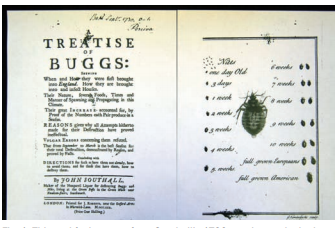
It has been reported many times that not a single room was free from vermin, and many people did not go to bed at night, but slept in their clothes in fear of being bitten by bugs and fleas. Mattresses were mainly stuffed with straw and placed on top of a latticework of ropes that needed to be tightened by twisting a wooden peg. (hence the saying “sleep tight”). When the straw became so infested, it was burned and replaced with fresh straw. Dishes and pans filled with oil were placed under the legs of the beds to trap bugs and crude planks of wood with holes were placed under the mattresses and these trapped the bugs to be killed the following day. Bugs could be seen crawling from house to house through windows and doors and along pipes and gutters. A booklet was written in 1730 called “A Treatise of Buggs” giving advice on the elimination of bed bugs. (See below)
The houses were poorly built and looked ready to fall down, most being well out of the vertical. Gambling was the pastime of the day, and sentries were posted, and if any official came near, the occupants would soon disappear out of sight. Of Shelton Street, a person observed at the time “A body of a dead dog and nearby two dead cats lie as if they had slain each other. All three have been crushed flat by the traffic that has run over them and their bodies lay rotting in the street for days.” The roads in London were described as having “unexpected chasms” and the footpaths as “Mountains of filth”.
The first thing you'd notice if you stepped out onto the streets would be the foul-smelling mud on the sides of the street but of course it was not really mud. It was horse dung and human excrement. Also, the Thames River was thick with human sewage. There were tens of thousands of working horses in London and the Victorians never really found an effective way of removing the filth. In fact, 1,000 tons of dung was left by horses every day in London. What the Victorians did, was to employ young boys to dodge between the traffic and try to scoop up the excrement as soon as it hit the streets. Urine, of course also soaked the streets. There was an experiment in Piccadilly with wood paving in the mid-century but this was abandoned after a few weeks because the smell of ammonia that was coming from the pavement was just too great. The air itself was generally filled with soot and smoke. It was said of the sheep in Regent's Park that you could tell how long they'd been in the capital by how dirty their coats were. They went from white to black over a period of days. If you were a respectable person, you had to wash your face and hands several times during the day to make sure that you looked half clean. Even in the homes, London was filled with cesspools or “Bog Houses”. These were brick chambers around 6 feet deep by about 4 feet wide and most houses would have one. They would ideally be in the back garden away from the house, but especially in central London and more crowded areas without gardens, it was more common to have the cesspool in the basement of the house. Above the cesspool would be where your household privy would be. Surges of waste and rubbish dumps and obnoxious smells caused people to become very concerned about what was in their cesspools because of the stink that was rising from them. Cesspools were built to be porous so the liquid part of the waste was meant to seep away into the ground. They were left with this residue of solid matter however and it was removed by so-called "night soil men." This was not a full-time job, but often dustmen or labourers who needed to make a little extra money on the side and they would come in the middle of the night to your home. By law they had to work overnight because the stench of venting a cesspool was considered too disturbing during the day. They would have to climb down into the pit, shovel out the muck into a wicker basket and get it into a cart. At the start of the century, that was actually reasonably productive labour because the cart could then be taken out to the countryside and the manure could be sold to farmers. These night-men however often risked a fine by emptying the contents into the sewers to save them time. Most inhabitants openly urinated and defacated on the streets and alleyways. In their houses, chamber pots were emptied into the street with the well-know saying “Gardez l’eau!” meaning ‘watch the water,’ which later became corrupted to “Gardyloo!” Along with horse and cattle dung, animal carcases, offal from the butchers’ shops, decaying fish and vegetables this ended up in the sewers or dumped along the river bank. Along the Thames, the mounds grew to over thirty feet in height with tracks for carts to tip their loads. In 1708, the flies were so bad that feet left impressions in the street of dead insects “as visible as snow”.
The whole area of London was avoided by passers-by as it was known for its offensive dirt from the “necessary-houses, drains from dyehouses, wash houses, fell-mongers, slaughter houses, hog-keeper’s yards, stale and dead fish, discarded carcases and human excrement.”
(5) John Barraud, born in 1729 in Greenwich, and baptised on the 16th January, 1729 at St. Alphege Church, and it is this John Barraud that I have followed, as no records show in Ms. Barraud’s book.
(6) Frances, born 1732 and died in 1733. She was buried in St. Alphege Church, Greenwich on 30th May, 1733.
(7) Sarah Mary was born on 13th April, 1733, and died in 1734, and buried on the 18th February, 1734.
Note… I wondered why, if Philip died in January 1732, then why was Sarah Mary not born until April, 1733, and the answer became clear some time later. The calendar at the time started in March and ended in February.
The country eventually adopted the Gregorian calendar in 1751 losing 11 days, making the year start on the 1st January and, prior to that, the year started on the 25th March. It is confusing to discover a newspaper of the time dated 31st December 1715 followed by one dated 1st January, 1715. Where this has happened, I have changed the date to 1716.
Name: Paul Philip Barraud
Gender: Male
Burial Date: 2 Sep 1820
Burial Place: Camberwell, Surrey, England
FHL Film Number: 2214492 Reference ID: item 1865 p 234
Burial record of Paul Philip Barraud from IGI
Tenant: Paul Philip Barraud
First Year of Section: 1800
Civil Parish or Ward: Coleman Street, England
Borough or County: City of London
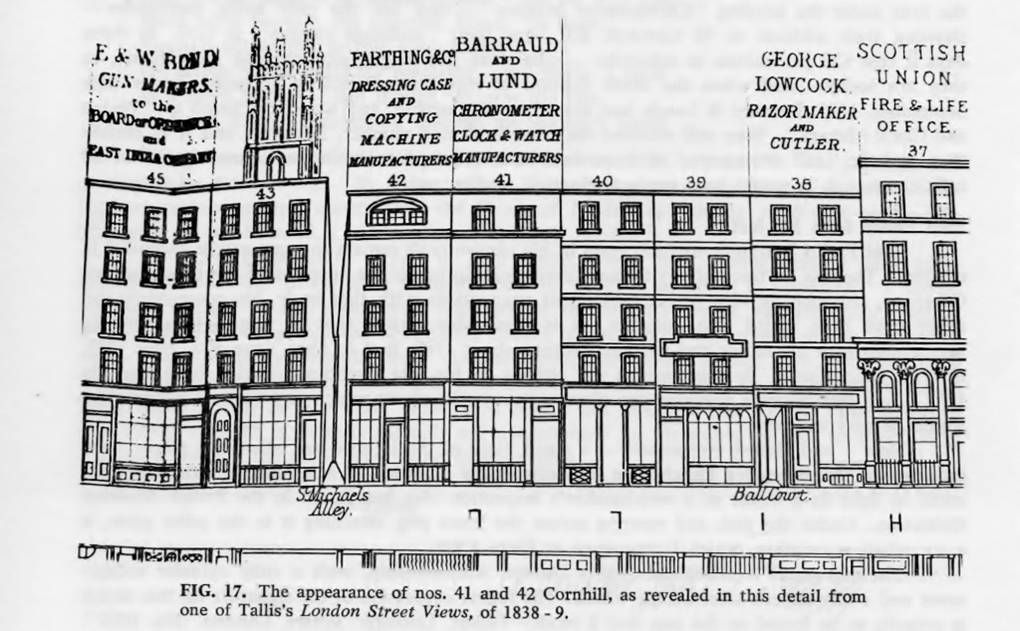
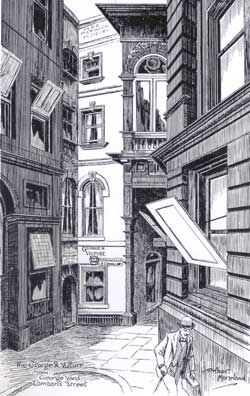
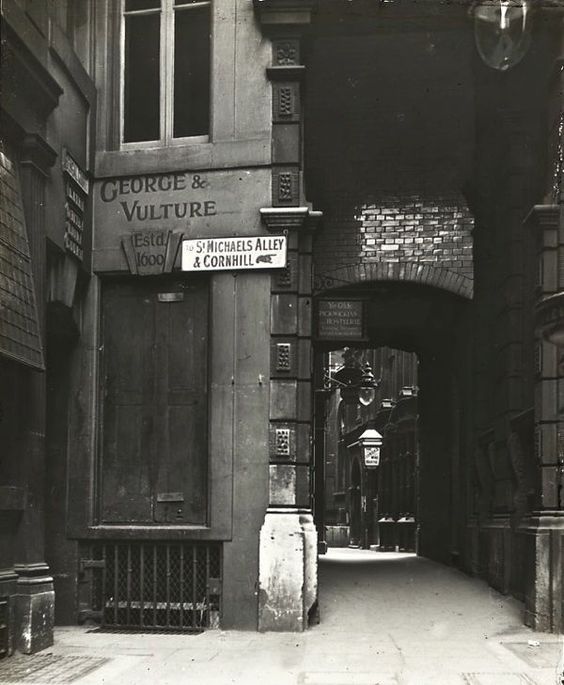
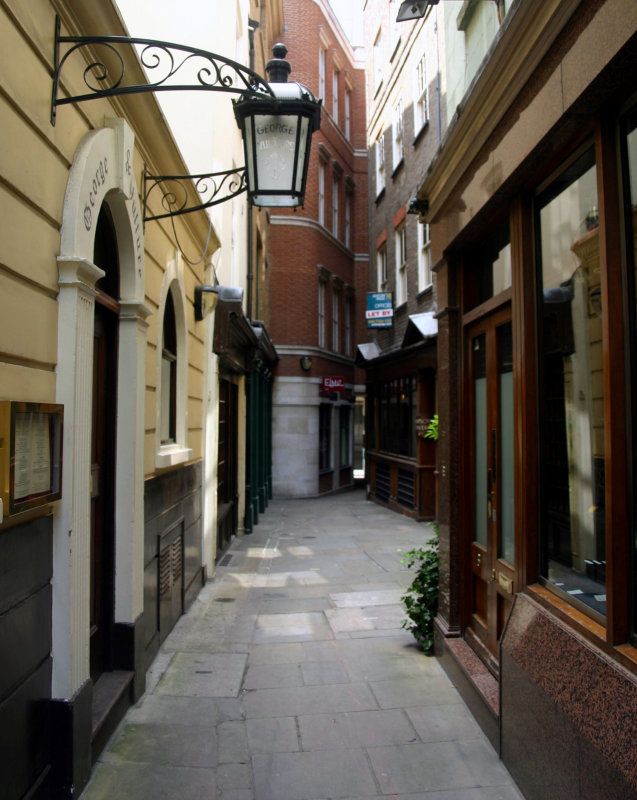
Rear of 41 and 42 Cornhill Rear of 41 and 42 Cornhill St. Michael’s Alley
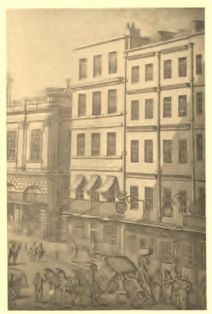
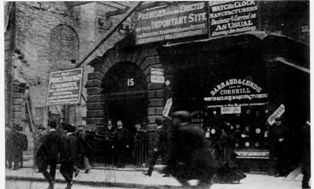
41 and 42 Cornhill 14 Bishopsgate 1912
In 1652, the first coffee house in London was opened on St. Michael’s Alley, off Cornhill, set within a warren of medieval streets. In truth, it was less coffee house and more wooden coffee shack, but it had the distinction of being situated below the spire of St. Michael’s Church which was visible all over London. It was in this part of the City that Charles Dickens placed the office of Ebenezer Scrooge in “A Christmas Carol”, and, it has to be said, that the alleyways hereabouts still have a very Dickensian feel. The neighbourhood has changed a great deal since, but here in this grimy alleyways time stands still, and you can picture its Victorian residents, "going wheezing up and down, beating their hands, and stamping their feet upon the pavement stones to warm them". In the window of the George and Vulture just before the white brick arch, there is a white marble bust of Charles Dickens, looking inwards on a restaurant that has changed little since he himself used to dine here. The "George and Vulture," is known throughout the world as the tavern that Mr. Pickwick and his friends made their favourite city headquarters. The address in the directory of this inn is St.Michael's Alley, Cornhill. The Pickwick Papers, however, describe it as being in George Yard, Lombard Street
Fixed to a wall inside the tavern are two boundary markers defining the dividing line between the parishes of St Michael's, Cornhill and St Edmund the King, Lombard Street. They originate from pre-Great fire days when City churches were so close together that there needed to be some physical means of ascertaining the limits of each parish. The boundary of the two parishes runs right through the bar of the George and Vulture. John Strype, the ecclesiastical historian, records that "Near Ball Alley was the George Inn, since the fire rebuilt, with very good houses and warehouses, being a large open yard, and called George Yard, at the farther end of which is the 'George and Vulture' Tavern, which is a large house and having great trade, and having a passage into St. Michael's Alley."
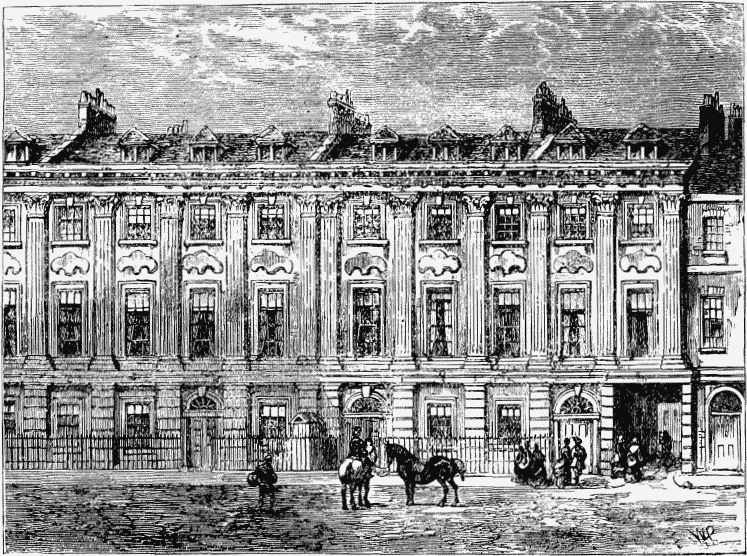
Great St Andrews Street, Soho where Francis-Gabriel Barraud lived
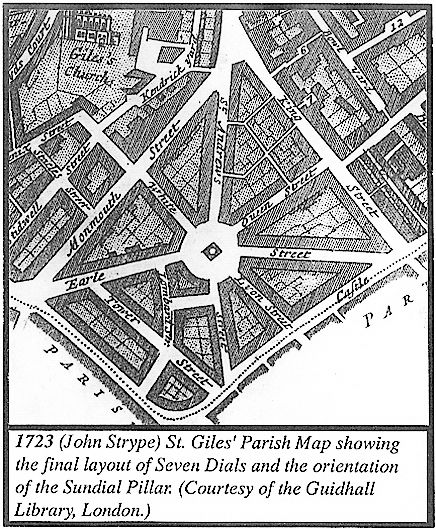
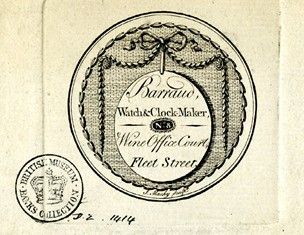
Map of 7- Dials 1723 Paper seal of Francis-Gabriel Barraud
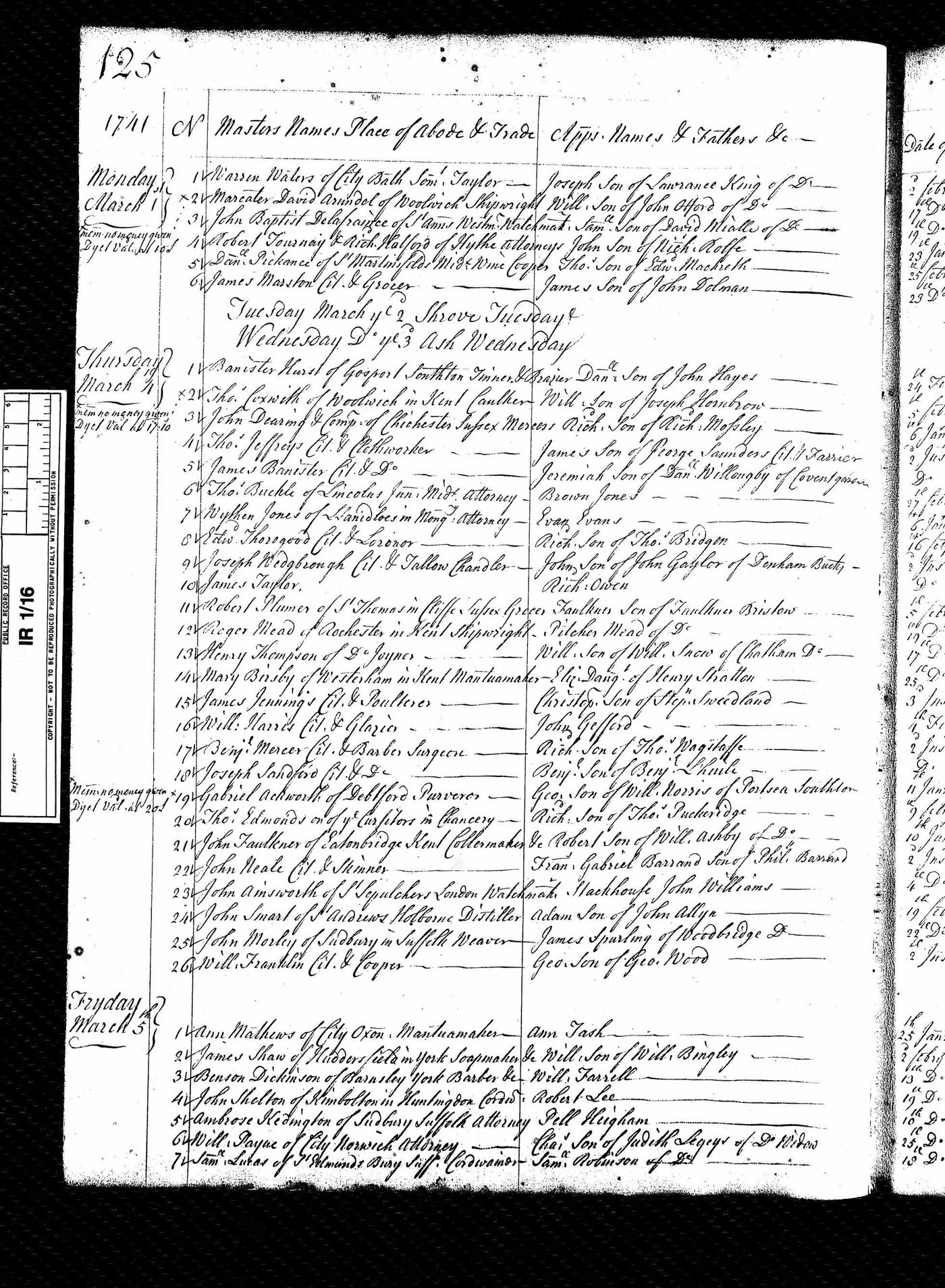
Apprentice Record of Francis Gabriel Barraud to John Neale (22nd March 1741)
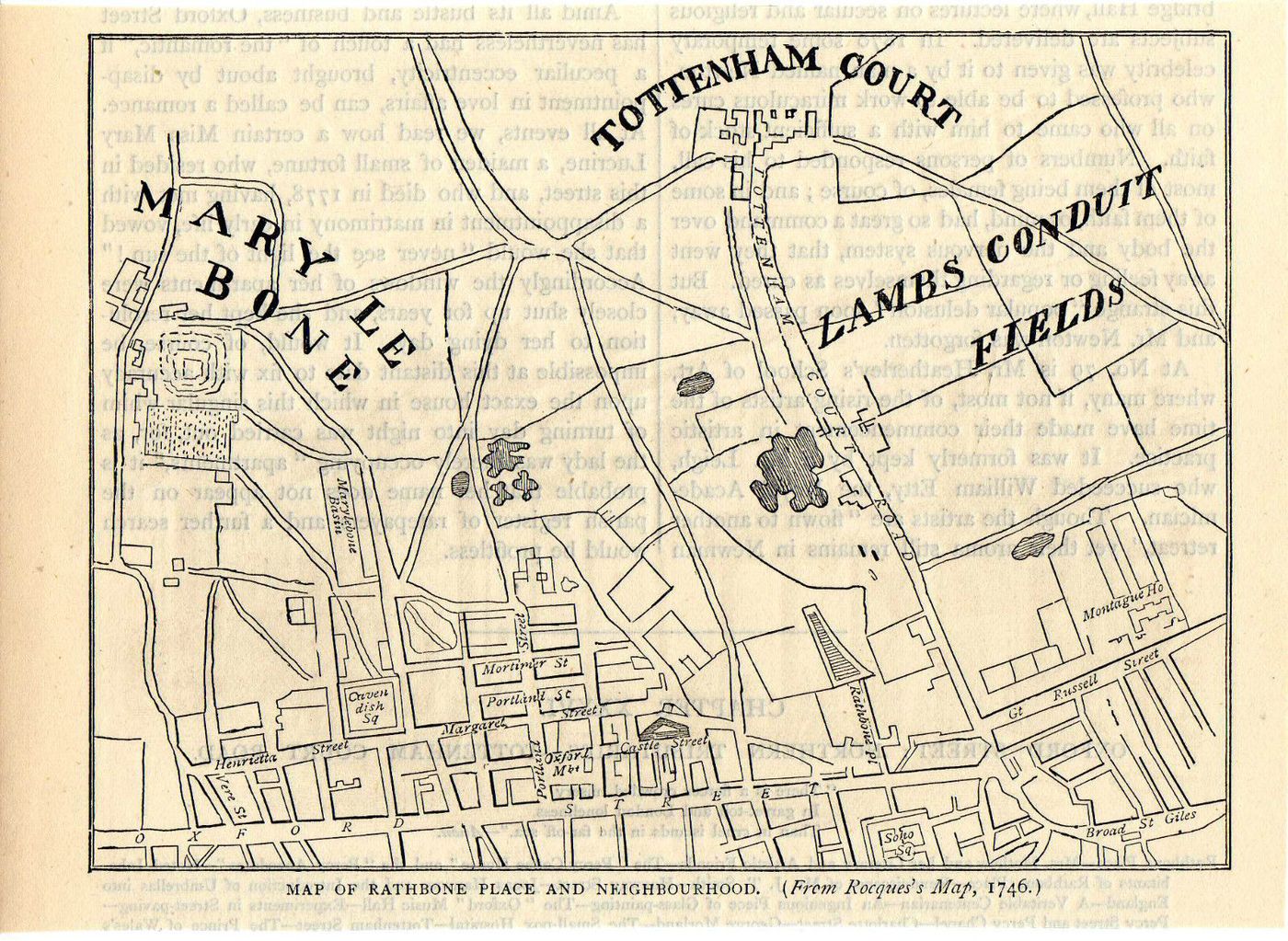
Oxford Street, Rathbone Place Goodge Street
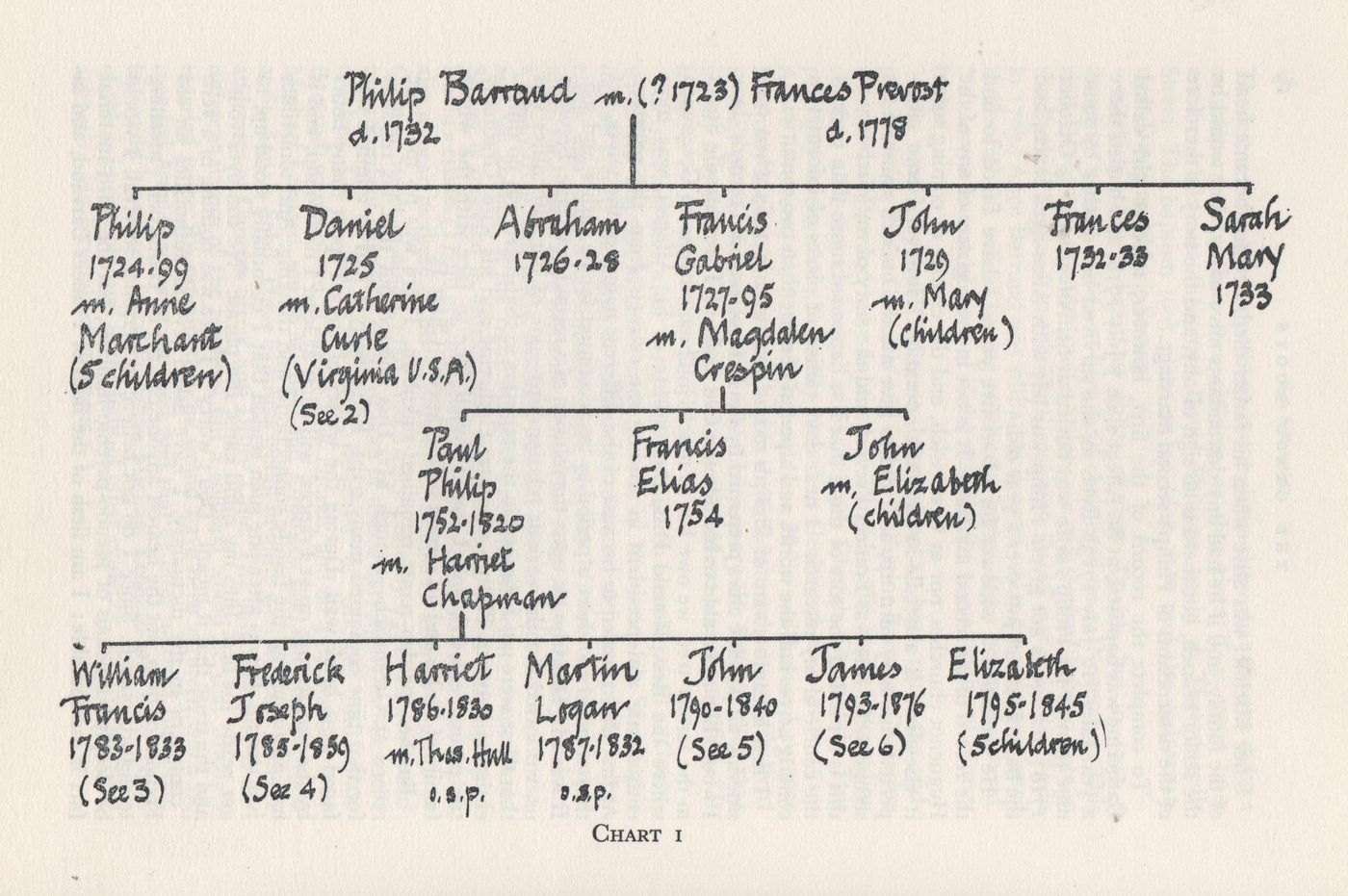
Chart 1 from the book “Barraud – History of a family” by Ms. Enid M. Barraud
As mentioned previously, up to about 1715, Philip Barraud and Catherine Strang lived in Laurence Poutney Lane (near what is now Cannon Street Station) in London and near to the old London Bridge. Philip and Catherine Strang(e) (his 1st wife) then moved to Greenwich in about 1713 probably as a better location for his occupation as a merchant. It is known however that Philip Barraud kept the wharfe and warehouse in Buttolph Street for the landing of his goods. They lived in Church Street (Renamed High Street) in Greenwich (now Greenwich High Road) which was a relatively well-to-do part of the town and was one of the headquarters of the Huguenot refugees. Their house was situated almost opposite St. Alphege Church. Catherine Strang(e), however died on 7th July, 1718 after childbirth with Catherine, their youngest daughter, and was buried in Greenwich on 12th July, 1718.
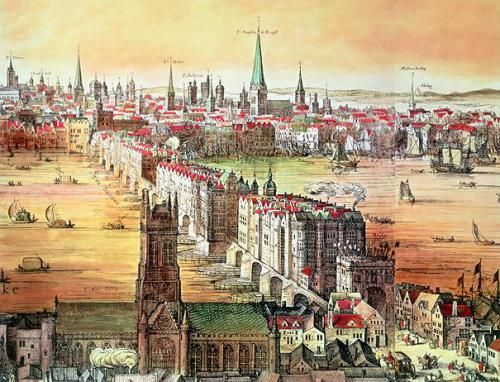
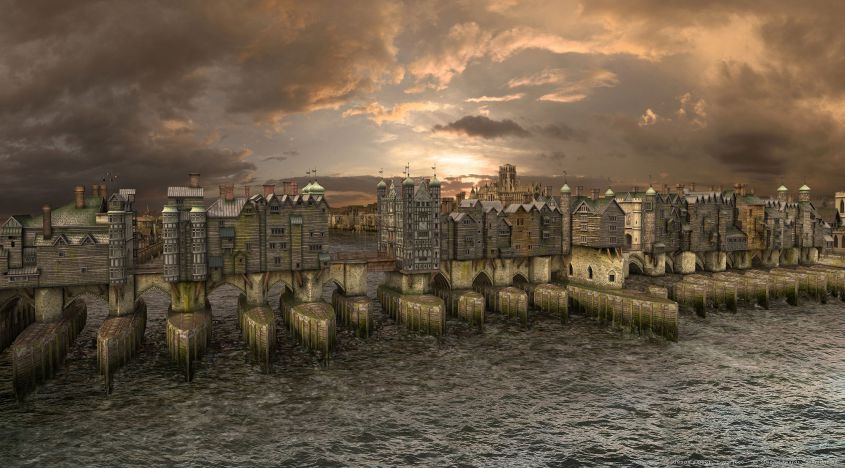
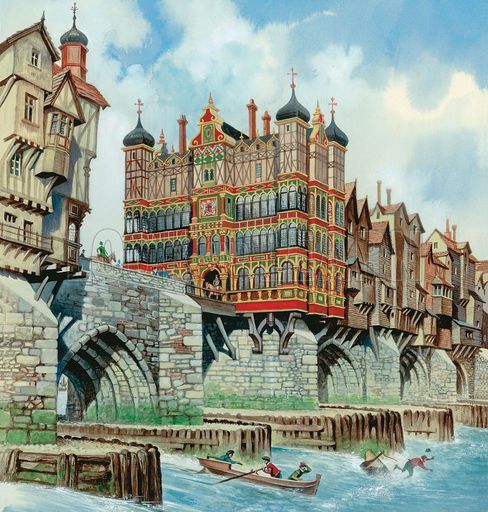
To move to Greenwich, Philip Barraud and Catherine would have had to cross the Thames by the only bridge, which was the Old London Bridge (see illustration below) and then through Deptford.
The deep ford which gave Deptford its name crossed the River Ravensbourne at what is now Deptford Bridge. It was on the ancient road from London to Canterbury and Dover, and Deptford is mentioned in Chaucers Canterbury Tales. One part of Deptford grew up here, beside the ford and the later bridge, the other part was the fishing village beside the Thames called Deptford Strand. Any traveller since roman times going east from London along the south bank of the Thames then had to cross Deptford Creek at Deptford Bridge (Illustration below). Once across this creek, the road then divided, left along London Street into Greenwich, or right along Watling Street to Canterbury and beyond.
Philip Barraud married his 2nd wife, Frances Prevost (also a Huguenot) in 1723 and they stayed in Greenwich until Philip died in January, 1732, and he was buried on the 1st February, 1732 at St. Alphege Church which was at that time a newly built church being opened in 1718, the original collapsing in 1710.
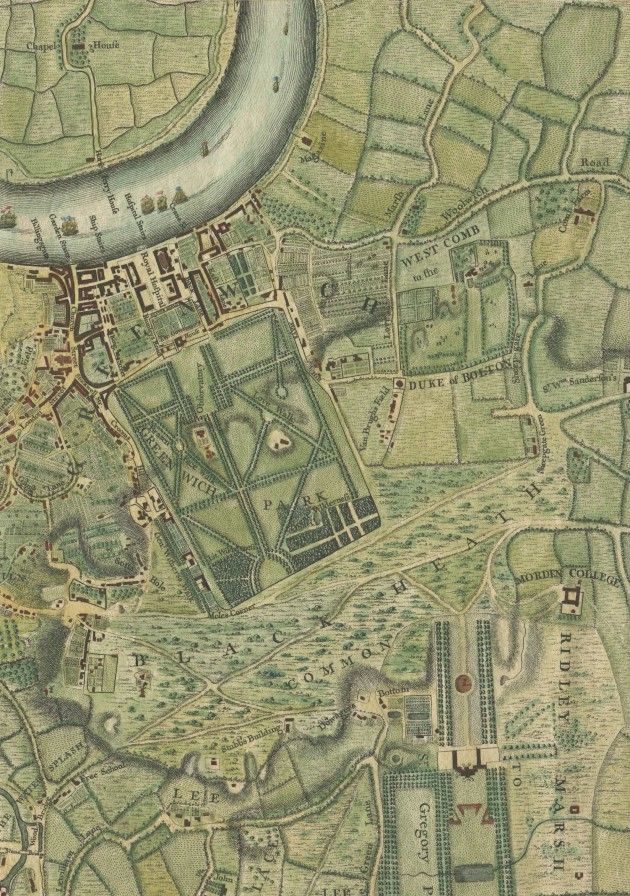
St Alphege Church Church Street/High Street, Greenwich where Philip Barraud lived
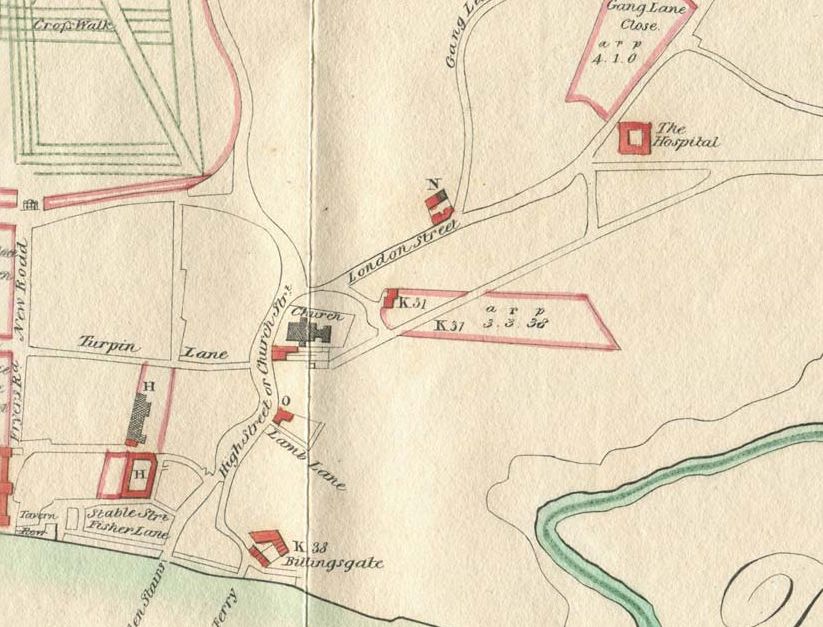
High Street, Greenwich c1700 where Philip Barraud lived 1714-1732 St Alphege Church
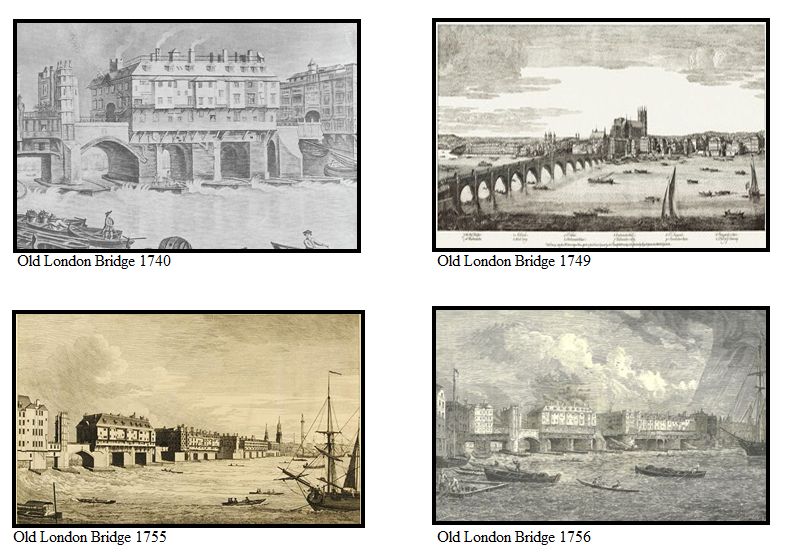
The old London Bridge was notorious for the rapids that existed between the arches, and where the water could suddenly fall 12 feet or more. People were normally landed at one side of the bridge and collected again at the other. There are many instances where a boat passed under the arches and disappeared under the rapids. This is probably a reference to “Shooting the Rapids” The old bridge had by the beginning of the eighteenth century become perilously ruinous, the central street was dark, narrow, and dangerous; the houses overhung the road in such a manner as almost to shut out the daylight, and arches of timber crossed the street to keep the old buildings from falling on each other. Luck alone kept together the long-toppling, dilapidated structure that was perilous above and dangerous below. The inhabitants soon grew accustomed to the noise of the falling waters, the clamour of watermen, and the frequent shrieks of drowning people, and also the bridge is noted for the sheer number of swarms of rats that infested the banks of the riverside and onto the bridge itself each evening.
Though, the bridge was itself of stone, the houses upon it were built only of timber, leaving a very narrow and inconvenient street between them. Their repeated destruction by fire occasioned the loss of many lives; it was therefore determined to remove them. The Corporation accordingly obtained in 1756 an act of parliament empowering them to take down those buildings, and to make such other alterations as might be deemed requisite. Two arches near the centre were thrown into one; a balustrade was built on either side; a paved road thirty one feet wide was formed, with foot-pavements, each seven feet wide.
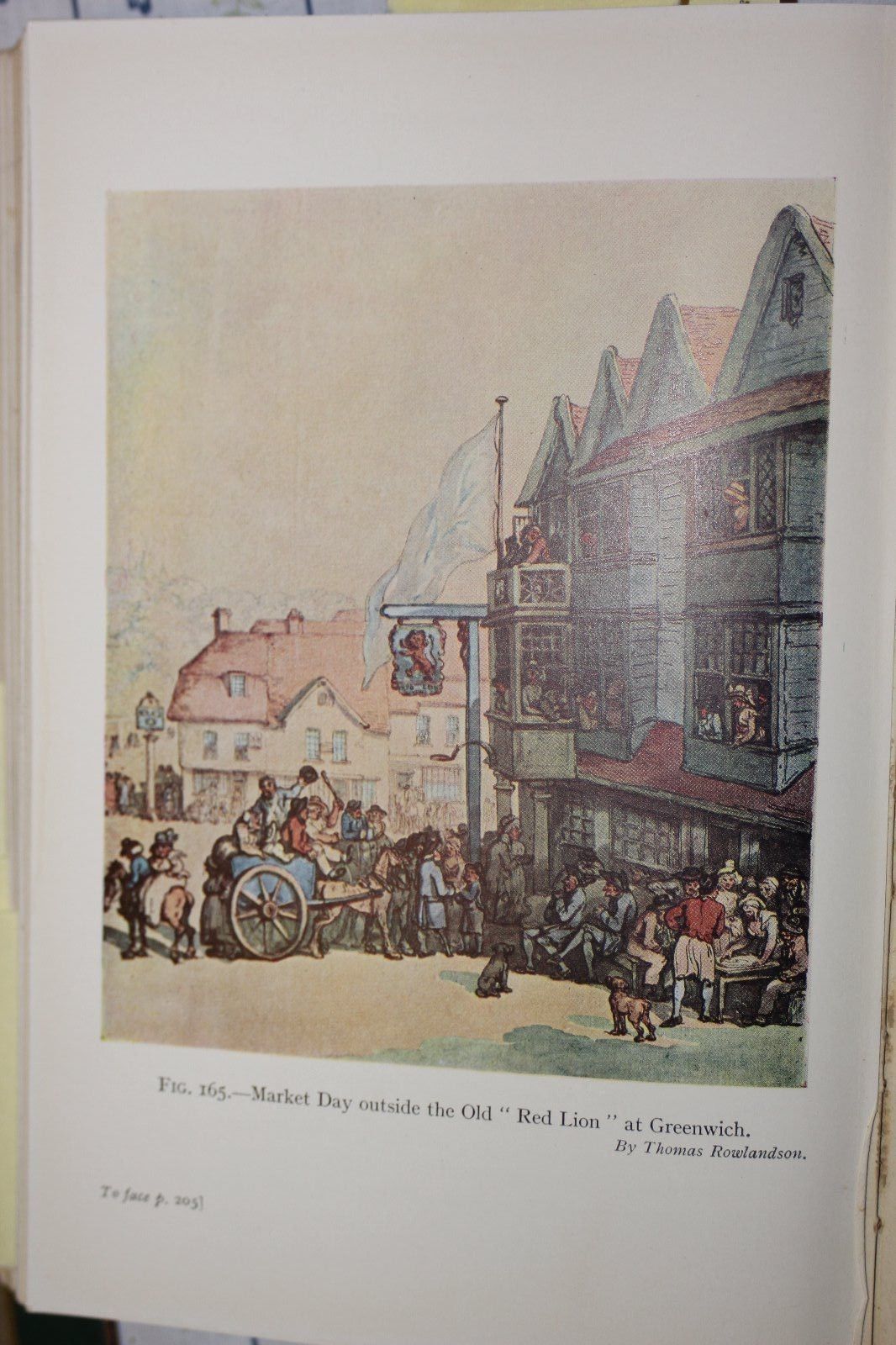
Market Day in Greenwich
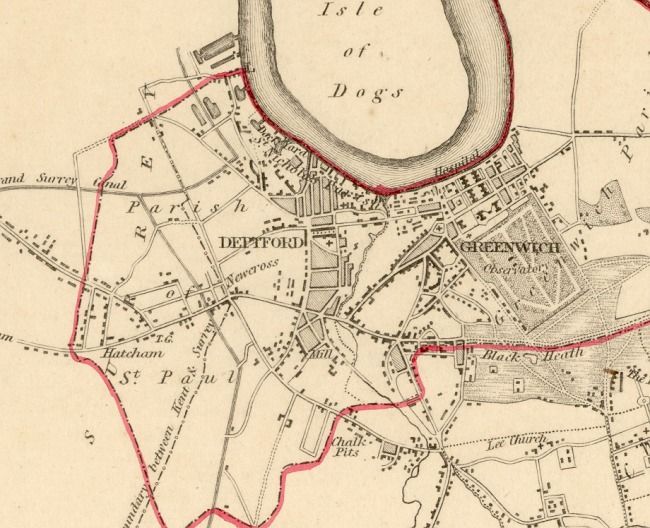
Deptford split – Left into Greenwich and right towards Canterbury.
St. Alphage Church and Philip Barrauds home
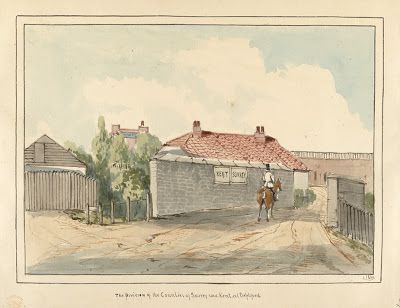
The division of Watling Street at Deptford
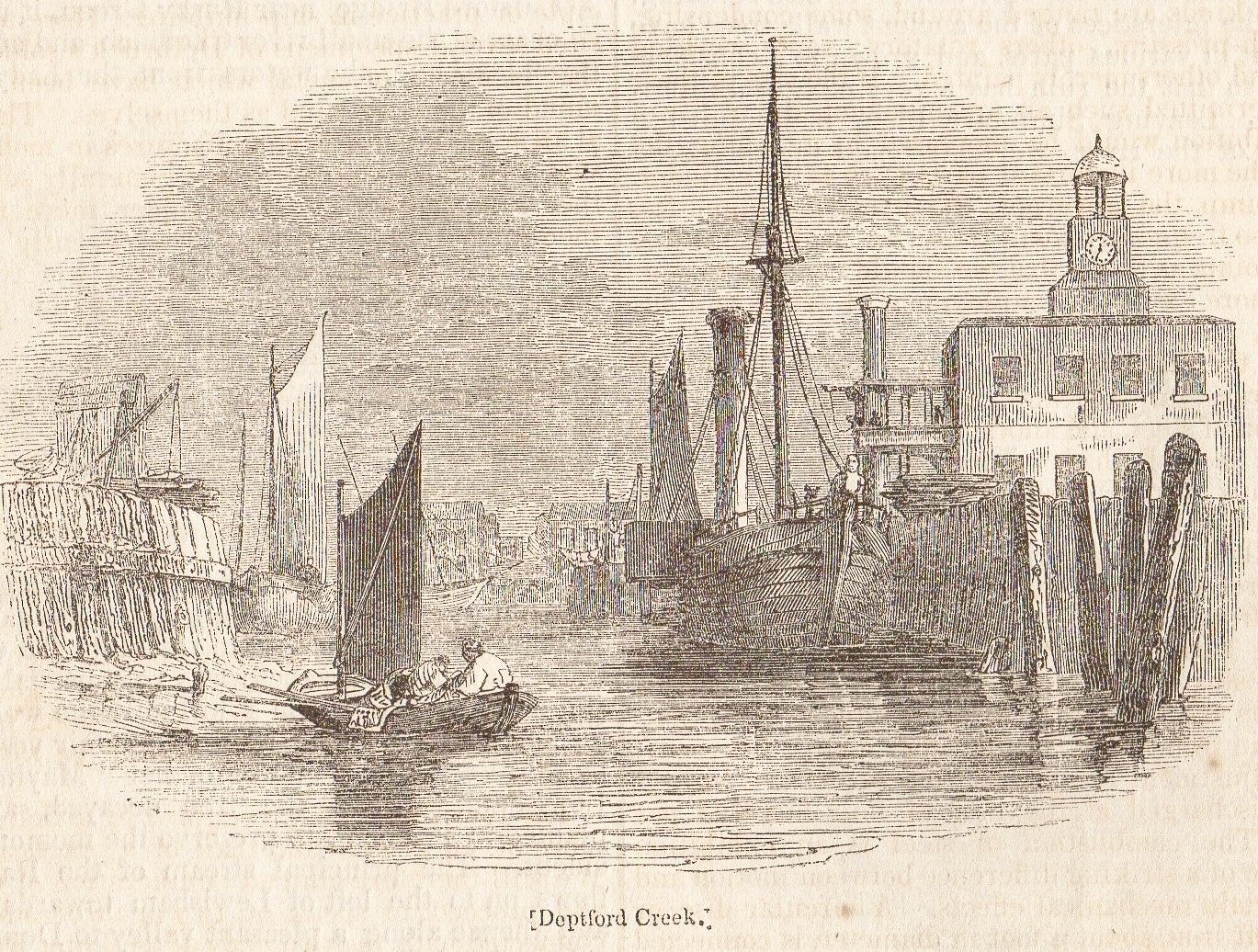
Deptford Creek – division of Kent and Surrey
Philips death in 1732 left his wife Frances already pregnant with his youngest child, Sarah Mary who was born after his death, plus their four young boys, and also the 2 surviving children (Alice and Michael) from Philip’s previous marriage to Catherine Strang. Frances stayed in Greenwich for a further 10 years after Philip’s death until 1743 when she moved the family to King Street in Soho, London. It was in King Street (Now part of Shaftesbury Avenue) that Frances’s brother William Prevost had his silversmith business from (1738-1760) and it is therefore very likely that they lived together and this is where her son, Philip most likely learnt his skills as an engraver. William Prevost is noted as an engraver in “St. Giles”.
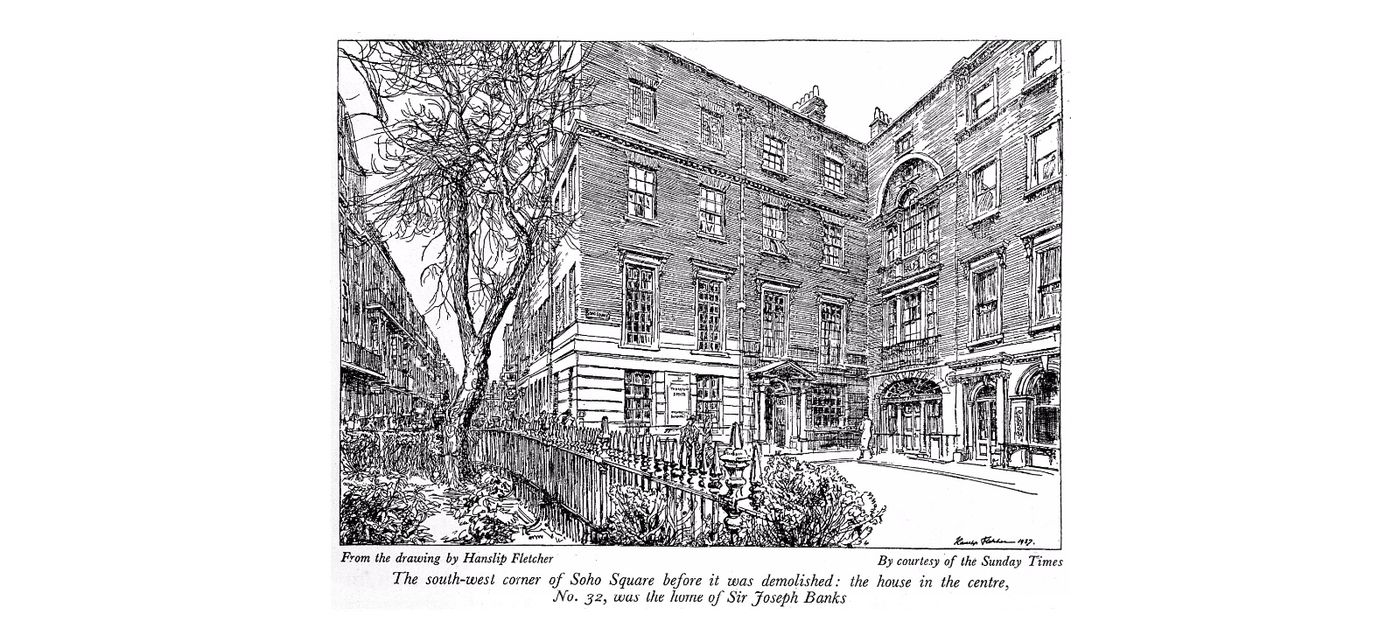
Soho Square early 1700s. South West corner of Soho Square
William Prevost lived in the 5th house from the east end of the street which had a uniform front, three storeys high and two windows wide, with plain pilaster-strips marking the party walls, with a cornice and a plain parapet at roof level. The house was built in 1731 following demolition of the original houses in King Street.


Images of King Street from Tallis
‘Soho Square itself, from the earliest years, was the centre of aristocratic and fashionable life and at the time when it was a most fashionable quarter, it was much frequented by the nobility, when no less than four ambassadors were residing within it. The Soho area was built in a square but in small dimensions and uninviting, and it seems difficult to realise the fact that when masqued balls were all the rage, it was crowded every night with the carriages of “the quality.” It was laid out for building in the reign of Charles II, and consists almost wholly of straight and narrow streets running at right angles to each other. In many of these streets, however, there were noble and substantial mansions, which were largely occupied by wealthy merchants and members of Parliament, and even by a few peers of the realm. From: ‘Soho’, Old and New London: Volume 3’
St. Anne’s Church in Soho was, from its foundation a fashionable church and from that day to this, though many social changes have swept over the district, its congregation has always included those from royalty downwards, who have continued the traditions of the time when Soho was classed as the Mayfair of London.
Soho was generally known as a Huguenot stronghold, and it has been said that by 1710 as many as half the inhabitants of the Parish of St. Anne’s Soho were French. Part of the attraction was that the area was outside the jurisdiction of the City Companies so that foreign craftsmen could work there without interference.
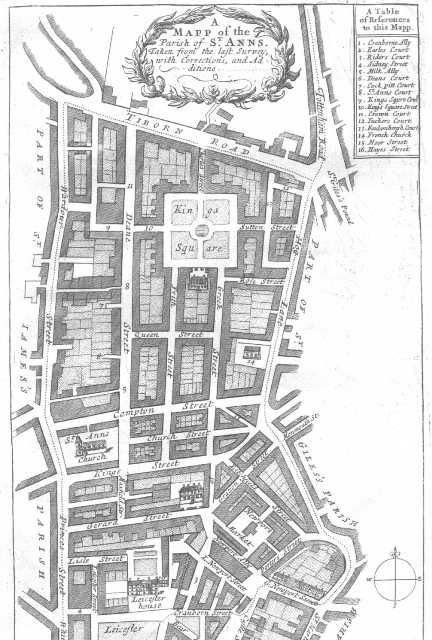
Early map of Soho area of London 1756
King Street Soho Soho Square or King’s Square
In the book, History of a Family, there are no further details of the 2 surviving children to Philip’s 1st marriage to Catherine Strange – Alice and Michael. I certainly agree with Ms. Barraud, that I also cannot find any details of what eventually happened to Alice, however as both Alice and Michael are mentioned in the will of their uncle, David Strang – the brother of their mother (and who was a witness to the marriage of Philip Barraud and Catherine Strang in 1707) in 1742, then they both must have still been alive at that time and, as Alice is clearly mentioned in the will as ‘Alice Barraud’, then this would clearly suggest she was still unmarried in 1742 at the age of 31. From information which was probably unavailable to Ms. Barraud at the time of writing the book in 1968, it is now known that Michael became an apprentice to a Robert Manning an Inn-keeper in 1735, and the citation is clear – “Michael, son of Philip Barraud, of Greenwich, merchant” Whether Michael continued with his apprenticeship as an innkeeper is unclear as, when he married Anne Monk in 1735, his occupation is noted as “Packer” although Robert Manning is mentioned several times in records of London as a general packer, barrel maker, inn-keeper, general merchant and wine merchant in Bond Court, Walbrook. He is mentioned in “The Intelligencer 1738” and “Merchant’s Assistant 1740” and also “A compleat guide to all persons who have any trades or concerns within the City of London 1740.” Bond Court in Walbrook is the next street to Cannon Street where Michael Barraud lived in 1740, therefore it is possible that Michael continued to work with Robert Manning after completing his apprenticeship.
In 1726, Robert Manning was working with a John Simmonds in the Coopers’ Business, and Simmonds left owing Robert Manning some £5, money for timber to make into Casks, which he had when he was a Master Cooper. John Simmonds gave a promissory note to Robert Manning which was not honoured and subsequently found to be counterfeit. A threatening letter was sent to Mr. Manning demanding twenty Guineas; and containing threats, as well of the Life of Robert Manning and the burning the House and Shop which was believed to be from John Simmonds.
''We are men resolutely bent, on pain of death, to execute what we have undertaken. Money we want, and money we must have; and we are obliged for you to raise twenty guineas, and if you don't send the money, 'your houses, shops, and yards, will be made as level as fire can make them, and your life will be in danger; therefore make no delay, for if you do, dreadful must be the fall of you or us. Put the Money in a small bag, conceal'd ' in a wisp of hay, made up in a small parcel, and cover'd with canvas, made fast and directed '' for Thomas Bull, till call'd for. Send it by your youngest apprentice to the Old Green-Dragon at Stepney, on Tuesday the 8th, about '' six o'Clock at night. Send no watch, nor divulge this to none on earth, but burn it as soon as you have received it, if you don't, take what follows; if you don't send the money, you may expect a shout which will tear' hell's concave; destruction, horror, and death will seize your whole Family. You are able to bear this trifle, so if you don't send the money on tuesday night, look to your self.”
The case was heard in the Old Bailey and John Simmons was sentenced to death. He was hanged in May, 1737 at Tyburn tree.
Reference to Robert Manning, Innkeeper John Manning (Son of Robert)
A highway robbery took place in 1767 resulting in the deaths of 2 coach passengers. The victims had been drinking in the Red Lion Public House, and the Innkeeper was John Manning, the son of Robert Manning. Previously, in 1765 John Manning and his wife were robbed of £25.00 from their upstairs room at the Red Lion Public House. Richard Thomas and William Edwards were suspected of the crime and appeared at the Old Bailey. William Edwards was also accused of another crime on the following day at St Pancras where he stole gloves worth over £81. The outcome of both cases is not recorded.
As previously mentioned: Another London Huguenot, Peter Bonnin was born in France. He was naturalized as a British citizen in 1699-1700. His name is given as “Peter Bonning (sic), from Anguoleme near Bordeaux in the Guiesne, son of Michael Bonning (sic) and his wife Elizabeth”. In November 1699 he married Elizabeth Strang (or Strange), one of the daughters of Mary Strang of Greenwich and therefore Catherine Strang’s sister. They were married by licence in the church of All Hallows the Great in the City of London. The will of David Strang, one of the sons of Mary Strang, (and the the brother of both Elizabeth and Catherine) refers to Peter Bonnin as “my brother-in-law Peter Bonnin”. Peter Bonnin’s daughter Elizabeth Bonnin died in 1720, the year after her father, and she left a will which included a bequest to her cousin Alice Barraud (b 1711), who was her sister Catherine’s daughter and one of Mary Strang’s granddaughters, and the residue of her estate to “My grandmother Mary Strang” Alice Barraud was the daughter of Philip Barraud and Catherine Strang.
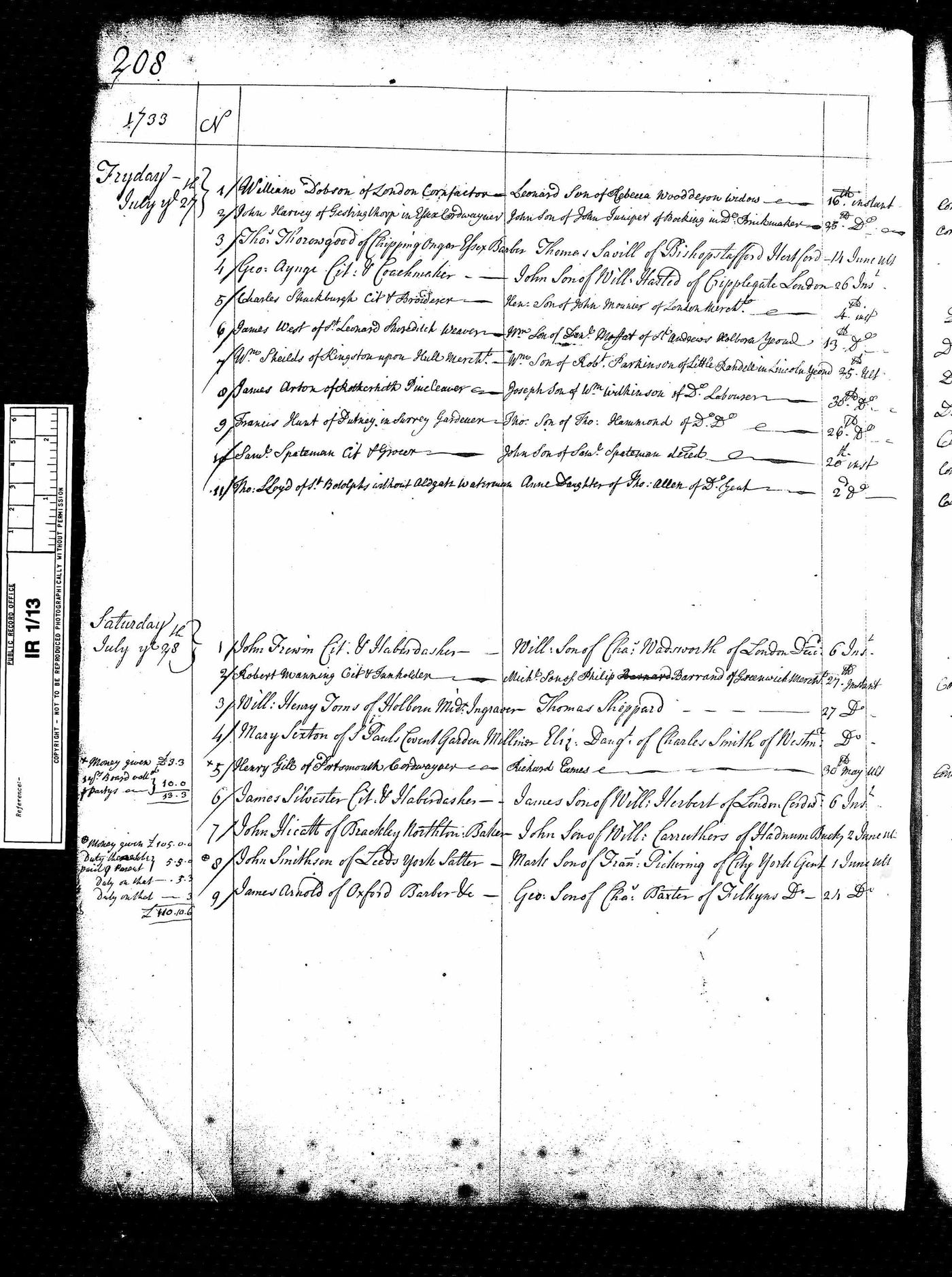
Record of Michael Barraud as apprentice
Michael Barraud (b 1717) married Anne Monk on the 7th July, 1735 in London. Anne Monk was born in 1714 and baptised on the 28th August, 1714, the youngest daughter of Thomas Monk and his wife Catherine or Katharina (not known but probably Crosthwaite from Cumberland) who were married in 1690 and they lived in St. Martins in the Fields, London. Thomas Monk and Catherine (Katharina) had 4 other children, three daughters, Mary (b 1698), Maria (b 1709) and Diana (b 1710) and a son Thomas (b 1712). Michael Barraud and Anne Monk first lived in the Soho area of London when they were married, in Cannon Street in 1740 in the same area as Philip Barraud and his 1st wife Catherine Strang lived in 1713, and then it is known they moved to Drury Lane in 1742.
Anne Monk England Births and Christenings
| Name: | Anne Monk |
| Gender: | Female |
| Christening Date: | 28 Aug 1714 |
| Christening Place: | SAINT MARTIN IN THE FIELDS,WESTMINSTER,LONDON,ENGLAND |
| Father’s Name: | Thomas Monk |
| Mother’s Name: | Catherine |
Indexing Project (Batch) Number: C00145-5 , System Origin: England-ODM , GS Film number: 560372
TNA Reference RG7 / Piece 148 / Folio 5 [Chapel/Registry]
Groom Name: Michael Barraud
Bride Name: Anne Monk
Groom’s Profession: Packer
Date of Marriage 7 July 1735
Registration Town/County Fleet, London
Ceremony Performed by Minister Gaynam
Groom’s Abode St Stephens Wallbrook
Bride’s Abode St Austins, London
The marriage details are as follows:
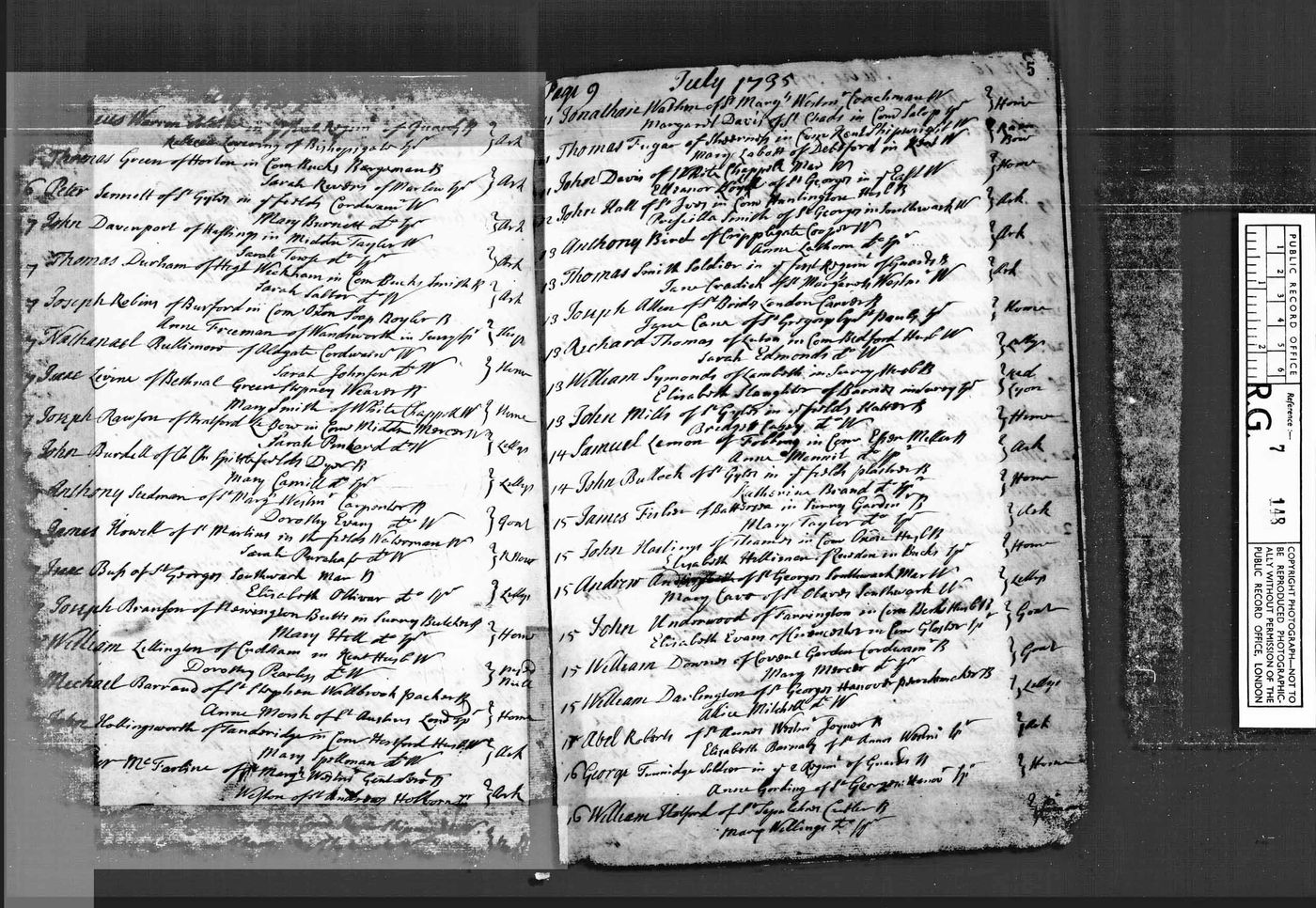
Parish Record of Marriage Michael Barraud + Anne Monk
Michael Barraud and Anne Monk had 3 children:
Anne, baptised on 15th May, 1736, died also in 1736, and buried on 5th August, 1736. Her name is transcribed as Barrand and not Barraud in the death records.
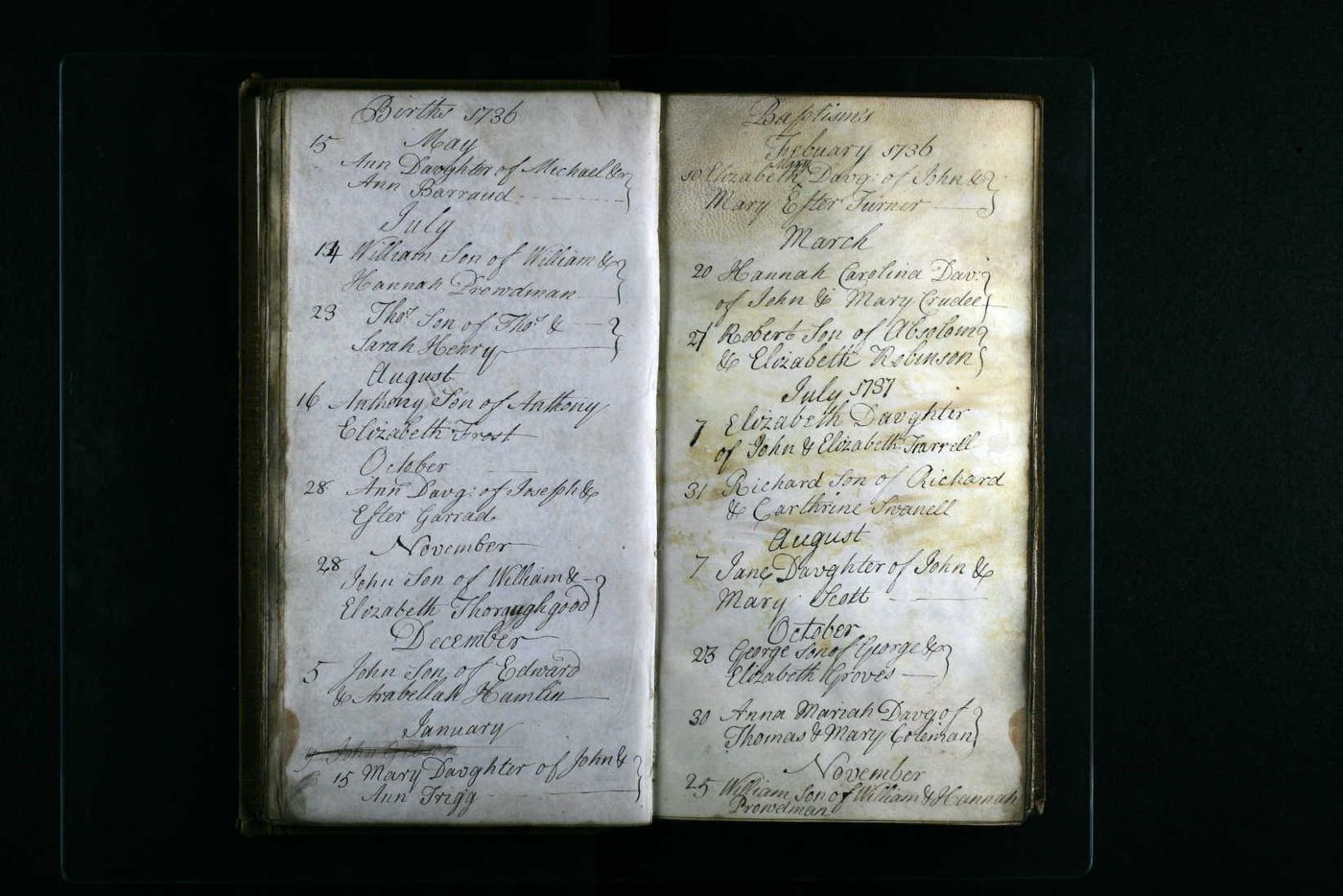
Birth record of Ann Barraud 15th May, 1736
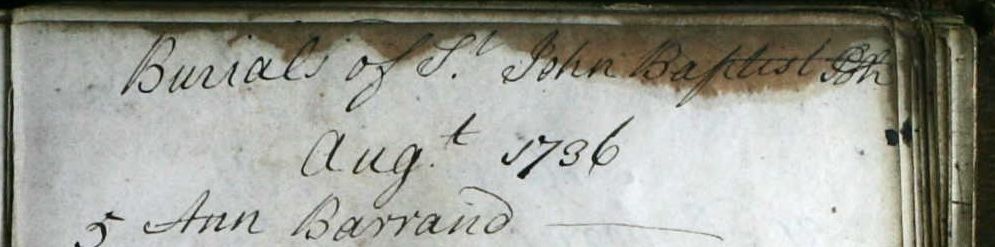
Death record of Ann Barrand 5th August, 1736
| County | London (City) |
| Place | Walbrook |
| Church | St John the Baptist Tr |
| BurialDate | 05 Aug 1736 |
| Forename | Ann |
| Surname | BARRAND |
| Age | 0 |
| FileNumber | 21194 |
Death Record of Ann Barrand/Barraud
Michael was their second child, born on 19th May, 1737 and baptised on the 29th May, 1737. It is known that he married an Elizabeth (not known, but most probably Elizabeth Macknell) in about 1758 and they had 5 children that I have found:
1. Frances, born in 1759, and baptised on the 21st October, 1759 in St. Anne’s, Soho (IGI C001548) Her name is transcribed as “Baraud” but she died in 1778 at the age of 19, unmarried.
2. Michael Leonard born on the 10th August, 1761 and baptised on the 1st September 1761 also in St. Anne’s Church, Soho. There are no further records of Michael Leonard that I have found. It is most likely that Michael Leonard Barraud died in infancy as there are records of another Michael Barrand’s baptism in 1768.
3. Peter Michael was born in 1767 and baptised on the 22nd March, 1767 in St. Giles in the Fields (buried at St. Anne’s Church Soho, 22nd November, 1767.
4. Michael was born in 1768 and baptised on the 25th September, 1768 in St. Giles in the Fields and was buried at St. Anne’s Church, Soho on 20th May, 1777.
5. George was baptised in St. Giles in the Fields on the 2nd December 1769.
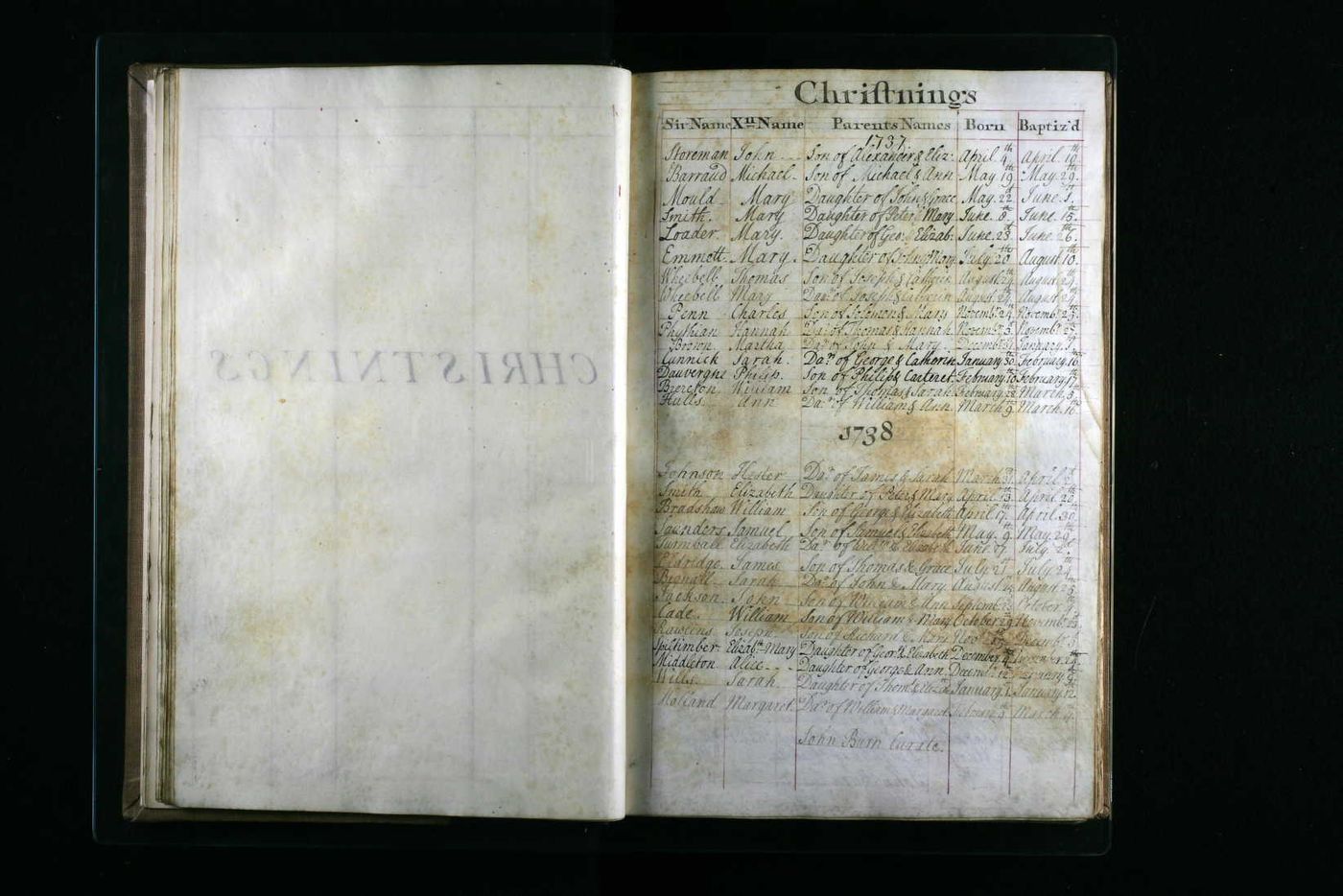
Christening record of Michael Barraud 1737
| Name: Frances Baraud Gender : Female Baptism: 21st October, 1759 Place St. Martins in The Fields, Westminster Father: Michael Baraud Mother: Elizabeth |
Transcript of baptism of Frances Baraud

Baptism record of Peter Michael Barrand 22nd March, 1767

Death record of Peter Barraud 22nd November 1767

Baptism record of Michael Barraud 25th September, 1768

Burial Record of Michael Barraud 20th May, 1777 Poor House

Baptism Record of George Barraud 2nd December, 1769
John, was Michael Barraud and Anne Monk’s third child and was born on 25th June, 1741 and baptised on 5th July, 1741. There are no further records of John since, although the family address of Peacock Lane in Southwark is shown on the records. It is possible that the Peacock Lane mentioned was located near to the Peacock Brewery on the riverside as shown on the Rocques map of 1761 as certainly Michael was apprenticed to Robert Manning who was an Innkeeper, and he may well have carried on with that trade, or more likely it is the Peacock Lane in Newington Butts also on the 1761 map. Peacock Lane in Newington Butts became Peacock Street.
There are no further records of Michael Barraud or Anne Monk in Parish records or the IGI records for Newington, and their fate is regrettably lost. Whether they stayed in London after 1742 or perhaps emigrated is unknown. It seems most possible however that Michael may have left the employ of Robert Manning in 1741 as, to travel from Newington Butts to the City of London, a distance of over 2 miles daily and across the Thames would have been quite difficult.
There are clear records of an Ann Barrand’s burial in St. George, Bloomsbury on the 4th May, 1743 and is noted as a child. Also, a child, Jane Barraud is recorded as being born in 1749 and died in 1768 at the age of 19. It is almost a certainty therefore that Michael Barraud and Anne Monk had another two daughters in 1743 and 1749. If these are their children, (which is most likely) then it would suggest that the family moved back to central London between 1741 and 1743 and remained there.
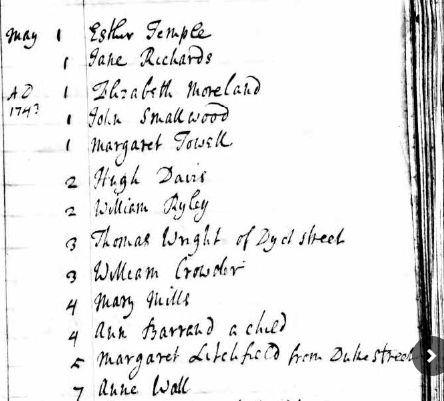
Burial of Ann Barrand 4th May, 1743 St George, Bloomsbury
| Name: | Jane Barraud, aged 19 |
| Burial Date: | 19 Aug 1768 – born c1749 |
| Parish: | St Luke, Finsbury |
| County: | Middlesex |
| Borough: | Islington |
| Record Type: | Burial |
| Register Type: | Parish Register |
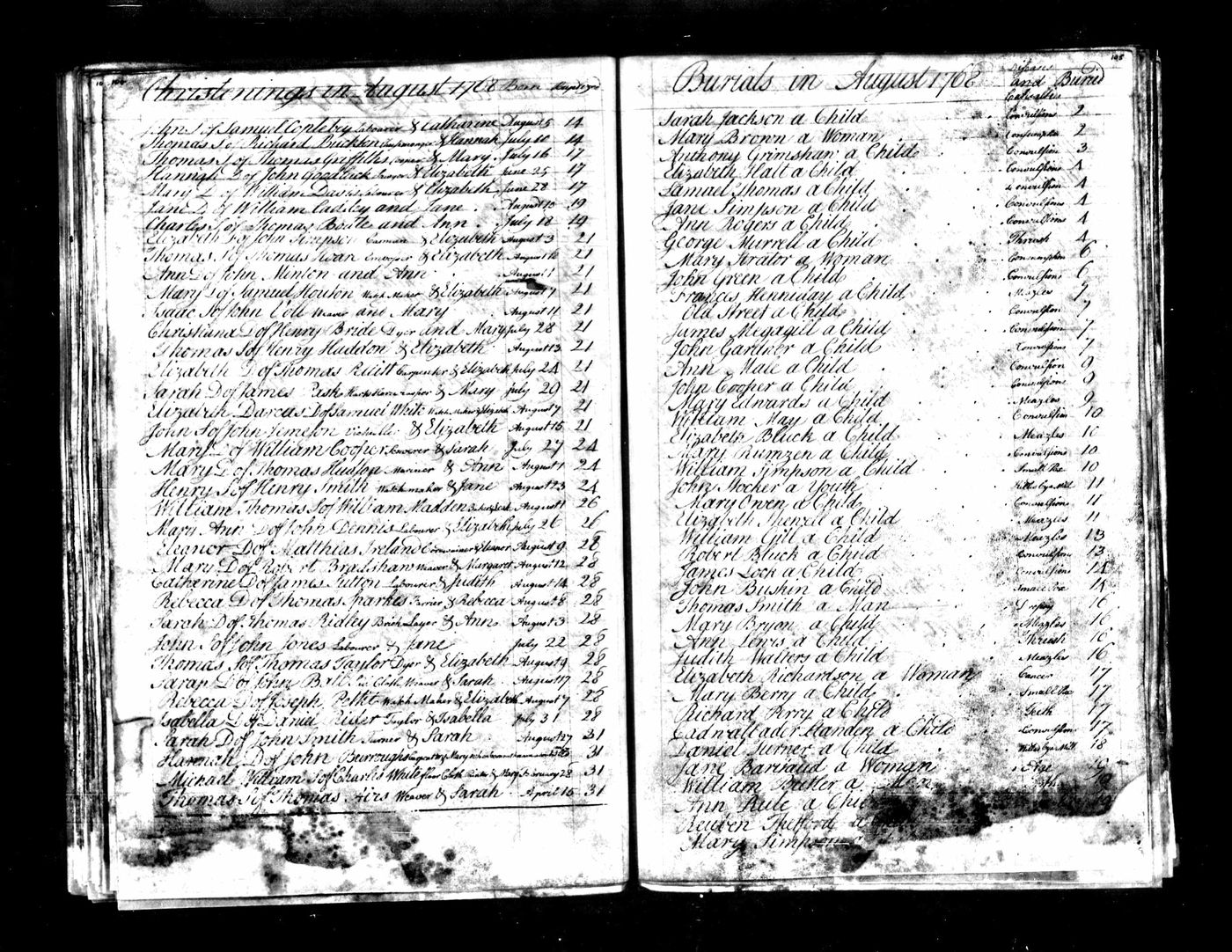
Burial record of Jane Barraud
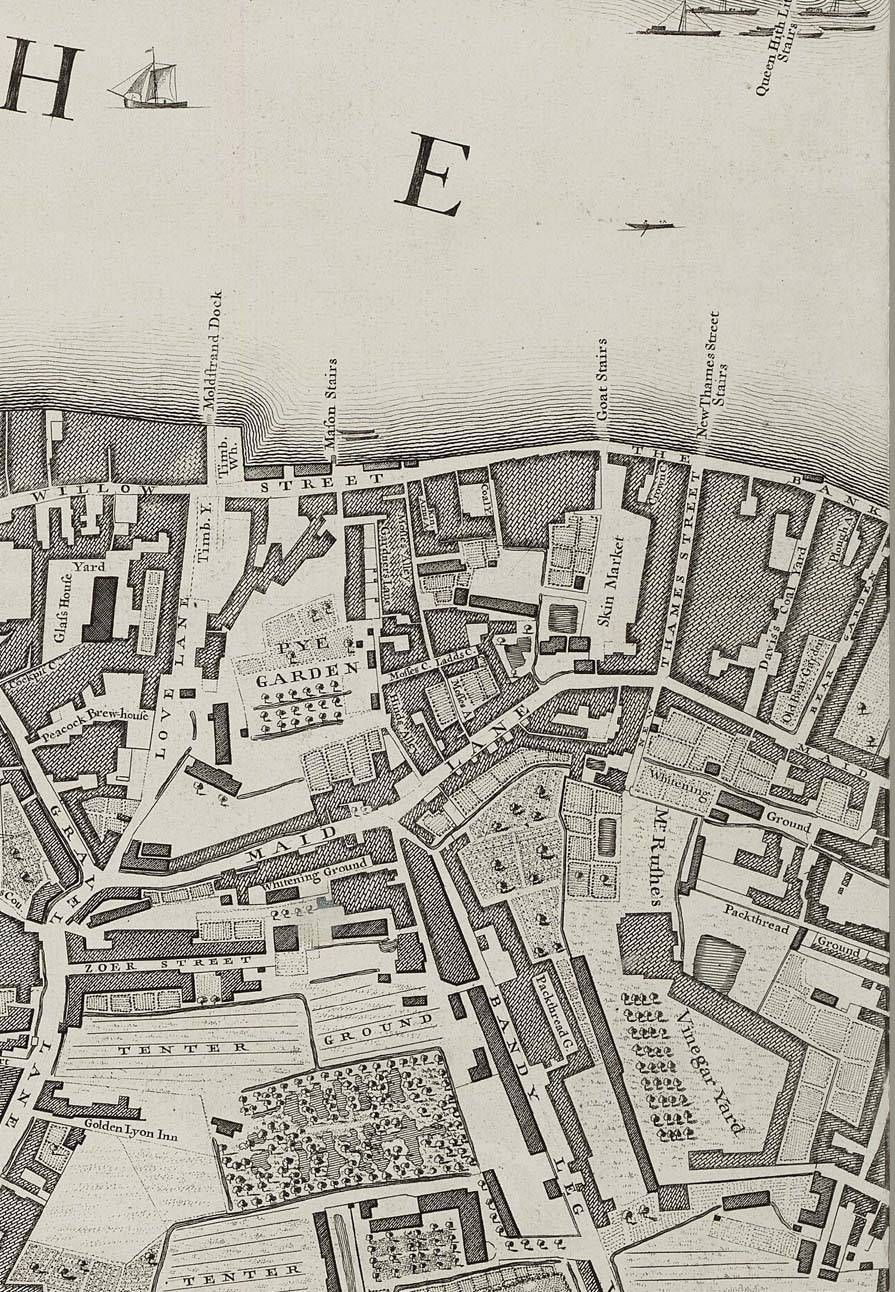
Peacock Brewery
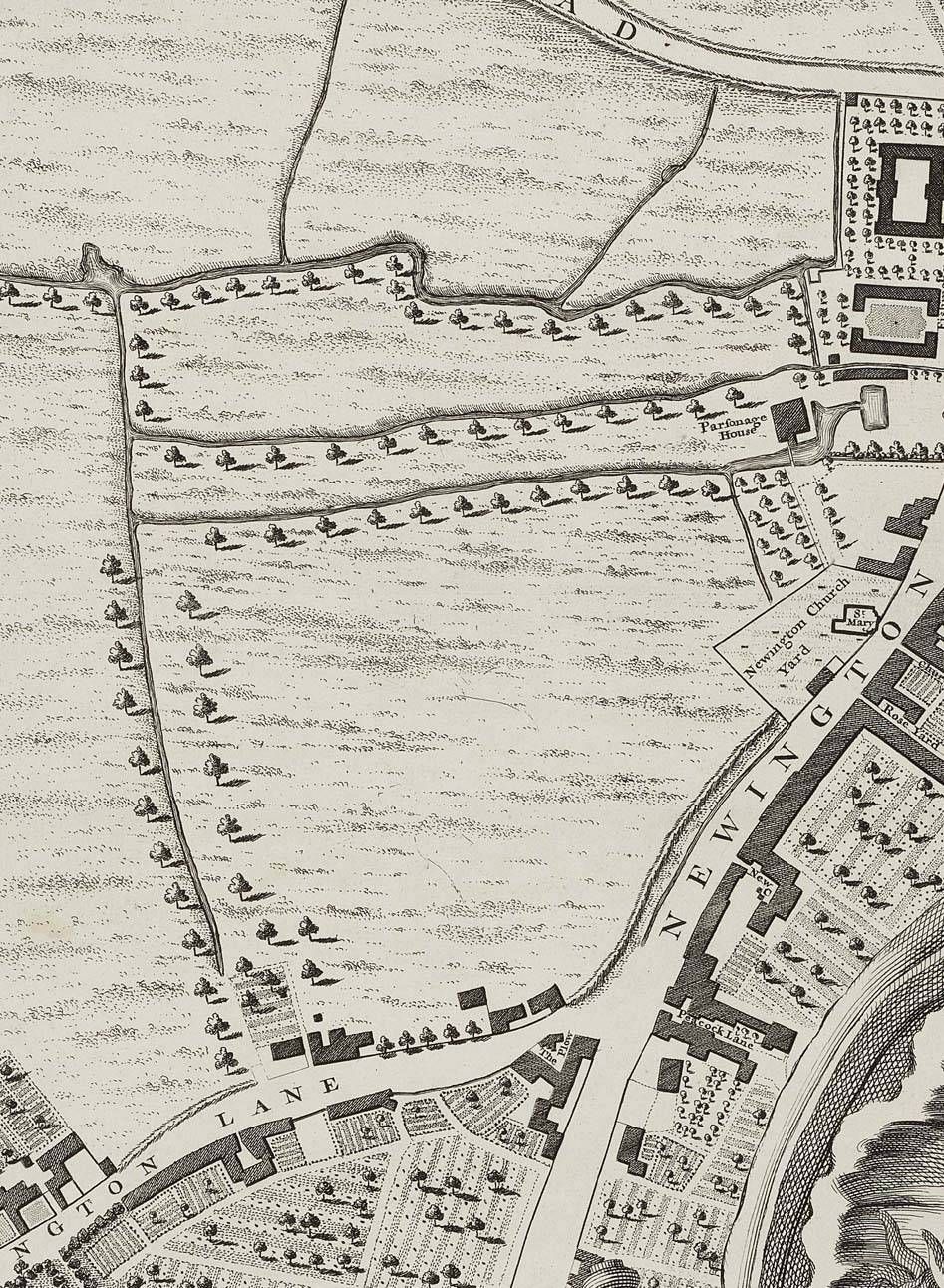
Peacock Lane, Newington Butts St. Mary's Church Rose Yard
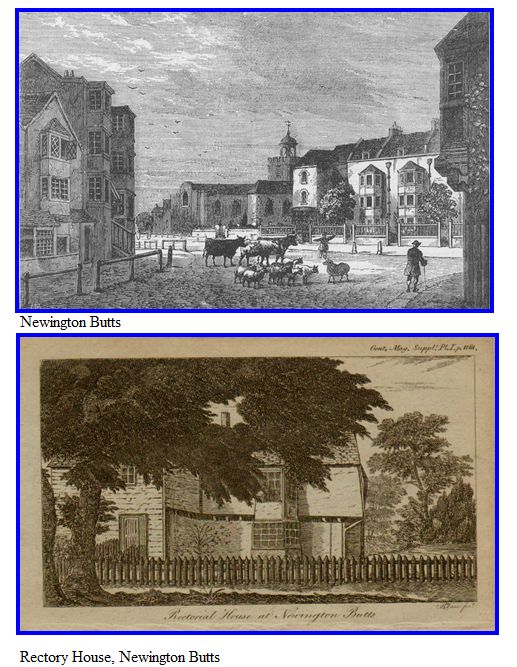
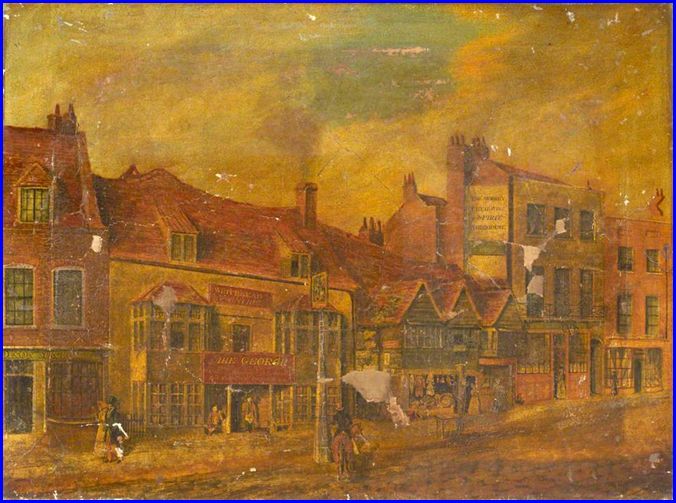
Newington Butts
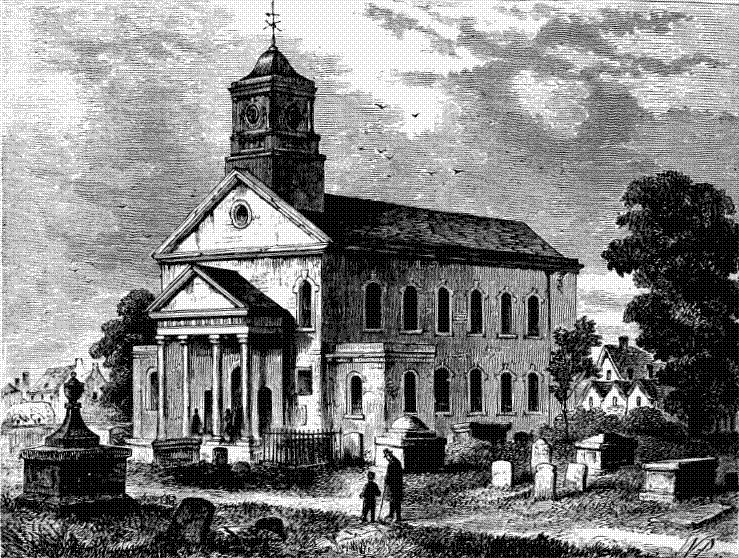
St. Mary’s Church - Parleton Tree “In Their Shoes”
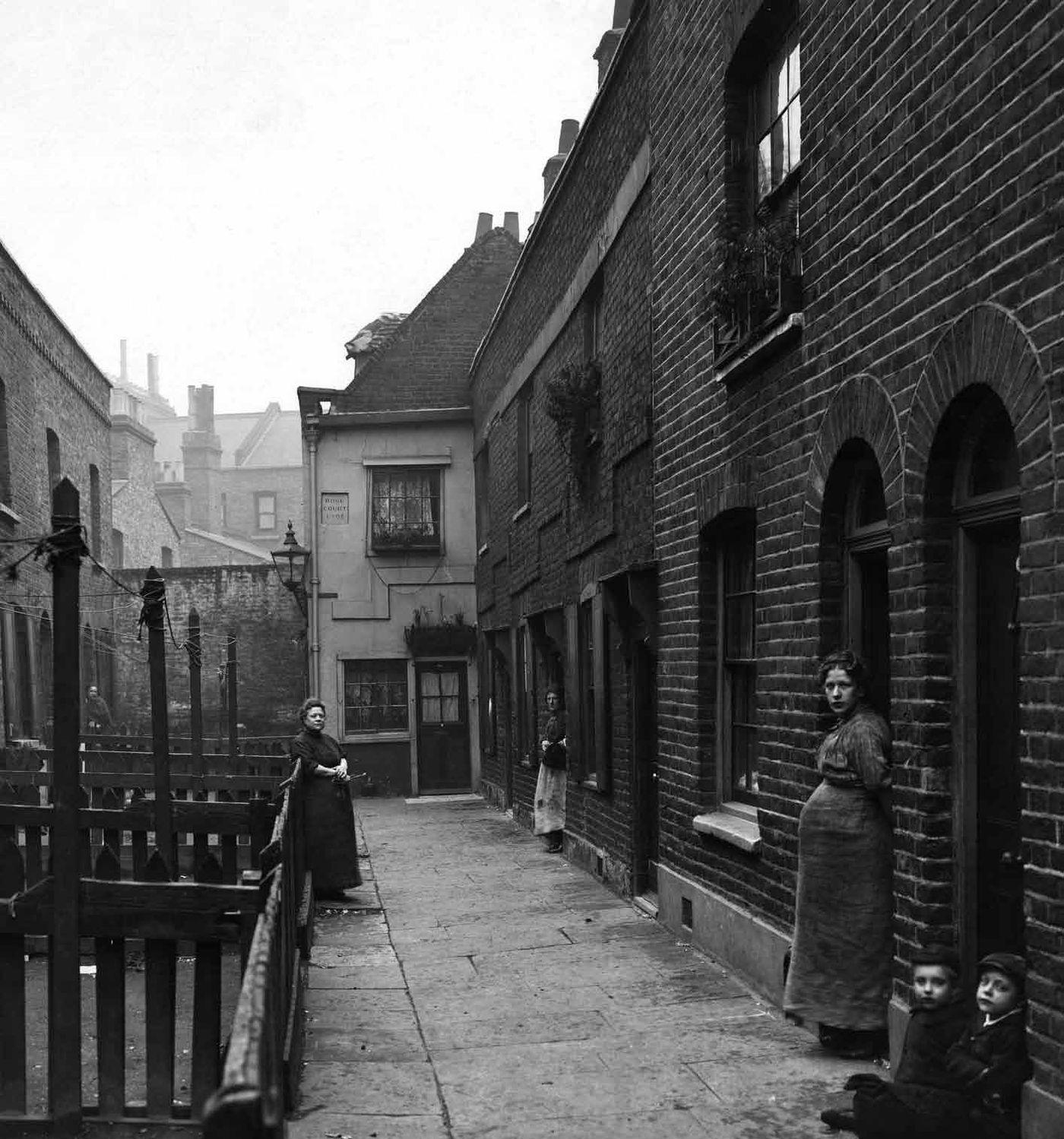
Rose Yard around 1900 – Parleton Tree “In Their Shoes”
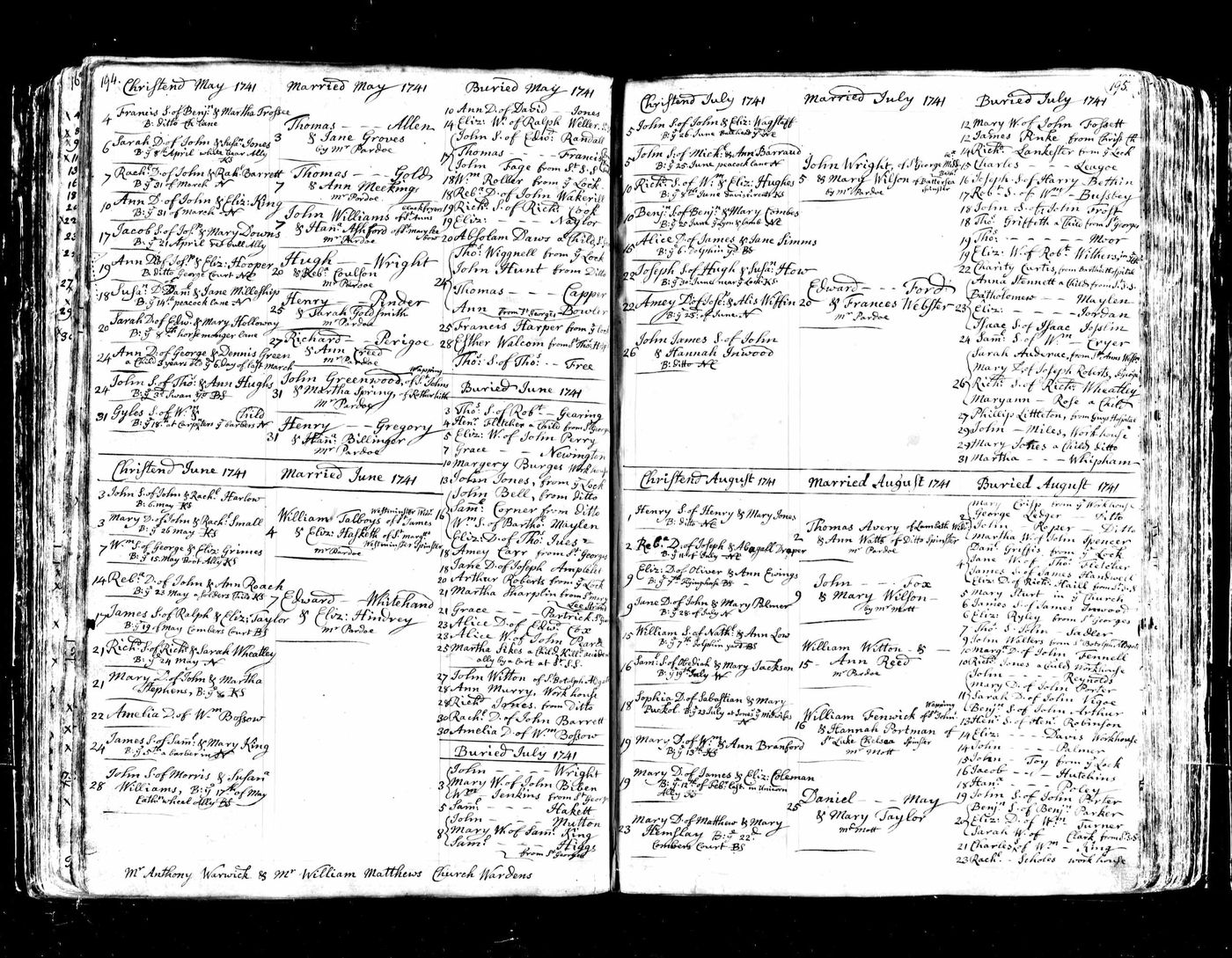
Christening Record of John Barraud 1741
|