King John of England was not a good king or a good husband. His marriage to Isabelle of Angoulême was no exception. Her age at the time of her marriage is a matter of debate and created some controversy. King John also stole her from a French nobleman who planned to marry her, creating resentment and discord on the Continent, resulting in King John losing his Plantagenet territories in France. There is little in the way of historical record on Isabelle but some of what remains is filled with wild rumors and outrageous gossip about sexual escapades.
Isabelle was the only child of Aymer Tallefer, Count of Angoulême and Alice, daughter of Peter de Courtenay, a descendant of King Louis VI of France. We know nothing of her childhood which was certainly cut short by her marriage. Estimations vary on the age of Isabelle at the time she wed King John from nine to fifteen. The best guess is she was the canonical age of twelve. Isabelle’s father was lord of a wealthy and strategically well placed province in southwestern France, situated between the Plantagenet territories of Poitiers and Bordeaux. In early 1200, Isabelle was betrothed to Hugh IX, Count of Lusignan and newly appointed Lord of La Marche by King John of England. This marriage alliance was greatly disturbing to King John as it would significantly upset the balance of power between Aquitaine, Lusignan, Angoulême and La Marche and create an ominous threat to his holdings in France.
John had recently become King of England after the death of his brother King Richard the Lionheart. He had been married to his cousin Isabella of Gloucester for ten years. The marriage had never been given the sanction needed by the Pope due to their being related within the prohibited degrees of consanguinity so John easily extricated himself from the union. John sent an embassy to Portugal to negotiate for a Portuguese bride and went to visit Hugh in Lusignan.
John may have wanted to curb the power of Hugh by taking his bride, or he may have fallen in love with Isabelle as she was supposedly very beautiful as her mother had been. Or, maybe it was a combination of both. A betrothal would have settled the matter but for some reason he chose to marry Isabelle. The records suggest that King Philip of France may have suggested the marriage. The embassy to Portugal was recalled. There were talks with Isabelle’s father on July 5th 1200, and they were married on August 24, 1200 in Bordeaux Cathedral, Gascony. John never compensated Hugh, alienating his family and leaving them furious.
At the beginning of October, John and Isabelle crossed the Channel to England. Isabelle was crowned on October 8th at Westminster Abbey. They then made their way to Wiltshire where John lodged her at Marlborough and left on a royal tour. Later that year, Isabelle accompanied John to a meeting with the King of Scots, William I the Lion at Lincoln and then they travelled back through England via Cumberland and York. They spent Christmas at Guildford and made their way to Canterbury for a crown-wearing on Easter, March 25, 1201.
Isabelle and John came to Normandy in May of 1201. They visited King Philip II of France in Paris in July and then Isabelle joined John’s sister-in-law, Queen Berengaria at Chinon. In 1202, Isabelle’s father died and she became Countess of Angoulême in her own right. However, she would not be formally recognized as Countess until 1206.
Isabelle remained in the south of France after her father’s death, possibly with her mother. In the autumn of 1202, John’s territories in France were surrounded on two fronts: the Bretons in the west and by King Philip to the east who was assaulting his castles. John got word in January of 1203 Isabelle was being pressed upon by insurgents at Chinon. John set off to relieve her but was waylaid when he heard one of his supporters had defected to King Philip. A detachment of mercenaries led by Peter de Préaux was sent to liberate her. After being freed, she spent more time with her mother before returning to England in December of 1203.
Isabelle had been promised various territories and holdings upon her marriage, mainly consisting of the lordships of Niort, Saintes and six other towns in Poitou and Anjou. When John’s mother, Eleanor of Aquitaine died in 1204, Isabelle was promised dower lands in England and Normandy, including towns in Exeter, Wilton, Ilchester and Malmesbury, the honour of Berkhamsted, a farm in Waltham, Rockingham and the county of Rutland. However, John bestowed the promised lordships to powerful local magnates and then confiscated the rents for himself. She also never received the obligatory “Queen’s gold” that her predecessors Eleanor of Aquitaine and Berengaria of Navarre had benefited from. In 1207, John decreed the “Queen’s gold” was not to be paid to Isabelle and pocketed the money for himself.
Isabelle is only mentioned in one charter from 1204 and she issued no charters in her own name as queen. Instead of giving Isabelle her own household, John came up with the unusual idea of having her stay with his first wife, Isabella of Gloucester. She also spent time at Marlborough in the home of Hugh de Neville, whose wife was at one time the lover of John. Although Isabelle didn’t spend a lot of time with John, the marriage must have been fairly harmonious because they had five legitimate children between the years 1207 and 1215. She had her first child in October of 1207, a son named Henry, at Winchester Castle. She would give birth to another son Richard of Cornwall, a daughter named Joan who would become Scottish queen, and another two daughters named Isabella and Eleanor.
After the birth of Henry, Isabelle lived for a while in Corfe Castle. While John was generous in his allowances for Isabelle to buy clothes, there are hints that Isabelle was kept in captivity and in financial straits. John may have demeaned and scorned her by not paying her expenses adequately and not giving her the privileges normally enjoyed by her predecessors. John was not faithful to her and continued his sexual peccadillos.
In February 1213, King Philip of France was threatening invasion. John and Isabelle with their son Richard sailed from Portsmouth to La Rochelle. A month later they were in Angouleme and then moved on to Angers by June. Isabelle wanted to marry her daughter Joan to Hugh X de Lusignan, the son of her former fiancé. The betrothal became official in May. Isabelle’s hand in the negotiations of the betrothal of her daughter may have caused the Poitevin lords to resent John even more and they refused to fight with him against the French King. In 1214, John lost his holdings in Normandy to King Philip. In October, Isabelle and John returned to England.
The loss of Normandy was John’s own fault, of course but John accused Isabelle of being the cause. The chroniclers followed suit as they couldn’t openly blame John. The chroniclers also accused Isabelle of all sorts of wild escapades. But there is no real hard evidence Isabelle was sexually promiscuous or engaged in incestuous relations.
After their return to England, the barons rose against John, forcing him to acknowledge and seal the Magna Carta. The political situation was tenuous. John probably felt the need to take measures to ensure Isabelle’s safety. A mercenary and favored servant of John’s named Terric the Teuton, along with an armed guard, accompanied Isabelle from Freemantle to Berkhamsted. In December, she was moved to Gloucester, then Winchester in May of 1215 and on to Marlborough and Bristol in 1216. Wales was in a state of rebellion and uprising during this time too and this could be why she needed to be carefully safeguarded and watched over by armed men.
After the sealing of the Magna Carta, John immediately repudiated its terms, resulting in the First Barons’ War. The barons invited Louis of France, son of King Philip to become king of England. Louis was on his way to invade when John died on October 19, 1216.
Isabelle was in Bristol when she got word of John’s death. Louis was defeated and paid to return home. Isabelle’s son was now King Henry III and she attended his coronation at Gloucester Cathedral on October 28, 1216. A regency council was established for Henry which didn’t include her. She made three grants for salvation of John’s soul and never mentioned him again. She either had no interest in a role in the ruling of England or came to the realization she never would be allowed to participate. She appears to have desperately wanted to go home. She demanded vociferously from the regency council that she be given all she was entitled to from her marriage settlements and from being queen and they did relent and release her properties to her. She left four of her children in England and returned to Angoulême in 1217, taking her daughter Joan with her, ostensibly to deliver her to her betrothed.
Isabelle’s cousin had wrested her rights in Angoulême from her in her absence. She spent three years regaining her rights and establishing her government. Then, in a very strange turn of events, Isabelle married Hugh X de Lusignan, her daughter’s fiancé and the son of her prior betrothed early in 1220. She needed an ally to help her as Countess of Angouleme. The English demanded she return Joan to England but Isabelle in essence held her daughter hostage to obtain her dower rights in France, which had been promised to her upon her marriage to John. Eventually, King Henry and King Alexander II of Scots arranged a marriage and Joan was returned to England. Her wedding to Alexander was celebrated on June 19, 1221.
With Hugh’s de Lusignan’s marriage to Isabelle, he became Count of Angoulême, thereby fulfilling the prophecy of John’s nightmare when he took Isabelle as his wife. Together they founded the abbey of Valence and they had eleven children, most of whom survived, went on to marry and have issue. Her marriage proved to be unstable, with Hugh being unfaithful, bitter quarrelling and many threats of divorce. But Isabelle appears to have had some degree of personal authority during this marriage, issuing charters in her and her husband’s name.
Isabelle used the title of Dowager Queen of England for the rest of her life and utilized a royal seal. She and her husband renewed their fealty to France putting her in conflict with her son King Henry. Her son Richard of Cornwall was fighting with her over control of her territories. Amidst the fighting, King Henry III brought an expedition to France in 1230. Isabelle met with him for the first time since she left England in 1217, in spite of his resentment of her desertion of him. In 1231, she gave control of her re-confiscated English dower holdings over to Richard and by 1241, she was quarreling with the King of France. She and Hugh vacillated back and forth in loyalty between Henry and the French king.
Isabelle spent twenty years trying to construct an empire for herself through militancy and diplomacy without much to show for it. After a big showdown in July of 1242 at Taillebourg, Isabelle retired to the abbey of Fontevrault, becoming veiled as a nun on her deathbed. She died on June 4, 1246 and was buried in the abbey. Funeral rites were observed in England for her and gifts and endowments made. Her children by her second marriage played a fundamental and pervasive role for many years in the reign of her son, King Henry III of England.
from an article by THE FREELANCE HISTORY WRITER
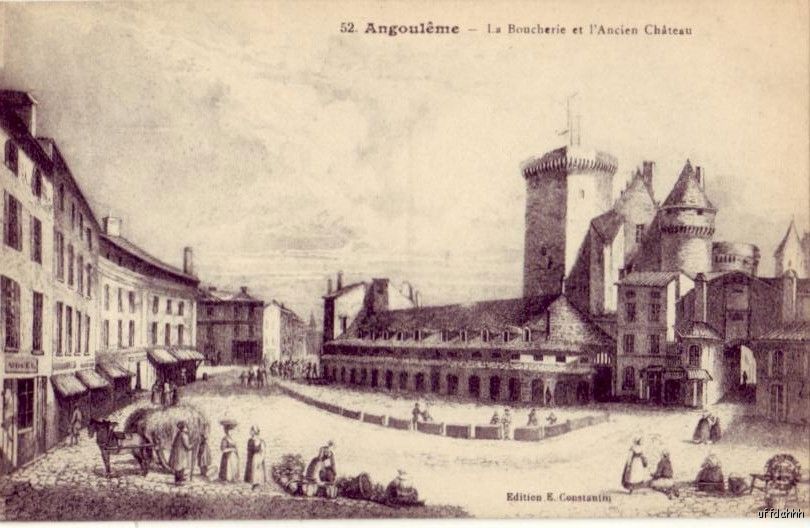
Market Place Angoulême
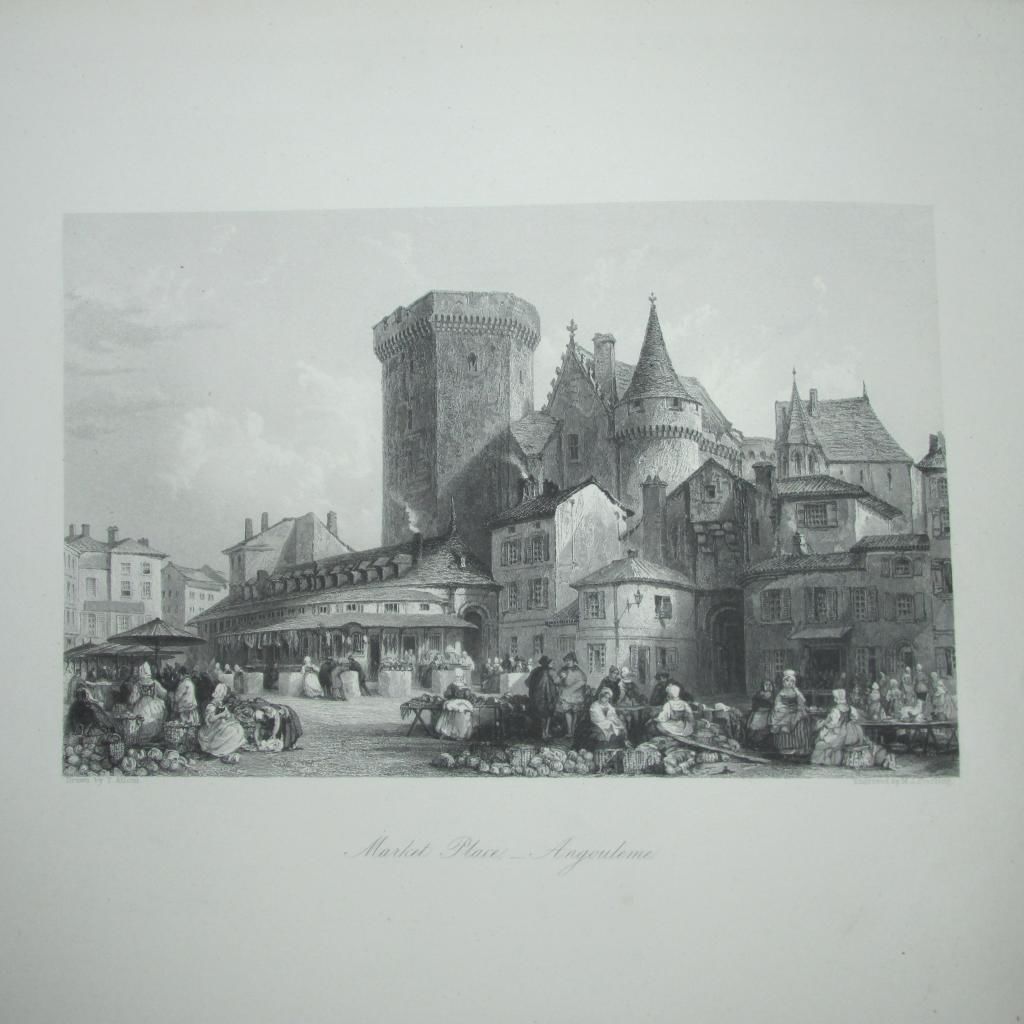
Market Place - Angoulême
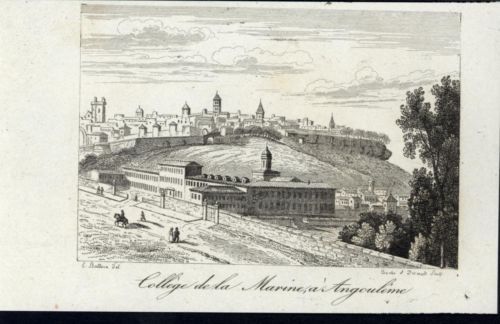
Early view of Angoulême
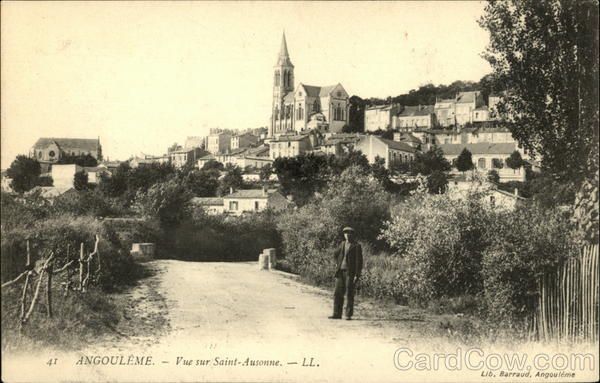
Angoulême
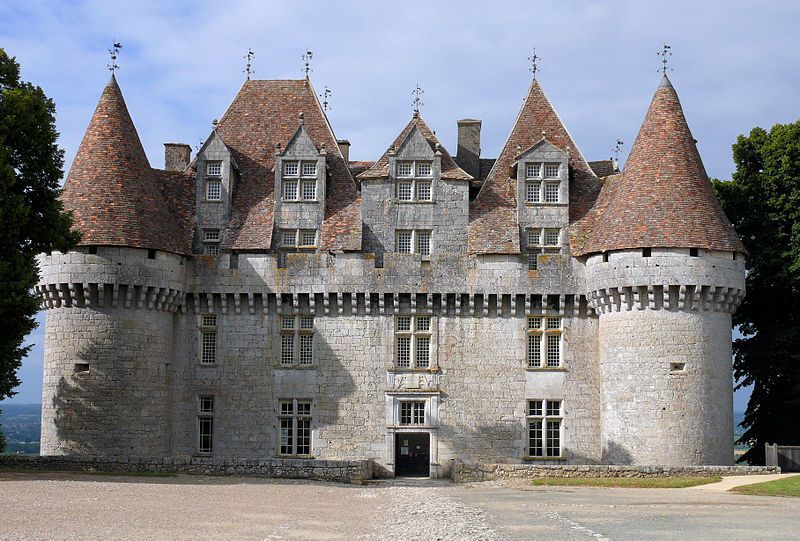
The castle (chateau) of Monbazillac
Chateau de Monbazillac
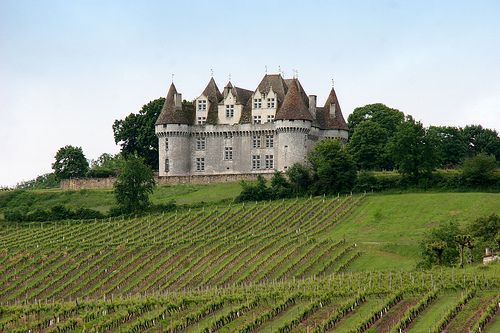
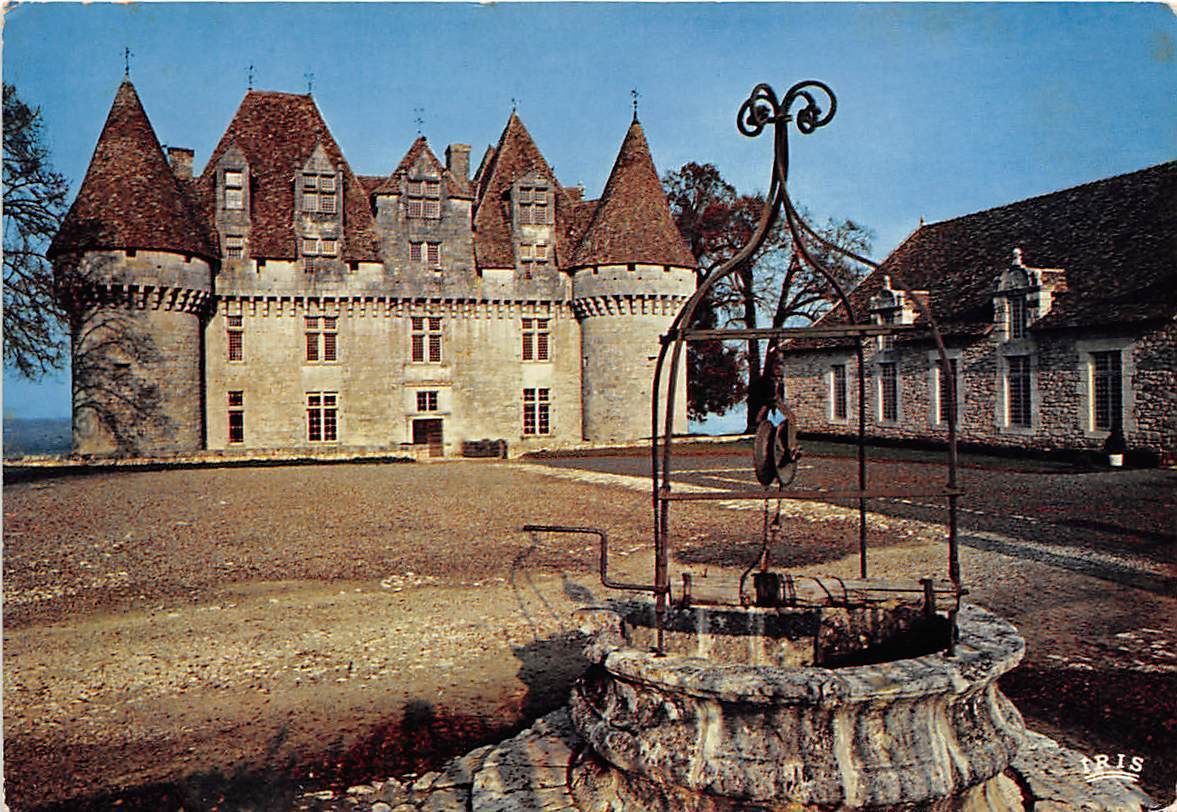
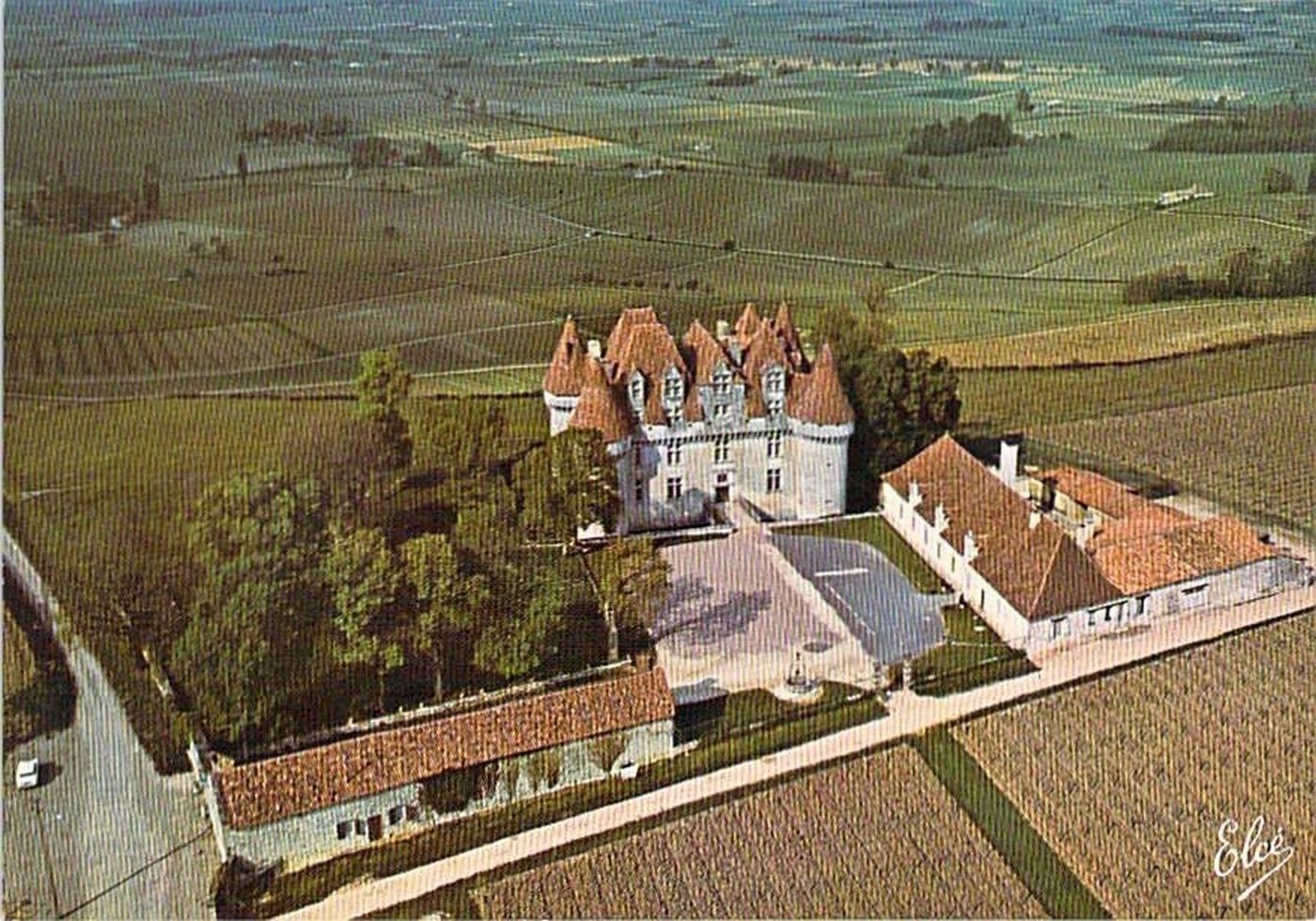
Around 1550, the family of Charles d'Aydie and his wife Jeanne de Bourdeille built a castle over a stream on the site of an ancient village originating from the 12th century which is still visible today in the courtyard. The original chapel was dedicated to St. Martin by monks who planted the first vines. Charles d'Aydie had obtained the lands of Monbazillac by a legacy of his mother Anne-de-Pons. The castle was built to a very simple plan: a rectangle, stationed at the corners with four large circular towers and access was by a fixed bridge with two arches. Defenses were built into the structure such as: battlements, loopholes and parapets and, whilst the chateau was originally built as a defensive chateau with towers, a moat and arrow slits, it incorporated the early Renaissance styles of architecture with large windows with rooms that are both light and airy. A well was dug into the stream, and this is now located in a room within the castle. The castle itself is now a listed historical monument, and dates from the 16th century. It is situated in an attractive wooded setting with far-reaching views across the region and the castle contains some finely decorated rooms and apartments and miraculously has come unscathed through the various wars and revolutions that have followed this period of history.
On visiting the Chateau de Monbazillac there are three floors to explore and in particular, on the ground floor are the reception rooms with their beautifully polished wooden floors and 17th century furniture.
The Huguenot Louis Bouchard Aubeterre who was born in 1570, bought the castle after the destruction of the village church for the second time in 1607. Louis Bouchard Aubeterre, became the master of the castle, as a reward for services rendered to King Henry IV and he also became the lordship of Monbazillac and a viscount. On his death, the castle passed to the Brizay family through his widow dame Marie of Montbazillac whose father was Jacques-de -Brizay, squire and Lord of Denonville, Lord of Avesnes and Mehény, and Lord of Belavilliers. The castle then passed to Pierre-de-Brizay who was the nephew of Marie of Monbazillac and, on the 22nd February, 1666, by a deed passed before the notary at the castle with the consent of his brothers, they ceded the castle and the title Lordship of Monbazillac along with all belongings including all rights of justice to nobleman Pierre-de-Barraud (Lord of Bakehouse and Montaut) for the sum of 75,000 livres tournois (francs). This Pierre-de-Barraud (also known as Berraud) was the 6th child of Pierre-de-Barraud (a town Councillor) and Jeanne-de-Sansart (see page 7). Both Pierre-de-Barraud and Jeanne-de-Sansart were born about 1586. Pierre (their son) took the title Viscount of Monbazillac and he then married his 1st cousin, Marie-de-Barraud on the 18th April, 1646 who then became the Vicountess of Montbazillac. Marie was the daughter of Jean-de-Barraud and Jeanne d’Alba born about 1625 and died 29th September 1705 at the castle of Monbazillac. It is mentioned that Marie Barraud the Viscountess was made to forswear her faith and renounce Protestantism to become a Catholic on the 29th August, 1668. Pierre Barraud however, died on the 12th July, 1682. On the 22nd October, 1685 the The Edict of Fontainebleau was signed, and the Edict of Nantes was revoked. The Edict of Fontainebleau banned Protestants the rights of worship and also prevented them working in many trades. Many Protestants were persuaded by force to become Catholics.
The archives of the castle were hidden from the troops who occupied both the castle and the village of Monbazillac but, when the village temple of Monbazillac was destroyed in 1682, Marie-de-Barraud allowed the villagers to worship in the castle under her protection in the area which is now the restaurant. Pierre-de-Barraud and Marie had no children, and after Pierre’s death, Marie then at the age of 60 was persuaded to marry Eleazar-de-Luxe (Baron of Capian, Lord of Gouran and Lataste) in 1685 and he then took the title Viscount of Monbazillac. Eleazar-de-Luxe was the second son of Joshua-de-Luxe and his wife Catherine, and his father instituted him as his heir in 1651. Eleazar first married Marie-de-Belrieu, daughter of Jean-de-Belrieu, the Baron of Viralez with a dowry of 6,000 pounds. In 1675 he was an Advocate General in the parliament, and an officer in the Picardy Regiment, but he was forced to resign from these positions as Protestants were then banned from public office.
There were no children from this marriage and, on Eleazar’s death around 1696 a dispute arose between the heirs of Marie’s mother’s family of D’Alba and the Marsoulier family for the title of Viscount of Monbazillac. The dispute escalated on the death of Marie-de-Barraud in 1705, and the commissioners instructed all creditors to show title of claims and, in 1705, Daniel d’Alba and his son David made an inventory of the Castle. Elisee-de-Marsoulier had already succeeded the title and he also stated that his mother, Anne-de-Barraud, a younger sister of Pierre (Viscount of Monbazillac) was given the title Viscount of Monbazillac by Marie through a deed on the 14th February, 1687. Daniel-d’Alba however also claimed to be the heir of his cousin, Marie-de-Barraud and claimed the inheritance and he engaged in a very large lawsuit against Elisee-de-Marsoulier. Finally, the outcome was that Elisee-de-Marsoulier kept the title, but conceded the castle to the d’Alba family. In 1777, the castle was bought by François Hilaire de Bacalan (1728-1804) and then became the property of the Bacalan Family and this allowed the building now classified as a historic monument to survive the French Revolution without damage.
oOo
.
The Huguenots
Huguenot was the name given to French Protestants in the 16th century. It is probably a corruption of the German word eidgenossen, meaning "confederates". Persecution of the Huguenots began during the Wars of Religion that raged throughout France between 1562 and 1598.
The first wave of Huguenot refugees fled France following the infamous Massacre of St Bartholomew in 1572. Ordered by Catherine de Medici, the mother of the French king, these attacks on Protestants lasted three days in Paris and six weeks in the Provinces. When they were over, nearly 100,000 people had been murdered. Pope Gregory XIII ordered a medal to be struck to celebrate the event. Religious turbulence continued until the Protestant Henry of Navarre succeeded to the French throne, in the process converting back to Catholicism. In 1598, Henry conceded tolerance of the protestant religion by issuing the Edict of Nantes. This gave the Huguenots some respite from the persecution they had suffered over the previous forty years. Another pope, Clement VIII, wrote to the French king complaining that "a decree which gave liberty of conscience to all was the most accursed that ever had been made". However, the protections granted by the Edict lasted for nearly a hundred years. Henry's grandson, Louis XIV, assumed personal rule following the death of his regent, Cardinal Marazin, in 1661. During the twenty years that followed, the Sun King resumed persecution of the Protestants, progressively increasing the repressive measures enacted against them. He banned the singing of psalms in private dwellings. He encouraged children to declare themselves against the religion of their parents. He authorized priests to intrude on sick Protestants and try to convert them lest they die "in heresy". He forbade communities from collecting tythes to support Protestant ministers. He forced Protestants to only bury their dead at daybreak or nightfall. He barred Protestants from holding public office, from serving as judges, advocates, or notaries, and from practicing as physicians, apothecaries, librarians, book-sellers, printers, or mail-handlers. Protestant women were forbidden to be midwives (in case they did not give Catholic baptism to children who might die soon after birth). By 1680, even mixed marriages between Catholics and Protestants were made illegal. As these restrictions grew more oppressive, Protestant families started leaving France. The restrictions on the livelihoods and movements of Protestants did little to stop the outflow of refugees - and it certainly did not result in them to converting to Catholicism. Neither had financial incentives - such as delaying payment on any debts for three years - attracted many converts (or any driven by the right motive). So starting in March 1685, initially in the region of Bearn, near the Spanish border, and later in towns like Angouleme, all across France, large numbers of rowdy troops, usually dragoons, started to be billeted in Protestant households - in numbers deliberately double the fair allocation the Catholic households might see. They were instructed to wreak whatever havoc took their fancy, and do anything short of killing their unwilling hosts to get them to abjure their religion. Dragoons fastened crosses to the barrels of their muskets and compelled Protestants to kiss them. They used the butts of those muskets and the flats of their swords to beat those who resisted, many of whom were crippled for life. They beat women with whips, struck them in the face with canes to disfigure them, dragged them through the mud by their hair, and much worse. The sound of drums and the breaking of their furniture were used to deprive people of sleep. Tobacco smoke was blown in their faces so that their resistance might break and they might convert just to be rid of their afflicters. Public opinion in England persuaded Louis' cousin, Charles II, to issue a proclamation at Hampton Court in July 1681 welcoming these refugees from France. The English king stated that he held "himself obliged in honour and conscience to comfort and support all afflicted Protestants who, by reason of the rigors and severities which are used towards them upon account of their religion, shall be forced to quit their native country."
Between 1670 and 1710, over 50,000 people reached England and another 10,000 made it to Ireland. Many Huguenots arrived in England in a destitute condition, and were in desperate need of the generous assistance that was provided by the Huguenot community and by general public subscription.