William Barrand was the first child, born in or about 1782 (no actual birth or baptism records) and he became a carpenter as his occupation. William, it appears was also a choirist as a child, and sang in Westminster Abbey and also at the Oxford Meeting at Drury Lane Theatre in 1793 at the age of 11, where his address in London is noted as Aldersgate Buildings, Goswell Street. He married Alice Young on the 6th April, 1804 in Shadwell, London, and the marriage was witnessed by William’s father, Thomas. (Was Alice Young any relation to Mary Young, the wife of John Barton (or Barlow), and whose daughter Mary Ann Barton (or Barlow) married John Barraud - son of Paul Phillip Barraud & Harriett Chapman? At the time of his marriage, or shortly after, William Barrand certainly lived at an address in London called Adam and Eve Court in Marylebone, Westminster, and the rent records show the rent paid between 1803 and 1807 and the house number as No: 1. William Barrand worked as a carpenter at the premises of Samuel Adams, a cabinet maker of No: 11 Adam and Eve Court at least until 1807.
Alicea or Alice Young: From the death records of Alicea or Alice Young, it presumes she was born in 1783/1784 or thereabouts, and the only records I have found in London which are a possible birth record of an Alice or Alicea is:- Alicea Young, birth date unknown but baptised on the 4th February, 1791 in St. Andrews Church, the daughter of Henry Young and Martha Hawes or Alice Young, born in 1792 and baptised 24th March, 1792, in Wandsworth, the daughter of Thomas Young and his wife, Ann which I do not think is possible. Whether Alicea was actually born in London or not is not known, but certainly at the time of her marriage to William Barrand in 1804, there is no mention of her being a minor on the banns certificate, so presumeably she was aged 21 or over at the time of the marriage, making her date of birth around 1783.
Name: William Barrand: Gender: Male
Address (Es): 10, Aldersgate Buildings, Goswell Street, London
Occupation: Occupation(s): music (a)
Personal notes: Notes: Choirist - gave grand performance in Westminster Abbey
Performed at the Oxford meeting in 1793 Source Date: 1794 Source Info: Listed in A Musical Directory for the Year 1794.
Published by R .H. Westley, Stationer, 201 Strand. Re-issued Royal College of Music, London, 1991
Record of William Barrand as a choirist
Goswell Street (As previously mentioned) …….Goswell Street seems to have become Goswell Road in the mid 1800's. If William was living at Aldersgate Buildings, Goswell Street in 1793 at the age of just 11 years old, then that must be the address that his parents, Thomas Barrand and Susannah Cook lived in at that time.
From the Lockie's Topography of London 1810,, Aldersgate Buildings is mentioned on Aldersgate Street at 91 -, 3/5 mile on the right from 66 Newgate Street, nearly opposite Charter House Square. The buildings were first mentioned in Horwood’s map of 1799.
A mention of Goswell Street - (Pickwick Papers: 72-73) “Goswell street was at his feet, Goswell street was at his right hand — as far as the eye could reach — Goswell street extended at his left: and the opposite side of Goswell Street was over the way”
Aldersgate Street
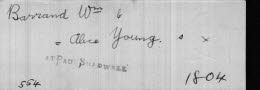
Pallots Register of the marriage of William Barrand and Alice Young
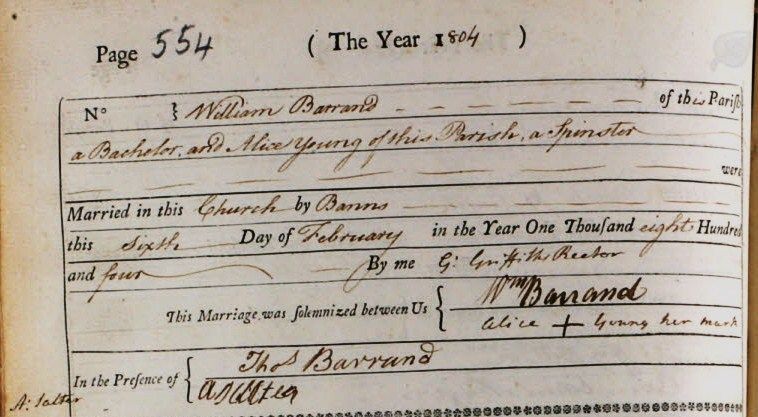
Parish Register of the Marriage of William Barrand and Alice Young with Thomas Barrand (father) as witness
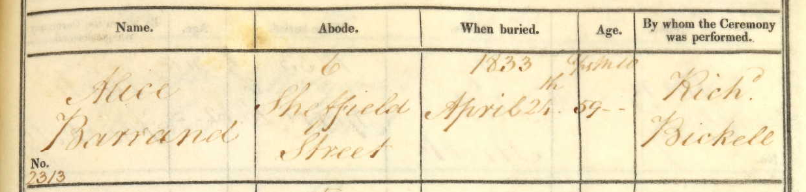
Death of Alice Barrand – 6 Sheffield Street.
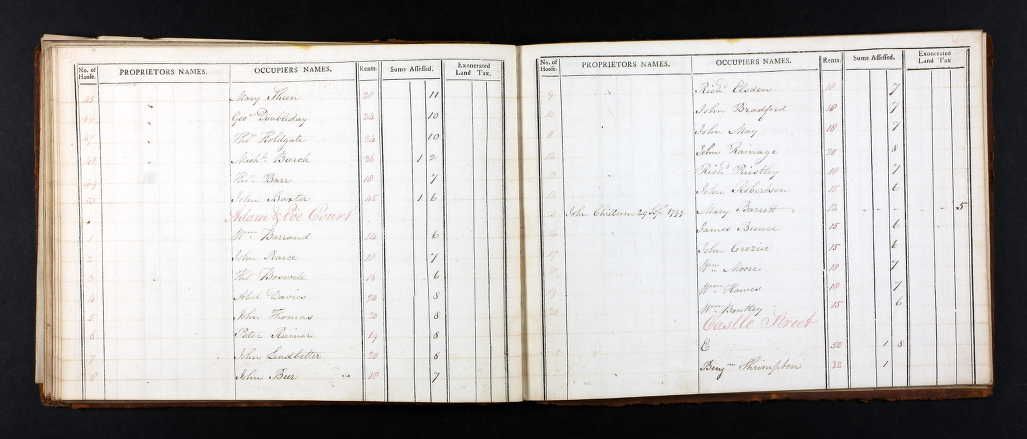
Adam + Eve Court
Tenant: Wm Barrand First Year of Section: 1803 Civil Parish or Ward: St Marylebone Borough or County: Westminster Call Number: MR/PLT/3901
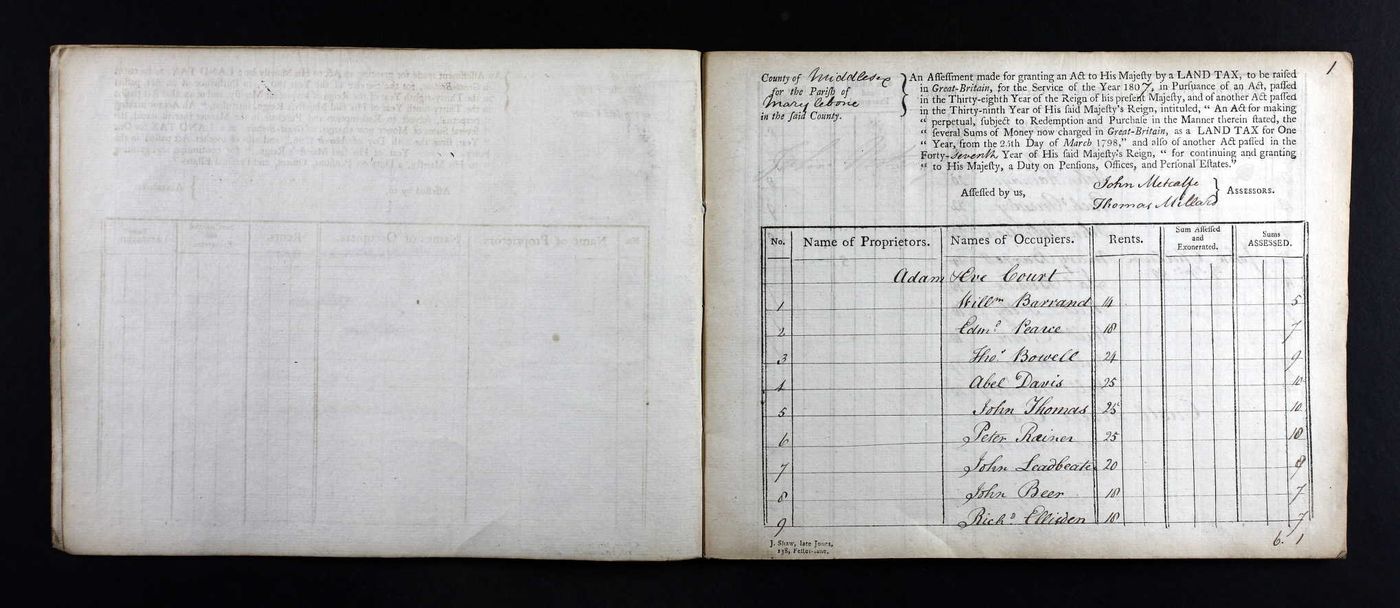
Adam + Eve Court
Tenant: Willm Barrand First Year of Section: 1807 Civil Parish or Ward: St Marylebone Borough or County: Westminster Call Number: MR/PLT/3941
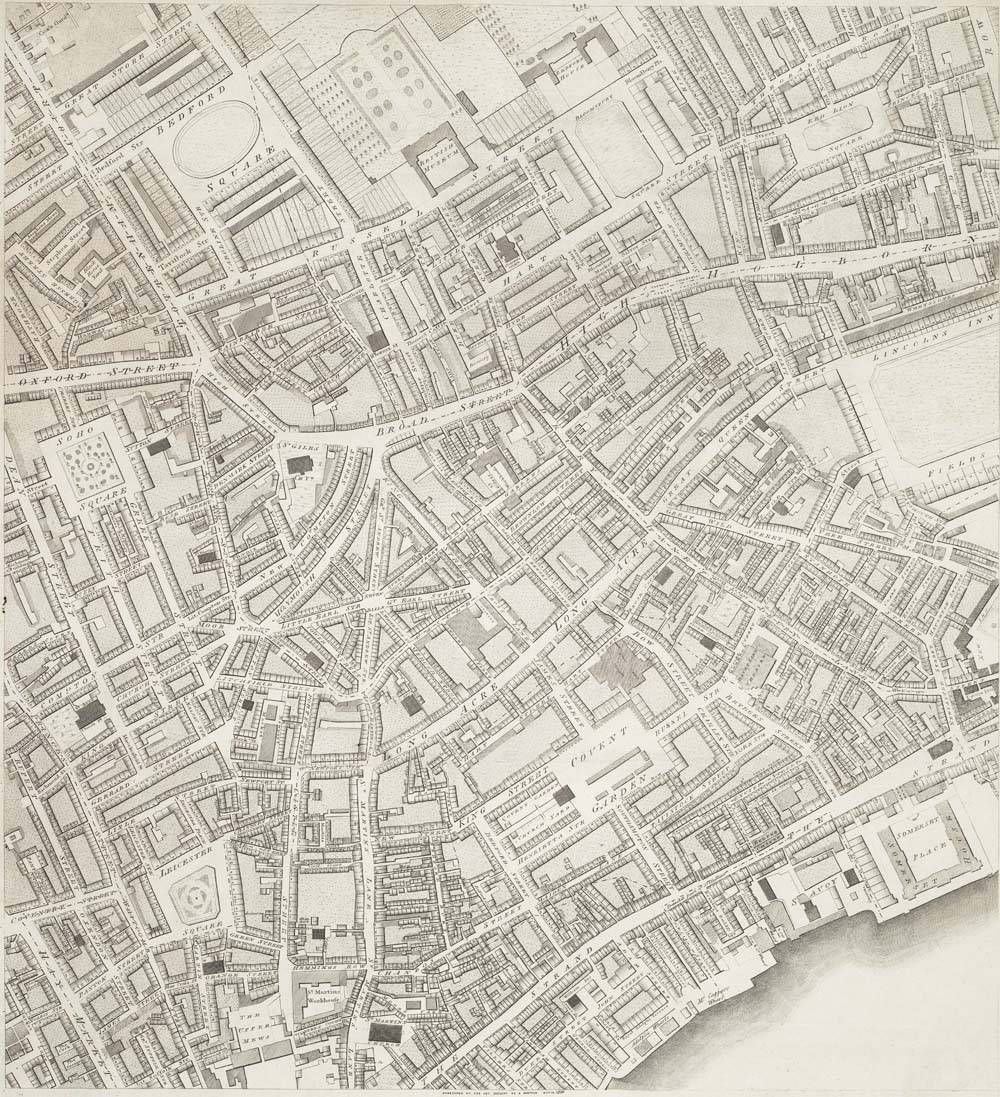
Adam and Eve Court:- The "Adam and Eve Public House" is described as "a detached road-side public-house." It stood, according to the plan of 1707, in the "Dung-field," near the present Adam and Eve Court, almost opposite Poland Street, in an adjoining field. "The House of Figg, a reputable prize-fighter," stood quite isolated from other buildings and Figg (1695-1734) appears to have been a noted character in his time. There were also regular boxing matches between women in the Public House. Today the Adam and Eve Public house has the address 77a Wells Street which is exactly behind William Barrand's house. The court once housed the pawnbroker’s shop where, in 1910, Crippen pawned his wife’s jewels and this would eventually lead to his capture. Adam and Eve Court today is about 320 yards east of Oxford Circus, on the north side of Oxford Street and in its early days must have been anything but a pleasant or safe thoroughfare for travellers. It is pretty clear from a description as "a deep hollow road, and full of sloughs, with here and there a ragged house, the lurking-place of cut-throats; insomuch, that one should never be taken that way by night in a hackney-coach to a worthy uncle's, or go in dread the whole way." At that time, the Court itself was a rough track forming the only convenient access to the Adam and Eve tavern. Building work started around 1725 until 1746 and, where the Adam and Eve pub stood, the street became a favourite place for balloon ascents by the end of the eighteenth century. At the beginning of the nineteenth century, in 1804 its west side was already unsavoury, particularly around the area of Whitfield Chapel (then the largest Nonconformist church in the world) whose burial grounds were notorious for bodysnatchers. A squalid thoroughfare linking Oxford Street and Tottenham Court Road which took its name from the eighteenth century Adam and Eve tavern and tea gardens, a once highly popular place of amusement set in rustic surroundings with large trees shading tables and benches where customers came to eat, drink and be entertained. By the turn of the century, suburban development had ruined the country atmosphere and, with a dwindling clientele, the tea garden was forced to close. The land was built over with only the original house surviving. Adam and Eve Court runs off north of Oxford Street, just a few hundred yards from Duke Street where Thomas Barrand (father) lived.
Now a fairly obscure and unremarkable central London thoroughfare, this was once the path to the Adam and Eve tavern, occupying a rural setting just to the north of Oxford Street (then known as 'Tyburn Way' or 'the way to Uxbridge') with the 'court' being a rough track providing access for drinkers.
Adam and Eve Court is mentioned in numerous articles in the Old Bailey records as being a "nest of thieves" Here are a number of offences that took place near to William Barrand's house which was (No: 1 Adam and Eve Court)
In 1802, a Richard Johnstone was found guilty of stealing a carpet belonging to a Mr. Eyre of Adam and Eve Court and was sentenced to death, aged 18.
A Mrs. Barrett lived at No 6 Adam and Eve Court and a lodger of hers (William Hall) stole a silver watch belonging to Mrs. Barrett in November 1805 and he was found guilty and sentenced to a week in Newgate Prison and fined 1s.
An Ann Walgrave was found guilty of breaking into Richard Taylor’s house at 4, Adam and Eve Court in 1810 and sentenced to 6 months in prison and fined 1s.
In 1814, a William Hambleton was found guilty of stealing a watch belonging to John Egleton of 10, Adam and Eve Court and was sentenced to 6 months in prison and fined 1s.
A
Other newspaper mentions of Adam and Eve Court:-
The body of Catharine Weale, 3 Adam and Eve Court was found with violent marks on her body 1805.
John Ford of 16, Adam and Eve Court was found in the river with his throat cut. 1815
In 1838, a body was found at No 6, Adam and Eve Court in the sewer when the premises were being cleaned. The body was in an advanced state of decomposition.
A William Robins (aged 12) of 12, Adam and Eve Court was acused of stabbing another youth with a knife. 1844
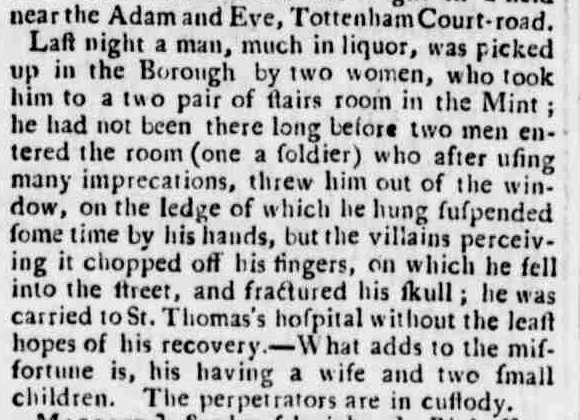
Stamford Mercury 03 July 1783
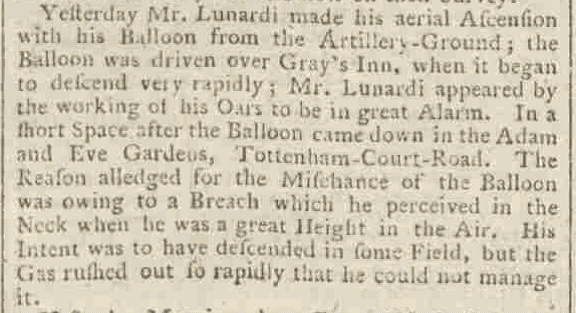
Northampton Mercury 16 May 1785
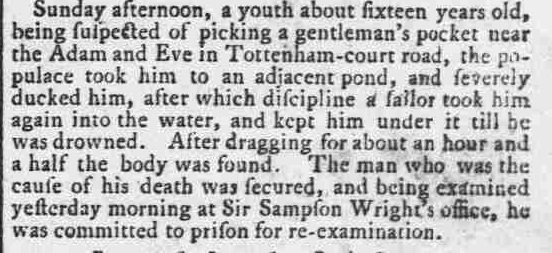
Leeds Intelligencer 20 September 1785
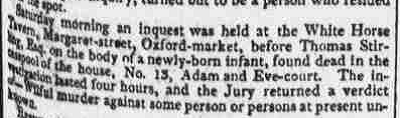
Morning Chronicle 03 May 1819
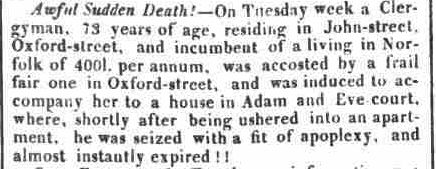
Worcester Journal 08 June 1820
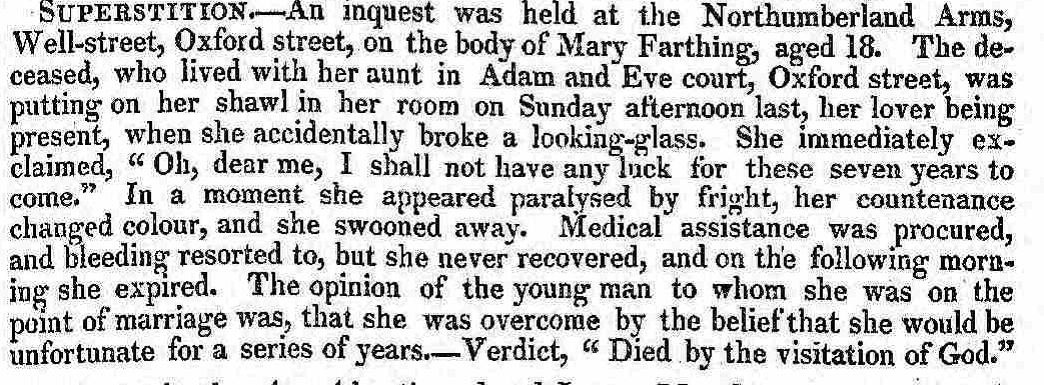
The Examiner 25 May 1834
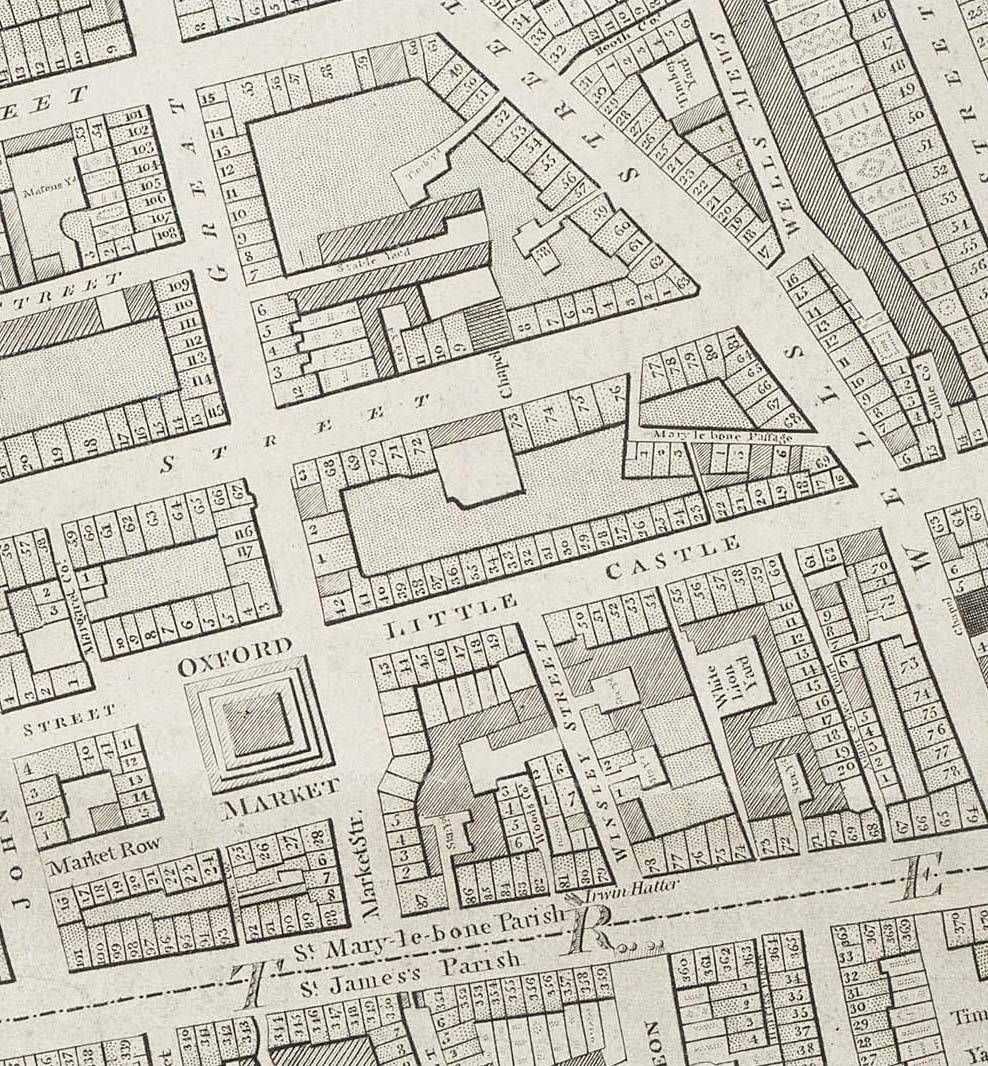
Oxford Street (Centre) No 1, Adam & Eve Court
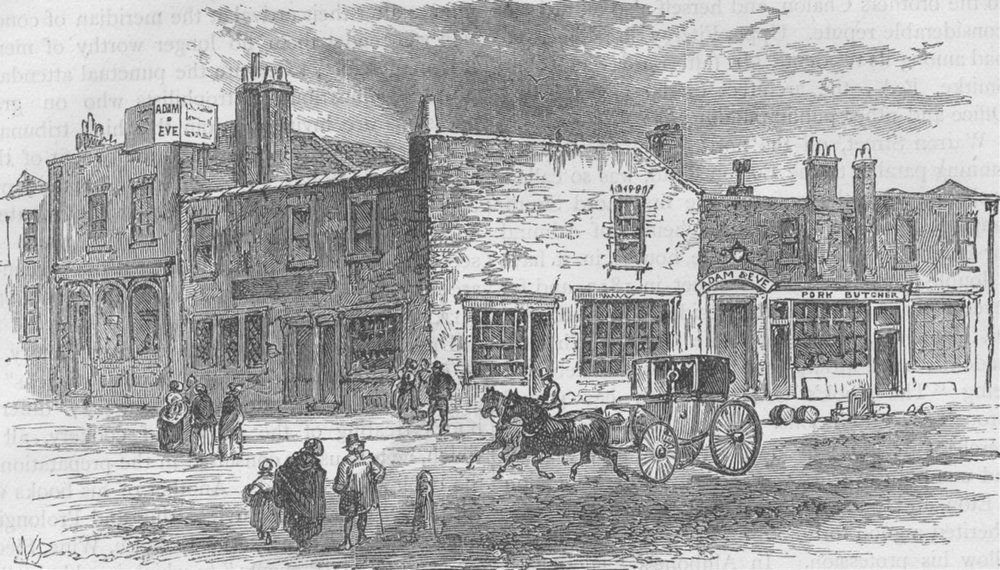

Adam and Eve PH, 1750 Street Sign Adam and Eve Court
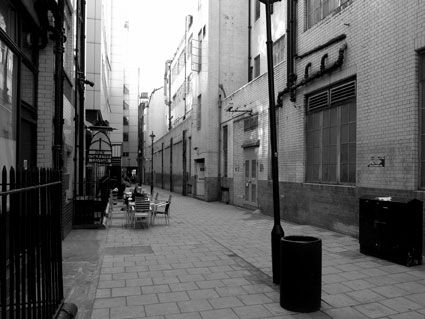
Adam and Eve Court Adam and Eve Court
| ||||||||||||||||||||||||||||||||||||||||||||||||||||||||||||||||||||||||||||||||||||||||||||||||||||||||||||||||||||||||||||||||||||||||||||||||||||||||||||||||||||||||||||||||||||||||||||||||||||||||||||||||||||||||||||||||||||||||||||||||||||||||||||||||||||||||||||||||||||||||||||||||||||||||||||||||||||||||||||||||||||||||||||||||||||||||||||||||||||||||||||||||||||||||||||
William Barrand and Alice Young had 6 children:
William, the first was born in 1805, died in 1807 and buried on the 27th November, 1807. I assume he was born in Adam and Eve Court at their home address in 1805, and also died there in 1807. There is a problem here in that: If William was still alive on the 29th March, 1807, then why was he not baptised at the same time as his younger siblings, Peter Cook Barrand and Ann Maria Barrand on the 29th March, 1807. One can only speculate as to the reason, but the most probable explanation is that William may have already been baptised between 1805 and 1807, of which I can find no record, or he was a sick child and they were unable to baptise William at the same time. There is no record of a baptism of William at St. Mary’s Church, Marylebone where the other children were baptised.
Name: Willm Barrand
Burial Date: 27 Nov 1807
Parish: St Marylebone
COUNTY: Middlesex
Borough: Westminster
Record Type: Burial
Transcript of the burial of William Barrand
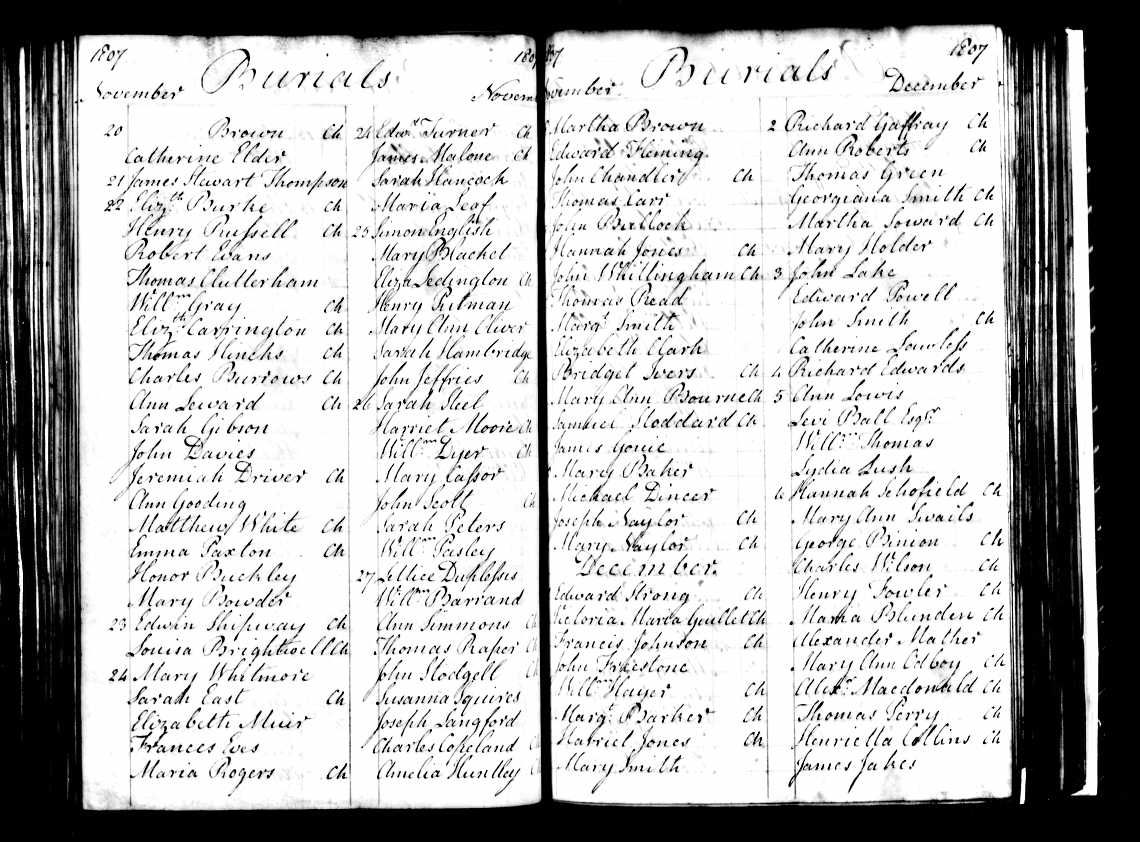
Burial record of William Barrand
Peter Cook Barrand, the second child of William Barrand and Alice Young was born on 13th August, 1806, and baptised on the 29th March, 1807 in St. Mary’s Church, St. Marylebone. Again it is most probable that he was born at their home address in Adam and Eve Court. The “Cook” element was from William’s mother who was Susannah Cook, and shows the importance the Cook name must have been to the Barrand family for them to use their name. There are no further positive records of Peter as a child however, there is a record of banns being read in July 1830 at St Martin in the Fields, London between Peter Cook Barrand and Elizabeth Tubb. There is also a record of the death of Elizabeth Tubb in August 1830, aged 19 (b 1811) and buried on the 29th August, 1830. Her address is shown as Castle Street. It appears they were never married. No further records can be found for Peter Cook Barrand since 1830.
PETER COOK BARREND Male
Event(s):
Birth: 13 AUG 1806
Christening: 29 MAR 1807 Saint Mary-St Marylebone Road, Saint Marylebone,
Parents:
Father: WILLM. BARREND
Mother: ALICIA YOUNG
Source Information:
Batch No.: Dates: Source Call No.: Type: Printout Call No.: Type:
C035245 1807 - 1810 0580907 Film 6903614 Film
IGI Record of the birth of Peter Cook Barrand
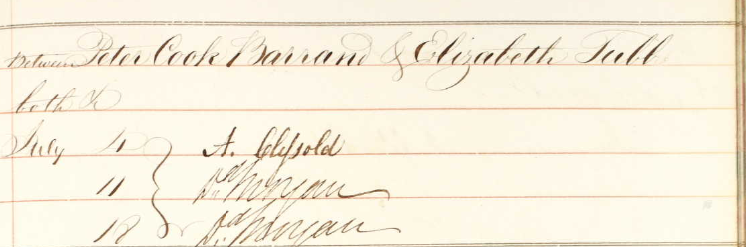
Banns of Marriage between Peter Cook Barrand and Elizabeth (Tubb) at St Martin in the Fields, London 1830
| |||||||||||
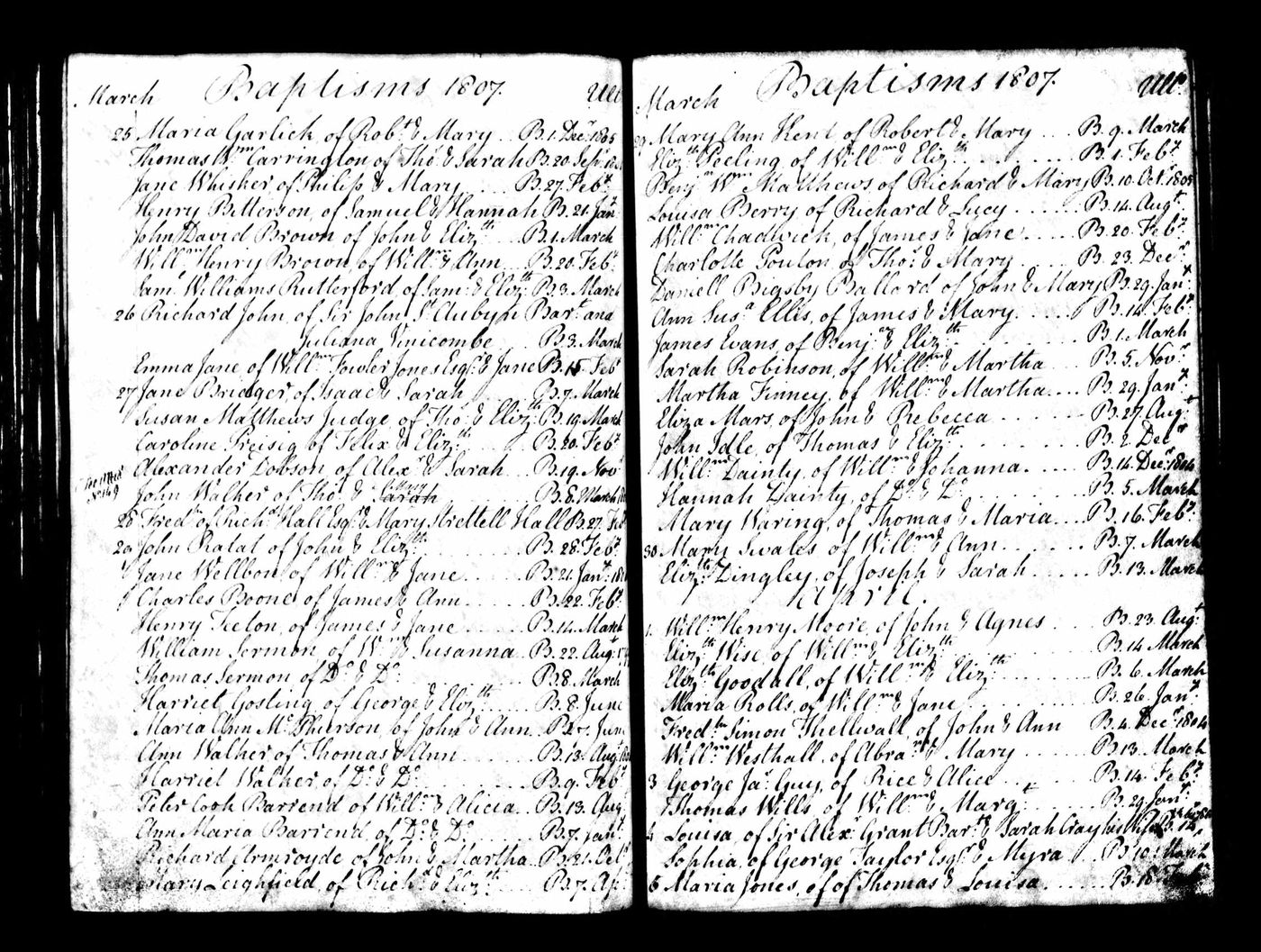
Baptism Record of Peter Cook Barrand also showing baptism of Ann Maria Barrand

Burial Record of Elizabeth Tubb.
Ann Maria Barrand (Barrend) was child No: 3 of William Barrand and Alicia Young, and she was born on the 7th January, 1807 and baptised on the 29th March, 1807 at St. Mary’s Church, St. Marylebone, on the same day as her brother, Peter Cook Barrand, and this date is shown on the Baptism record of Peter Cook Barrand (see above). There are no further records for Ann Maria since her baptism, and it is therefore most probable that she also died in infancy. The problem here is that, according to the registers, Peter Cook Barrand was born on the 13th August, 1806 and Ann Maria Barrand was born just 5 months later on the 7th January, 1807, which cannot be correct.
ANN MARIA BARREND Female
Event(s):
Birth: 07 JAN 1807
Christening: 29 MAR 1807 Saint Mary-St Marylebone Road, Saint Marylebone,
Parents:
Father: WILLM. BARREND
Mother: ALICIA YOUNG
Source Information:
Batch No.: Dates: Source Call No.: Type: Printout Call No.: Type:
C035245 1807 - 1810 0580907 Film 6903614 Film
IGI Record of the Baptism of Ann Maria Barrand (Barrend)
| John b 04/11/1752 d 1830 - 1840 Frances bc 1753 d 14/02/1831 = c 1778 William Potter b 1750 d 1818 Thomas bc 1755 d 1810 = 22/06/1781 Susan Cook bc 1752 d 1822 James b 1756 d 1756 Mary b ? d ? = 20/05/1783 John Jones Sarah b 1761 d 1833 James Mather b 1761 d 1823 Mary Turpin b 1732 d 1821 John Barraud b 1728 d c 1765 Re-married in 1772 to William Pether = 12/12/1772 William b 1760 = 29/05/1803 Margaret Callow b 1764 d 1837 = 04/03/1783 = 27/11/1752 Elizabeth b 1763 d 1827 Thomas b 1783 d 1836 Peter Cook b 1785 d 1839 Elizabeth b 1787 Ann b 1789 d in infancy John b 1791 d 1871 Joseph b 1793 d 1839 Eliza Cook b 1795 = 11/11/1804 Sarah Eliz. Took b 1780 d 1852 = 05/09/1810 Eliz. Corry b 1784 d 1837 = 15/11/1812 John Stead b 1778 d ? Ann Routeledge b 1795 d 1857 = 27/03/1827 Eleanor Page b 1795 d 1845 = 24/08/1815 James Able b 1779 d 1849 William b 1782 d 1835 = 06/04/1804 Alice Young b 1774 d 1833 = 29/11/1813 William b 1805 d 1807 Peter Cook b 1806 d ? Ann Maria b 1807 d 1807 ? Mary Ann Matilda b 1807 d c 1885 Elizabeth b 1811 d c 1851 William Cook b 1813 d 1813 | |||||||||||
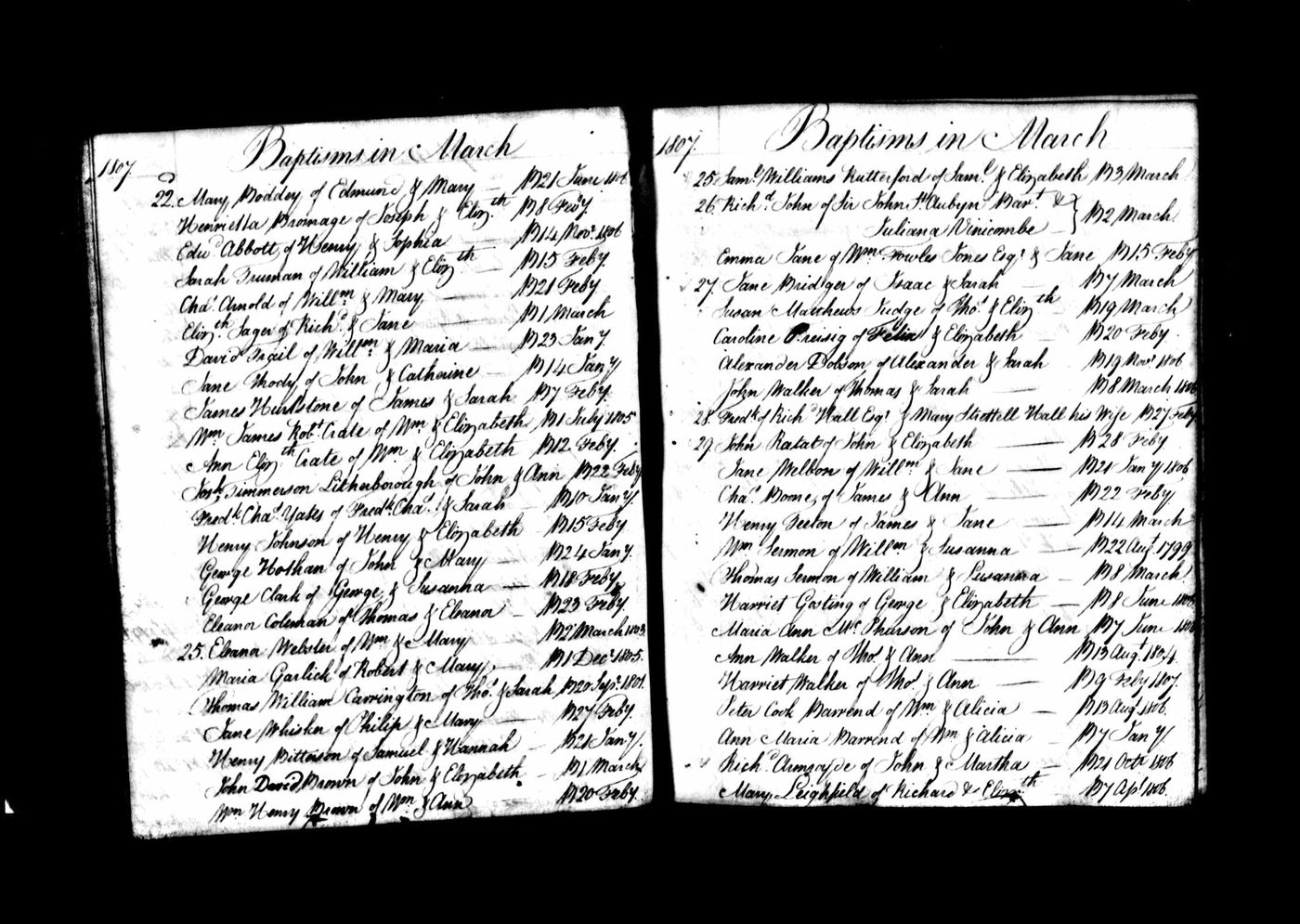
Baptism Record of Ann Maria Barrand
Mary Ann Matilda Barrand was the 4th child of William Barrand and Alicia Young, born on the 7th September, 1807 (according to the baptism records, but most probably 1808) as Ann Maria was born in January 1807, and it would be most unlikely that they had another living child within 7 months. Mary Ann Matilda however, was certainly baptised on the 18th June, 1809 in St. Mary’s Church, St. Marylebone.
Transcript of the Parish Register of the baptism of Mary Ann Matilda Barrand
Name: Mary Ann Matilda Barrand
Baptism Date: 18 Jun 1809
Parish: St Marylebone
County: Middlesex
Borough: Westminster
Parent(s): Willm
Alice
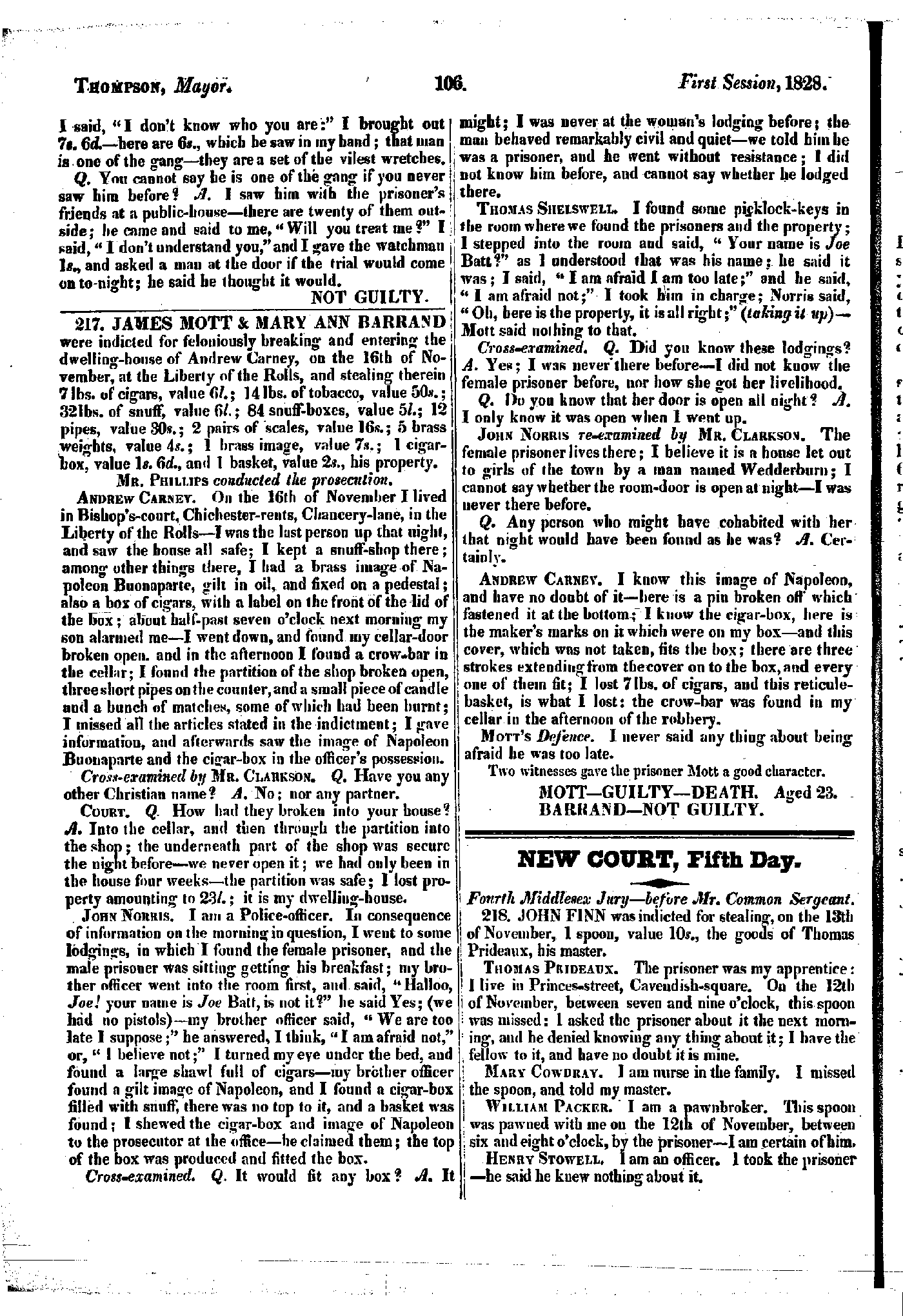
This Mary Ann Matilda, is the Mary Ann Barrand mentioned in the Old Bailey Court Records. She is shown as being 20 years old in December, 1828, therefore confirming her birth date around 1808. She was charged with theft and housebreaking.
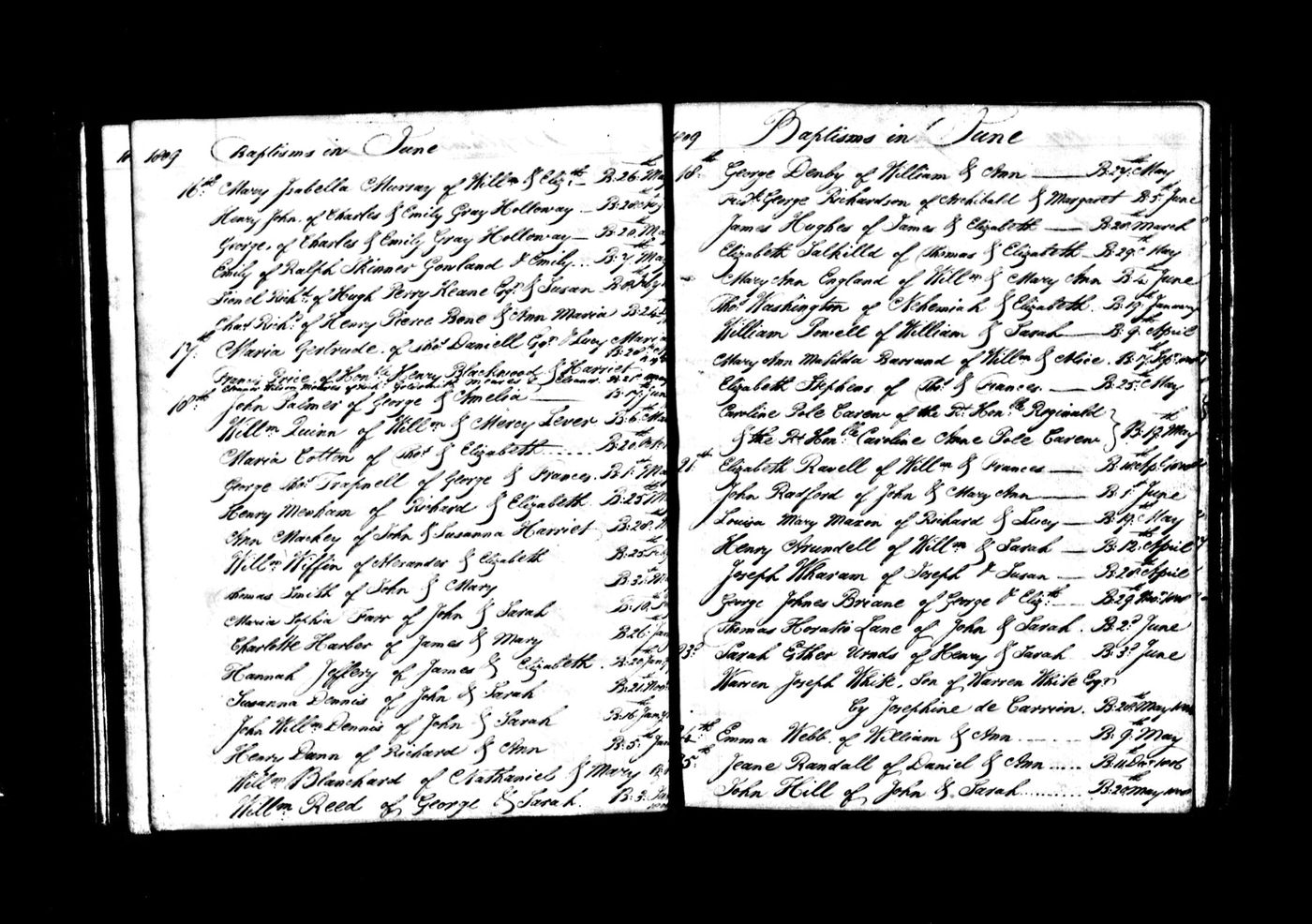
Copy of Parish register of the baptism of Mary Ann Matilda Barrand
| John b 04/11/1752 d 1830 - 1840 Frances bc 1753 d 14/02/1831 = c 1778 William Potter b 1750 d 1818 Thomas bc 1755 d 1810 = 22/06/1781 Susan Cook bc 1752 d 1822 James b 1756 d 1756 Mary b ? d ? = 20/05/1783 John Jones Sarah b 1761 d 1833 James Mather b 1761 d 1823 Mary Turpin b 1732 d 1821 John Barraud b 1728 d c 1765 Re-married in 1772 to William Pether = 12/12/1772 William b 1760 = 29/05/1803 Margaret Callow b 1764 d 1837 = 04/03/1783 = 27/11/1752 Elizabeth b 1763 d 1827 Thomas b 1783 d 1836 Peter Cook b 1785 d 1839 Elizabeth b 1787 Ann b 1789 d in infancy John b 1791 d 1871 Joseph b 1793 d 1839 Eliza Cook b 1795 = 11/11/1804 Sarah Eliz. Took b 1780 d 1852 = 05/09/1810 Eliz. Corry b 1784 d 1837 = 15/11/1812 John Stead b 1778 d ? Ann Routeledge b 1795 d 1857 = 27/03/1827 Eleanor Page b 1795 d 1845 = 24/08/1815 James Able b 1779 d 1849 William b 1782 d 1835 = 06/04/1804 Alice Young b 1774 d 1833 = 29/11/1813 William b 1805 d 1807 Peter Cook b 1806 d ? Ann Maria b 1807 d 1807 ? Mary Ann Matilda b 1807 d c 1885 Elizabeth b 1811 d c 1851 William Cook b 1813 d 1813 | |||||||||||
JAMES MOTT, MARY ANN BARRAND, Theft and housebreaking, 4th December 1828.
Reference Number: t18281204-217
Offence: Theft & housebreaking
Verdict: Guilty; Not Guilty
Punishment: Death
Related Material: Associated Records
See original 217. JAMES MOTT & MARY ANN BARRAND were indicted for feloniously breaking and entering the dwelling-house of Andrew Carney, on the 16th of November, at the Liberty of the Rolls, and stealing therein 7lbs. of cigars, value 6l.; 14lbs. of tobacco, value 50s.; 32lbs. of snuff, value 6l.; 84 snuff-boxes, value 5l.; 12 pipes, value 30s.; 2 pairs of scales, value 16s.; 5 brass weights, value 4s.; 1 brass image, value 7s. 1 cigar box, value 1s. 6d. and 1 basket, value 2s. his property.
MR. PHILLIPS conducted the prosecution.
ANDREW CARNEY: On the 16th of November I lived in Bishop's-court, Chichester-rents, Chancery-lane, in the Liberty of the Rolls - I was the last person up that night, and saw the house all safe; I kept a snuff-shop there; among other things there, I had a brass image of Napoleon Bonaparte, gilt in oil, and fixed on a pedestal; also a box of cigars, with a label on the front of the lid of the box; about half-past seven o'clock next morning my son alarmed me - I went down, and found my cellar-door broken open, and in the afternoon I found a crow-bar in the cellar; I found the partition of the shop broken open, three short pipes on the counter, and a small piece of candle and a bunch of matches, some of which had been burnt; I missed all the articles stated in the indictment; I gave information, and afterwards saw the image of Napoleon Bonaparte and the cigar-box in the officer's possession.
Cross-examined by MR. CLARKSON: Q. Have you any other Christian name?
A. No: nor any partner.
COURT. Q. How had they broken into your house? A. Into the cellar, and then through the partition into the shop; the underneath part of the shop was secure the night before - we never open it; we had only been in the house four weeks - the partition was safe: I lost property amounting to £23; it is my dwelling-house.
JOHN NORRIS. I am a Police-officer. In consequence of information on the morning in question, I went to some lodgings, in which I found the female prisoner, and the male prisoner was sitting getting his breakfast; my brother officer went into the room first, and said, "Halloo, Joe! your name is Joe Batt, is not it?" he said Yes; (we had no pistols) - my brother officer said, "We are too late I suppose;" he answered, I think, "I am afraid not," or, "I believe not;" I turned my eye under the bed, and found a large shawl full of cigars - my brother officer found a gilt image of Napoleon, and I found a cigar-box filled with snuff, there was no top to it, and a basket was found; I showed the cigar-box and image of Napoleon to the prosecutor at the office - he claimed them; the top of the box was produced and fitted the box.
Cross-examined: Q. It would fit any box? A. It might; I was never at the woman's lodging before; the man behaved remarkably civil and quiet - we told him he was a prisoner, and he went without resistance; I did not know him before, and cannot say whether he lodged there.
THOMAS SHELSWELL: I found some picklock-keys in the room where we found the prisoners and the property; I stepped into the room and said, "Your name is Joe Batt?" as I understood that was his name; he said it was; I said, "I am afraid I am too late;" and he said, "I am afraid not;" I took him in charge; Norris said, "Oh, here is the property, it is all right;" (taking it up) - Mott said nothing to that.
Cross-examined: Q. Did you know these lodgings? A. Yes; I was never there before - I did not know the female prisoner before, nor how she got her livelihood.
Q. Do you know that her door is open all night? A. I only know it was open when I went up.
JOHN NORRIS re-examined by MR. CLARKSON. The female prisoner lives there; I believe it is a house let out to girls of the town by a man named Wedderburn: I cannot say whether the room-door is open at night - I was never there before.
Q. Any person who might have cohabited with her that night would have been found as he was? A. Certainly.
ANDREW CARNEY: I know this image of Napoleon, and have no doubt of it - here is a pin broken off which fastened it at the bottom; I know the cigar-box, here is the maker's marks on it which were on my box - and this cover, which was not taken, fits the box; there are three strokes extending from the cover on to the box, and every one of them fit; I lost 7lbs. of cigars, and this reticule-basket, is what I lost: the crow-bar was found in my cellar in the afternoon of the robbery.
MOTT'S Defence: I never said any thing about being afraid he was too late.
Two witnesses gave the prisoner Mott a good character.
MOTT - GUILTY – DEATH: Aged 23.
BARRAND - NOT GUILTY.
| |||||||||||
The Old Bailey Court records loosly mention that Mary Ann Matilda Barrand was a prostitute and working from a brothel and this is suggested by the well used comments of the time that “her door is open all night.” and “Girl of the Town.”
The name Wedderburn (as mentioned as the brothel-keeper) was Robert Wedderburn of Jamaican origin and who became both a preacher and brothel owner. He originally earned his living as a skilled, respectable tailor, although he never took an apprenticeship, and as economic conditions declined, he was forced to take almost any sort of work available. Sometime around 1786 Wedderburn married Elizabeth Ryan with whom he had either six or seven children by 1806. He was deeply affected by the preaching of a Methodist preacher in Seven Dials, where many of London's black poor lived. As a preacher, Wedderburn's fiery rhetoric continued and he was arrested for 'Blasphemous Libel' when he called Jesus a ``Bloody Fool'' He was found guilty and sentenced to two years in prison for petty theft, blasphemy, and keeping a bawdy house. which were served in Dorchester jail. After his release he tried unsuccessfully to restart his career as a preacher, and gradually sank into poverty. In 1819, Wedderburn’s Chapel at No: 10-12 Hopkins Street had a reputation of being full of undesirables and it was often described as a brothel. The chapel was registered as a Unitarian meeting house though it was really a converted hayloft. From then until 1828, his involvement in public life was minimal but at the end of 1828 he was almost destitute and again jailed for operating his brothel in Hopkins Street, Soho to finance his Christian Diabolist Chapel and, after his release in 1831, aged 68, he was arrested again for brothel-keeping, and causing an affray and brawling outside another of his brothels at Featherbed Lane, Fetter Lane which Robert Wedderburn described in court as "a refuge for destitute women rather than being used for prostitution" and he also claimed in his defence that a member of the very court which was trying him enjoyed the services of one of his resident women, called "Carroty Eliza" He was found guilty and sent to Giltspur Street Prison in London for two years hard labour.
He was apparently still alive in 1834 but it is not known when or where he died, but it is estimated that he died in 1835-6. He may be the "Robert Wedderborn" who died aged 72 in Bethnal Green and was buried in a non-conformist ceremony on 4 January 1835.
In 1828 it was reported that a gentleman called Edward Seller inquired to go … [with him] (Wedderburn) to his house near Drury Lane, promising unto him that he had pretty wenches … [he] [Seller] lodged next door for about six weeks, in which time he had the company of women several times in the chamber, and there was common resort of men and women unto the said house and they lay together and kept very evil rule and many of them that frequented and lodged there were Irish men and women.” Edward Seller stated “he dwelleth next door to Wedderburn’s and many times in the night gentlemen came to his house and enquired for wenches and being told that they mistake the house they then go to Wedderburn’s house and there they have entertainment”. The overseers’ accounts indicated that the house in question was in or near Hopkins Street and King Street.
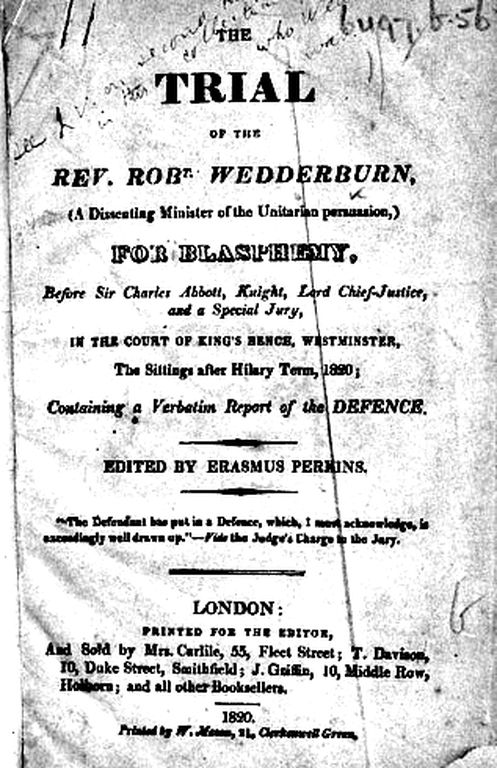
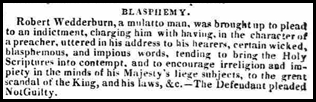
Newspaper article of the trial of Robert Wedderburn The Morning Post 27th January 1820
Mary Ann Matilda was forced to move when the brothel in Hopkins Street was closed down in early 1829 and she then worked in a brothel in Lazenby Court, Covent Garden.
BOW –STREET COURT:-
Sarah Levi, a Jewess, who keeps a brothel in Lazenby' court, was brought up by Sergeant Pearson, charged with having been inciting Mary Ann Barrand a young girl of the town to accost gentlemen in Covent-garden, the night before. The case was clearly established against the prisoner, but the officer had neglected to bring the girl, or any one whom she had accosted, forward.— Mr. Collett, for the defendant, asked whether the officers had not kept the prisoner in custody all night, although good bail was offered?—Inspector Rogers admitted that bail had been offered, and refused—Mr. Collett: But why was it refused? Inspector Rogers: Because the prisoner is a notorious character.—Mr Collett, (warmly): Sir, you have no right to determine who is or who is not notorious. You had no right to refuse bail.—Mr. Baker: I beg to differ with you, Mr. Collett. I think the officer acted most properly in rejecting bail for a woman whose character is so well known to them. The Act of Parliament empowers them to refuse bail in such cases.—As neither the gentleman who was accosted, nor the girl was present, no case to warrant a committal could be made out. The prisoner was therefore discharged, the Magistrate directing that all parties should be brought forward in future.
London Liberal Weekly Times July 29, 1829
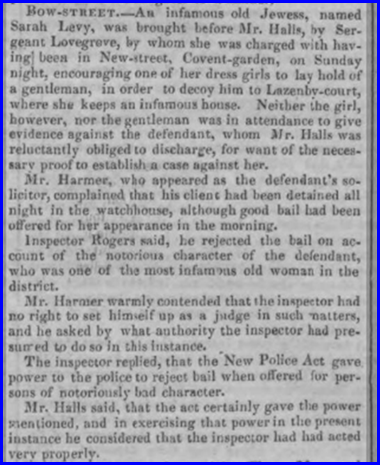
London Evening Standard 24 November 1829
Squalor and poverty of the most terrible kind existed in Lazenby Court and the adjoining Rose Street right up to the late 19th century. Multiple families lived in the cellars of houses, each tiny room providing accommodation for up to twenty or more people. Illness and disease were common place and in the damp and filthy conditions child deaths occurred daily. For the few men who had work, the return for their unskilled efforts was meagre and wayside thugs usually stole what little they earned as they trudged home on pay-day. Women, on the verge of despair, nightly left their crying and frail children to earn a few pence in the brothels of Rose Street and Lazenby Court. In the mid 19th century it was reported that water was available on only four days of the week and that it was polluted and unfit for drinking. Understandably, the area was high on the list of London's cholera infested districts. Lazenby Court, in Covent Garden, is a well-used narrow alley which forces commuters to settle into lines of one abreast. At its narrowest it is around 36 inches wide.
Disorderly houses in lazenby Court were complained of in 1819. In 1829 the Committee of Management set up a sub-committee to consider complaints of the presence of four 'Dung Pits'. On investigation, two were judged to be 'offensive', as the neighbours threw filth and dead animals into them. Only one was recommended for removal, however as the footway on the south side of the street was not made use of, and the abolition of all the pits would have been an inconvenience to stable-keepers. In the early 1830's brothels, particularly in and around Lazenby Court were attracting adverse attention:
Original Gas Lamp at Lazenby Court
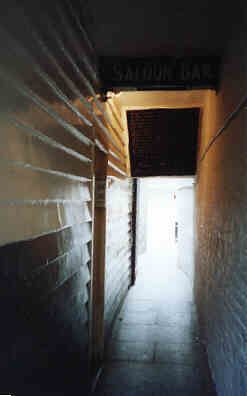
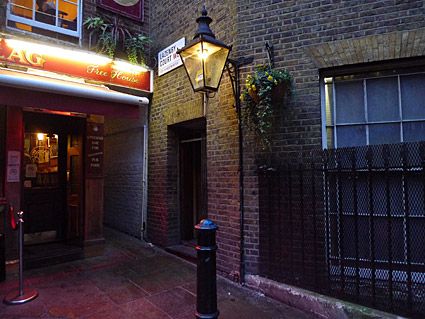
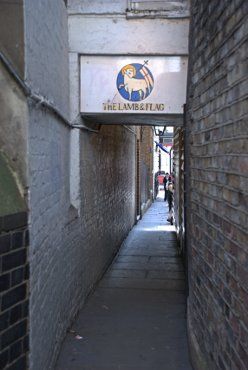
Mary Ann Matilda Barrand must have become pregnant while at Lazenby Court as she eventually moved to 48, Old Pye Street in Westminster, near the Westminster Abbey. There she gave birth to an illegitimate child out of wedlock, a William Barrand, born in December of 1829 but he died in 1830 aged 9 months and was buried in Westminster on the 12th August, 1830.
IGI Record of the burial of William Barrand
| Name: | William Barrand |
| Gender: | Male |
| Burial Date: | 12 Aug 1830 |
| Burial Place: | Westminster, London, England |
| Age: | 0 |
| Birth Date: | 1830 |
| Indexing Project (Batch) Number: | B02052-9 |
| System Origin: | England-EASy |
| GS Film number: | 560360 |
| Reference ID: | Vol E2899, Aug 1830 |
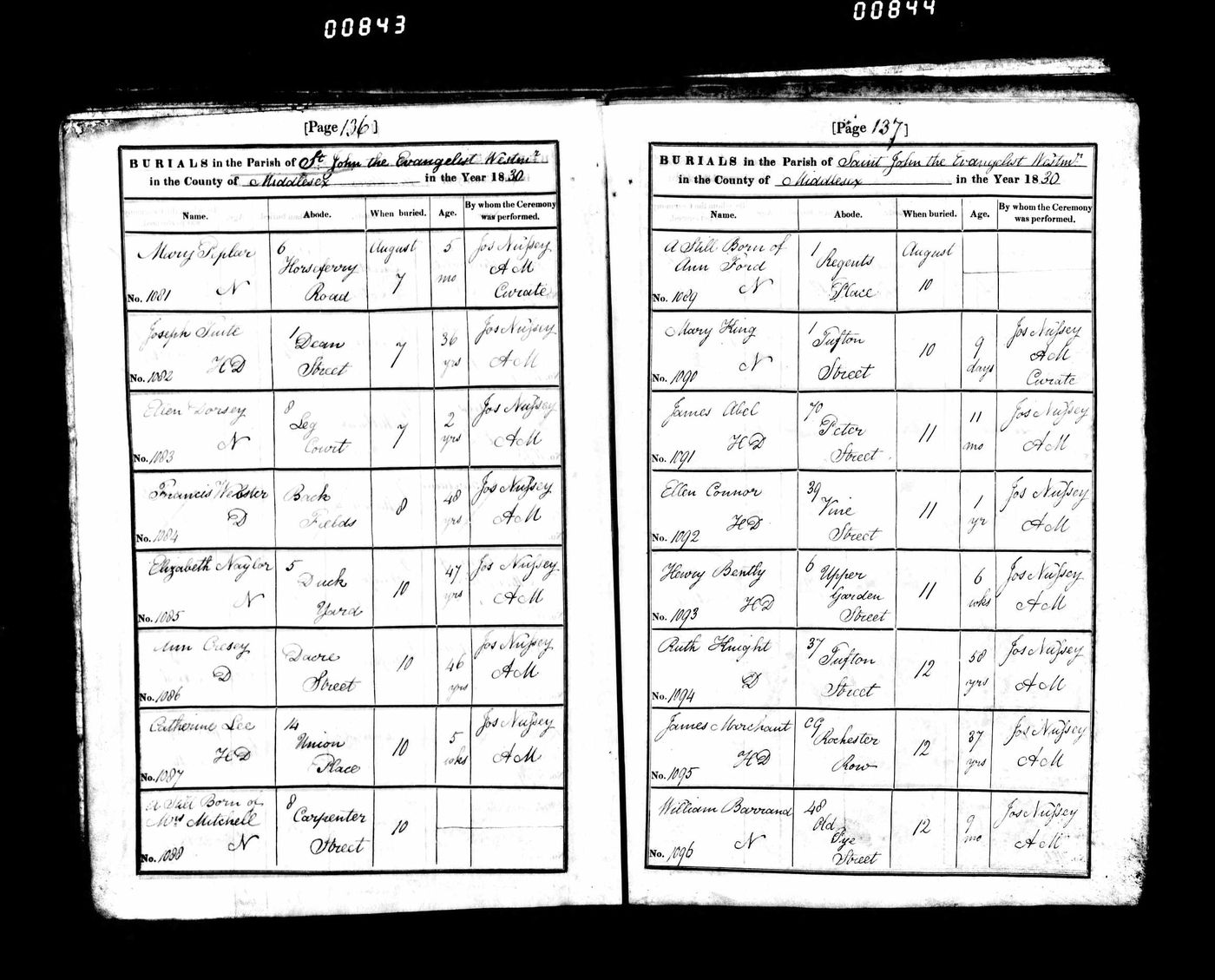
Death of William Barrand - aged 9 months. Living at 48, Old Pye Street.
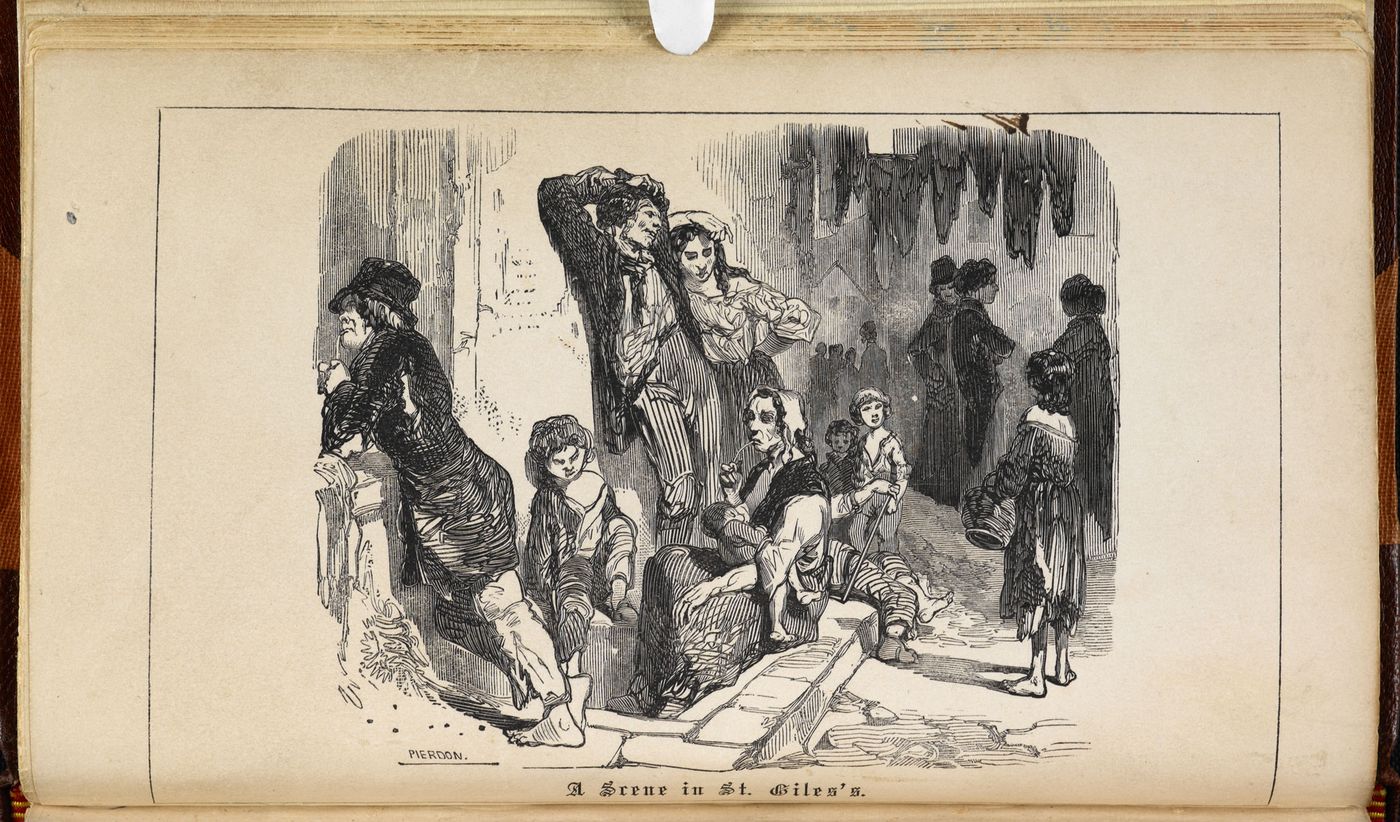
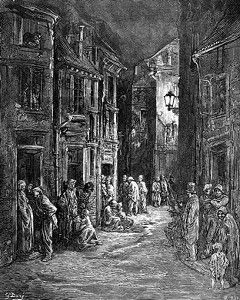
The area around Old Pye Street became known in Victorian times as the Devil’s Acre, with half the population estimated to be criminals. Here pubs acted as meeting places and receiving houses for stolen goods and the district was virtually a no-go area for the police.
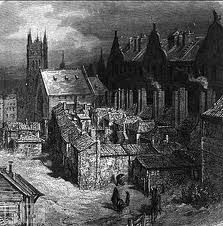
In the 1830’s the River Thames became so polluted that fish stocks disappeared and the dirty river was blamed for an outbreak of cholera. By the 1850’s there were sixty sewer outlets into the Thames which deposited black mud on the river bed. In 1858, during the hot summer months the notable ‘Great Stink’ caused by the polluted river drove the MPs from their river-facing rooms at Parliament! Dickens wrote to his friend that ‘The Thames at London is most horrible’ and that the smell was of ‘a most head-and-stomach distracting nature’. Old Pye Street - Devil's Acre - The Devil's Acre with the Palace of Westminster in the background is shown in an 1872 illustration by Gustave Doré. The illustration shows the Devil's Acre some years into the slum clearance, with the courtyard of small low-lying houses surrounded by multi-occupancy houses fronting onto Old Pye Street.
Street Scene Pye Street
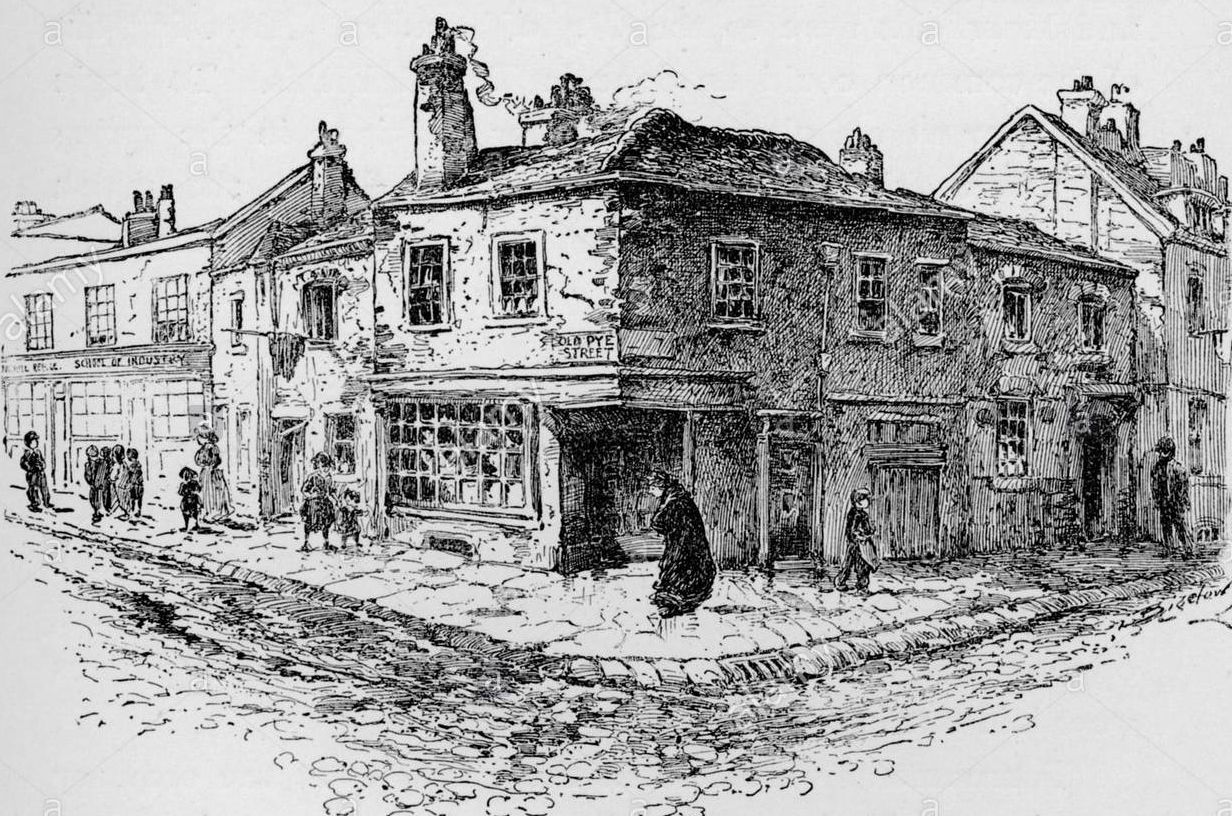
Old Pye Street and the Ragged School
The area around Old Pye Street, Great St Anne's Lane (now St Ann Street) and Duck Lane (now St Matthew Street), including most of the properties on those streets, was considered the worst. Prior to the 18th century the area was considered a desirable place to live, but in the middle of the 18th century gardens and courtyards were built over and the streets became "notoriously ill-paved and ill-maintained". Dwellings were built with the cheapest material, lacked ventilation, had poor lighting, and no drainage or sanitation facilities. In particular, poorer parts City of London had a lack of night soil affordability and in particular, service which resulted, as in other major cities in the culverting (covering over) of all of its small streams, such as the Tyburn, which created stench in remnant low flood plains of their lowest course which is a particular feature of Westminster, Lambeth Marsh and lowest areas of the docklands'
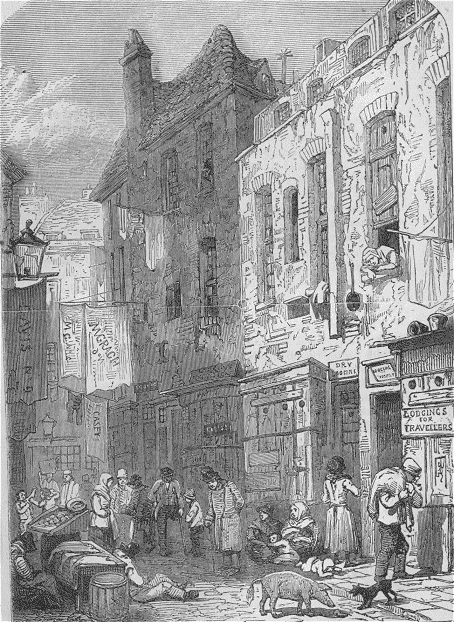
In Old Pye Street 10 to 12 people frequently lived in one room and the houses were mostly occupied by what a contemporary described as "mendicants (beggars), hawkers, costermongers, lodging house keepers, thieves and abandoned females of irregular and intemperate habits".
The street was lined with lodging houses and parts of Old Pye Street became known as "Irish Rookery". A 1851 census of the common lodging houses on Old Pye Street, which was the centre of the Devil's Acre, describes the occupation of 20 lodgers in one house as: five "beggars", two "beggar bricklayers", one "labourer beggar", one "needlewoman beggar", one "hawker", one "labourer bricklayer" and one "errand boy". Initially the birthplace of 15 of the 20 was noted as unknown and they were later identified as Irish.
“I crossed over the road, and entered the openly acknowledged high street of thieves and prostitutes. It is called Pye Street, and has no mock modesty about it—no desire to conceal its real character. Threepenny "homes for travellers" abound on both sides-yellow, sickly, unwholesome places, many of them far below the level of the road, and entered by a kind of pit. Many of the houses have no flooring on their passages; and there is nothing for the barefooted children to stand upon but the black, damp, uneven earth. A child, dirty and nearly naked, was hanging out of one of the old-fashioned casement windows; and in the summer time it is no unusual thing to see about fifty coarse women exhibiting themselves in the same manner. The yards at the back of the houses contain little mountains of ashes and vegetable refuse; and a dust contractor's yard, in the centre of the street, seems to have burst its bounds, and to have nearly poured out its oyster-shells, cabbage-stalks, and broken china into the open thoroughfare. Shorthaired young men, with showy handkerchiefs round their neck, and tight corduroy trousers, were standing at most of the doors, looking pretty sharply about them from under the peaks of their caps. A fiddler was playing a dancing tune to a mixed assembly of thieves and prostitutes, and a morning ball was being arranged on both sides of the pavement. Many of the side streets and courts about here are shored up with black beams to keep the houses from falling, which adds to their wretched appearance.”
Extract from Newspaper column 1840
Dickens described the area as the ‘Devil's Acre’ The Devil’s Acre was little more than a dismal swamp, home to a community of beggars, thieves, prostitutes, and charlatans. It was said that it was the area most ideal for housing criminals of all types as the police only made rare visits to the area—and when they did the local inhabitants vigorously repelled them. One report by missionary Andrew Walker described the extent of the depravity. He was shocked to discover that street orphans were taken off of the streets into ‘the School of Fobology’ which was based in the One Tun pub in Old Pye Street. The ‘Fagin like’ master of the school gave them a master class in the art of pickpocketing.
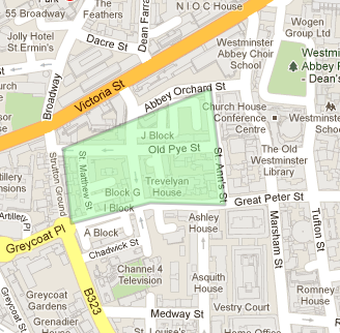
Modern map showing Old Pye Street
Streets around Old Pye Street
The Devil’s Acre
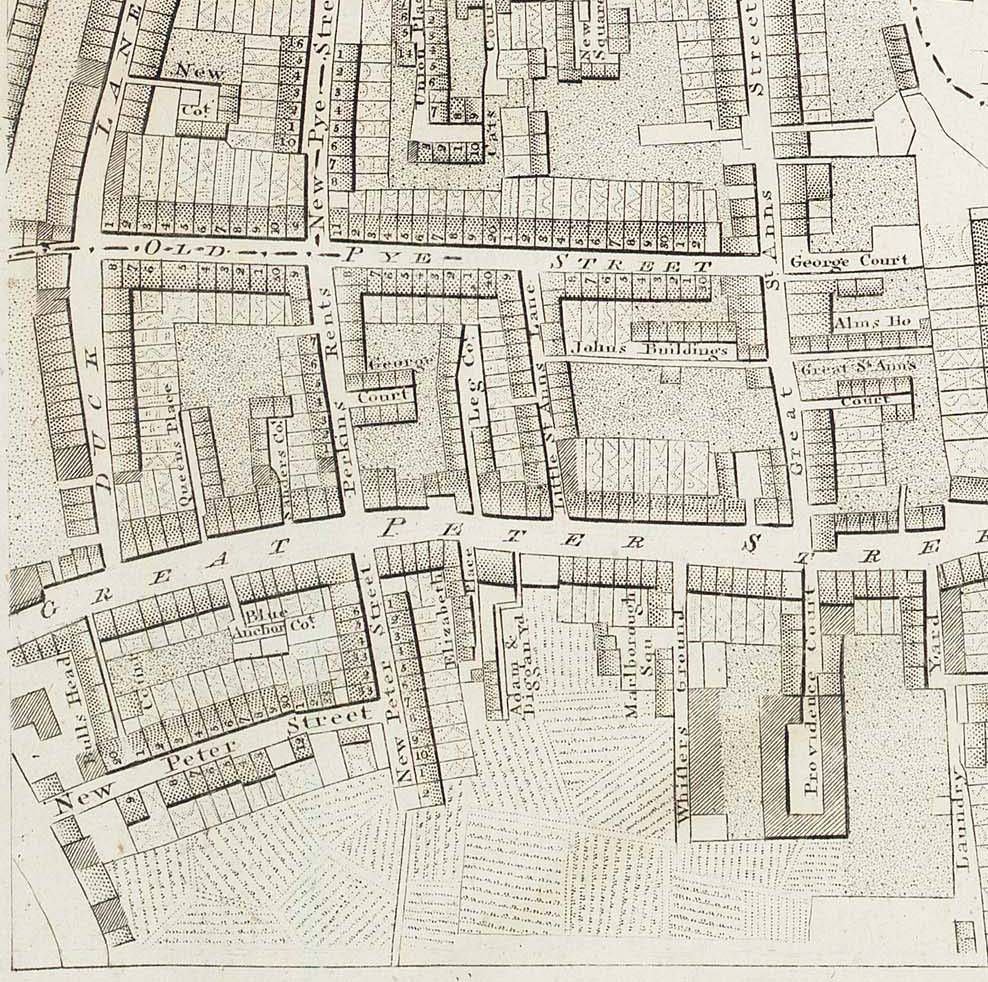
Richard Horwood map of 1799 showing No 48 Old Pye Street on the corner
On the 13th February, 1832, Mary Ann Matilda Barrand married John Fencock, a local cab driver, in St. Anne’s Church, Soho. There is no sign of either of them on the 1841 census, and only Mary Ann Matilda shows on the 1851 census living with her sister Elizabeth Palmer and her husband Robert Palmer, but there is no mention of John Fencock. It is of course possible that John Fencock was working on the night of the 1851 census, but Mary Ann is clearly shown as married, so presumeable her husband, John Fencock must still have been living, but there are no other records found showing either of them.
MARY ANN MATILDA BARRAND Female
Event(s):
Marriages:
Spouse: JOHN FENCOCK
Marriage: 13 FEB 1832 Saint Anne Soho, Westminster, London, England
Source Information:
Batch No.: Dates: Source Call No.: Type: Printout Call No.: Type:
M062361 1832 - 1837 0918599 Film NONE
IGI Record of marriage - Mary Ann Matilda Barrand & John Fencock
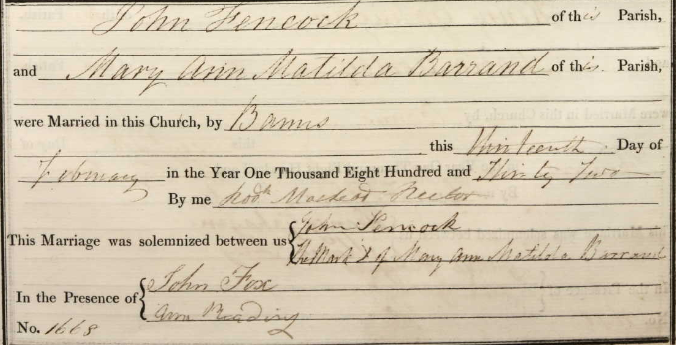
Marriage record of Mary Ann Matilda Barrand and John Fencock
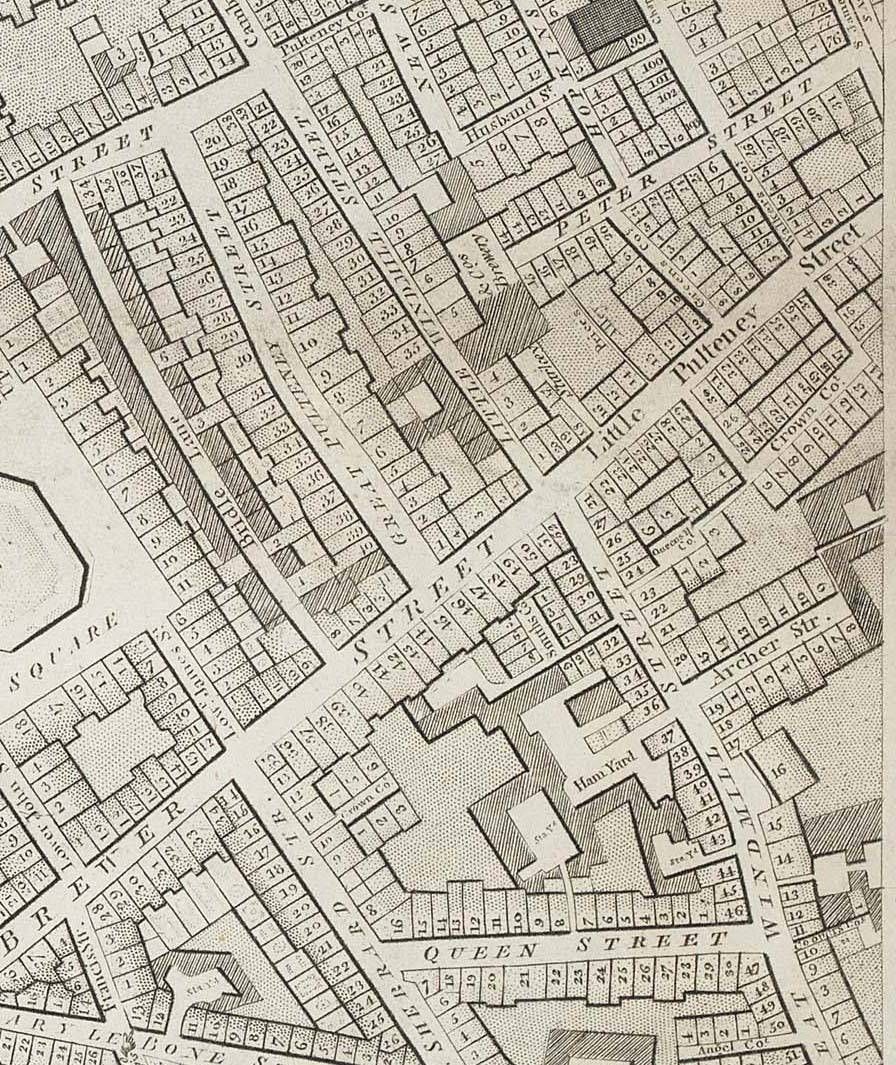
Horwood map of 1792-1799 showing Hopkins Street Chapel in Soho
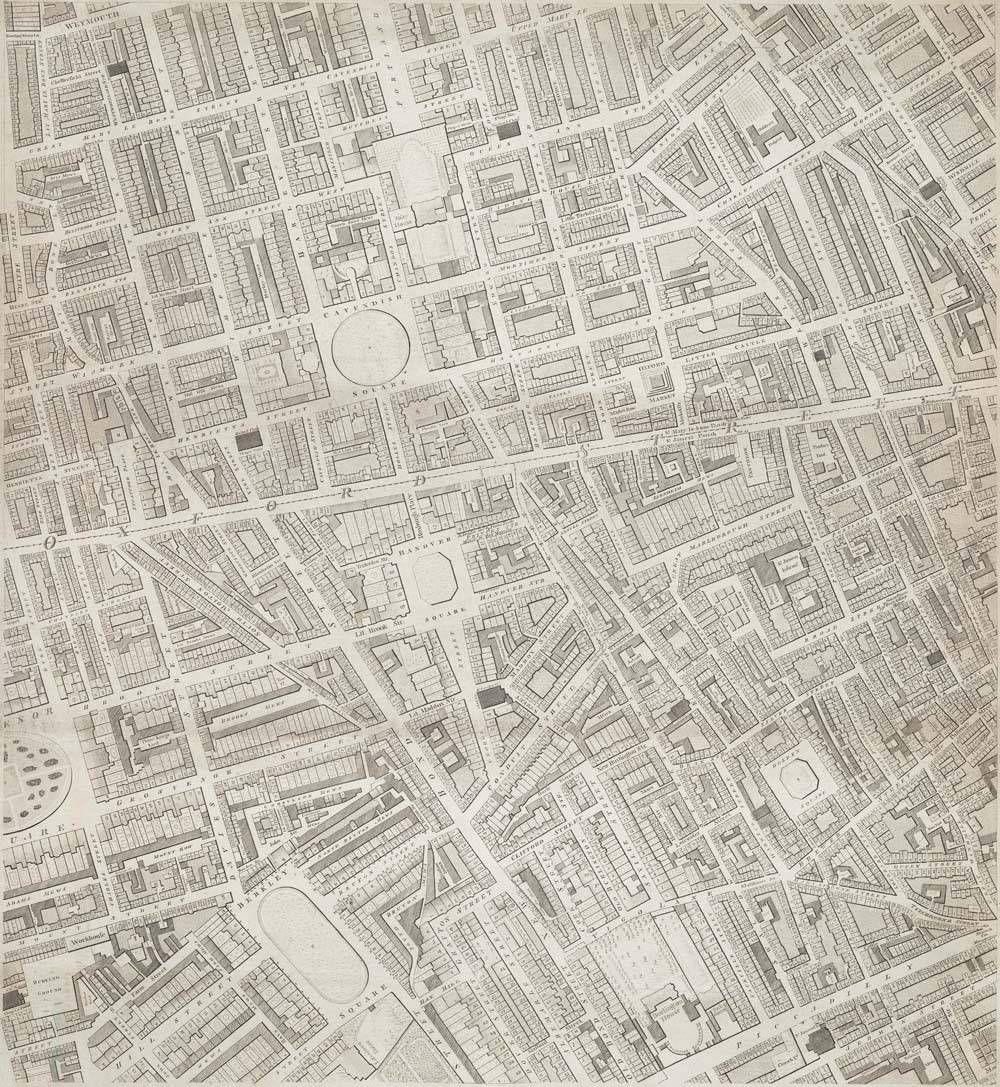
Horwood map of 1792-1799 showing Oxford Street, Hopkins Street and the chapel which was the brothel
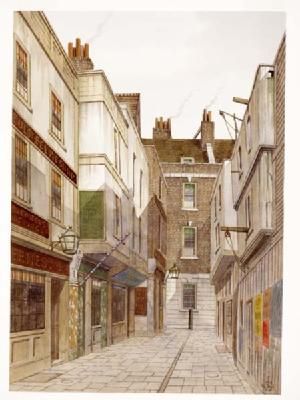
Chichester Rents, Chancery Lane where the robbery took place
This watercolour (above) depicts Chichester Rents, an area described by Dickens as The Sol's Arms in Bleak House. Next door was Krook's shop. The tavern was the scene of the inquest on Nemo's death. It was based on The Old Ship Inn in Chancery Lane. Chichester Rents is said to take its name from Ralph Nevill who was Bishop of Chichester from 1222 to 1224, although it is not proved that he owned the site yet, as he had a residence on the west side of Chancery Lane, now Lincoln's Inn, the fact may be as stated.
In Bishop's Court off Chancery Lane, Dickens, in "Bleak House," saw fit to place the rag and bottle shop of Crook, where that strange old man died a death due to spontaneous combustion. Mr. Vholes the lawyer of the Chancery Court also in "Bleak House," had his offices in Symond's Inn on the other side of Chancery Lane where Chichester Rents is now.
In the history of London, Bishops Court, is described as new built, with good Houses, having a Freestone Pavement, and a Passage into Lincolns Inn where there is a pair of Gates with open Iron Bars. Chichester Rents, a pretty broad Court, with a Passage also into Lincolns Inn through a pair of Gates, shut up at nights as those at Bishops Court. It is a Place not over well inhabited, nor neatly kept, although it might be otherewise, as having a good freestone pavement. Next to this is a small and narrow Place called Feathers Court or Alley, which hath a Passage into the upper End of Bell Yard.
Fever has been a frequent visitor to this part of Drury-Lane, and the cholera of course found it out. There are many courts and lanes in Drury-Lane, the rent of a single room in which varies from 1s.9d. to 2s. and 2s.6d. per week. Many of these houses and those surrounding them are occupied by persons who obtain their livelihood at Covent Garden market. In the direction of Covent Garden market, Crown-court, Rose-street, and other places in the vicinity are unhealthy and much neglected. From Long-acre to the main street of St. Giles's the lanes and courts are occupied by numbers of poor Irish, costermongers, foreigners, and persons of loose character, and, as might be expected, the houses are dirty in the extreme. Near the top of Drury-lane, on the west side, are some ancient wooden houses, now occupied as cow-sheds. On the opposite side of the street, with an undertaker's shop placed most ominously at each side of the entrance, is a place called the Coal-Yard - which I will mention later.
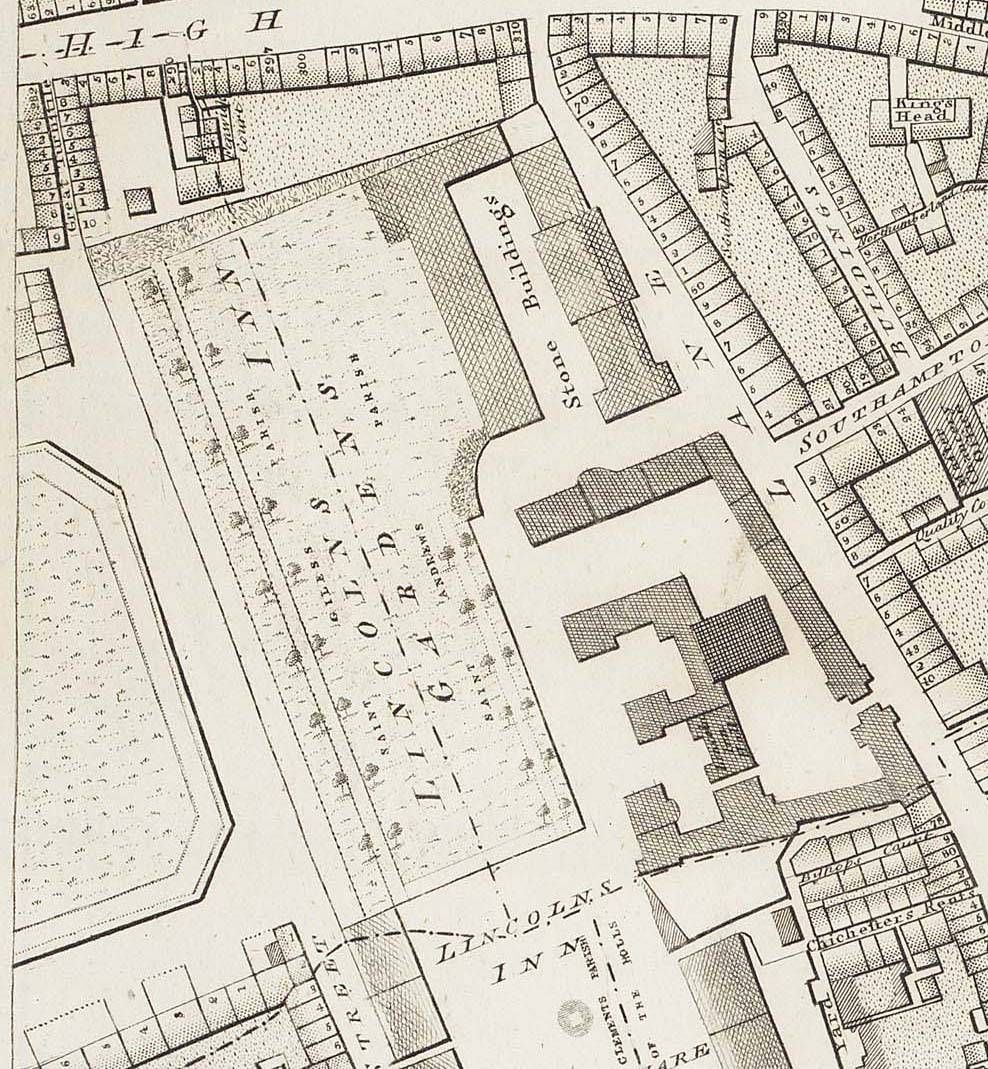
Richard Horwood map of 1792-1799 showing Chancery Lane, Bishop’s Court and Chichester Rents
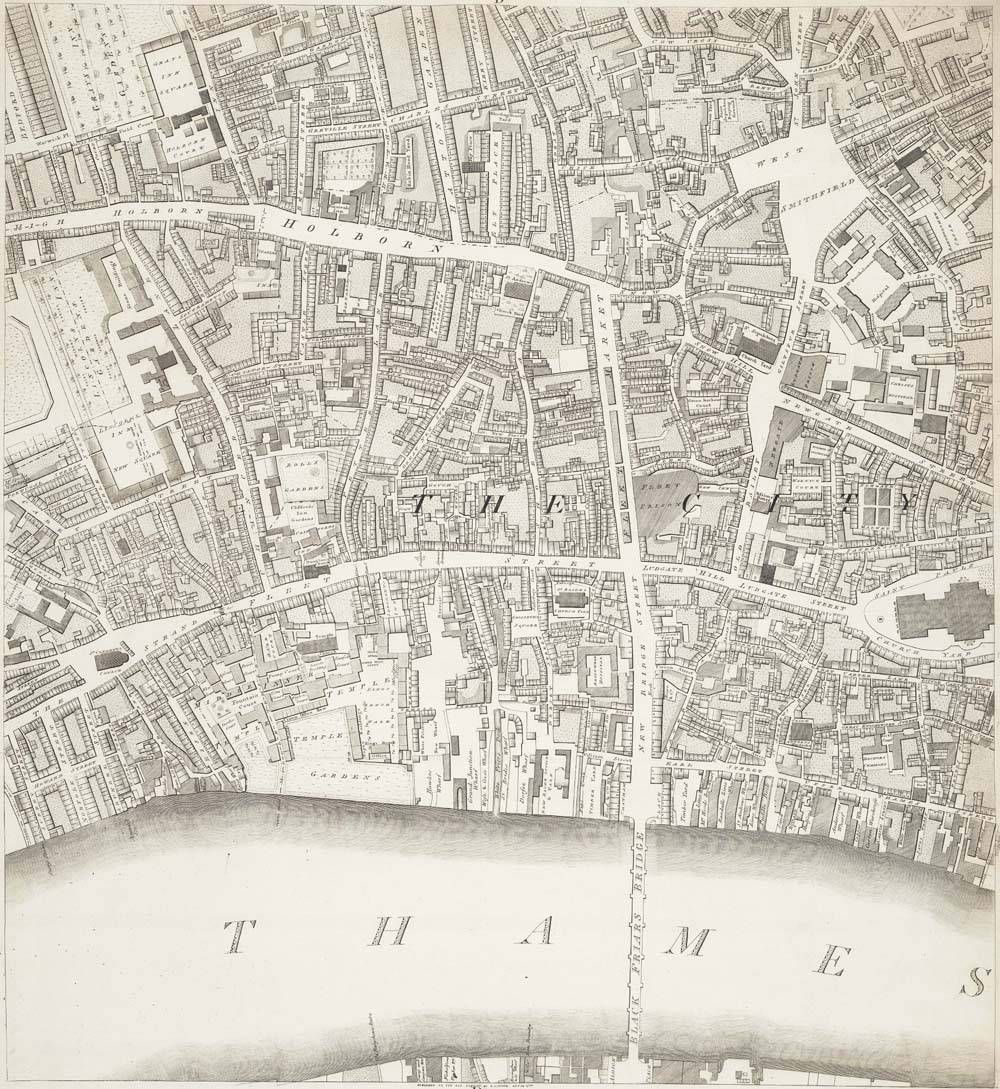
Richard Horwood map of 1792-1799 showing Chancery Lane, Bishop’s Court and Chichester Rents and the area of
Lincoln Inns.
Name: John Fencock
Record Type: Burial
Estimated Death Date: abt 1851
Burial Date: 21 Jun 1851
Age: 80
Estimated Birth Year: abt 1771
Parish or Poor Law Union: Lambeth St Mary
Borough: Lambeth
County: Surrey
Probable death for John Fencock - Pancras 1b 117 1st Qtr 1862
Look for the 1841 census records – Not Found
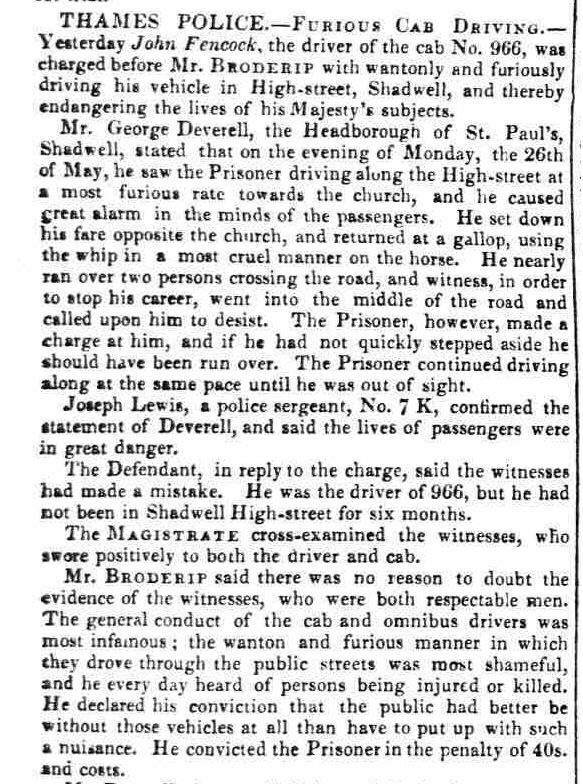
London Morning Post - Friday 06th June 1834
Also “The True Sun” – Friday 06th June 1834
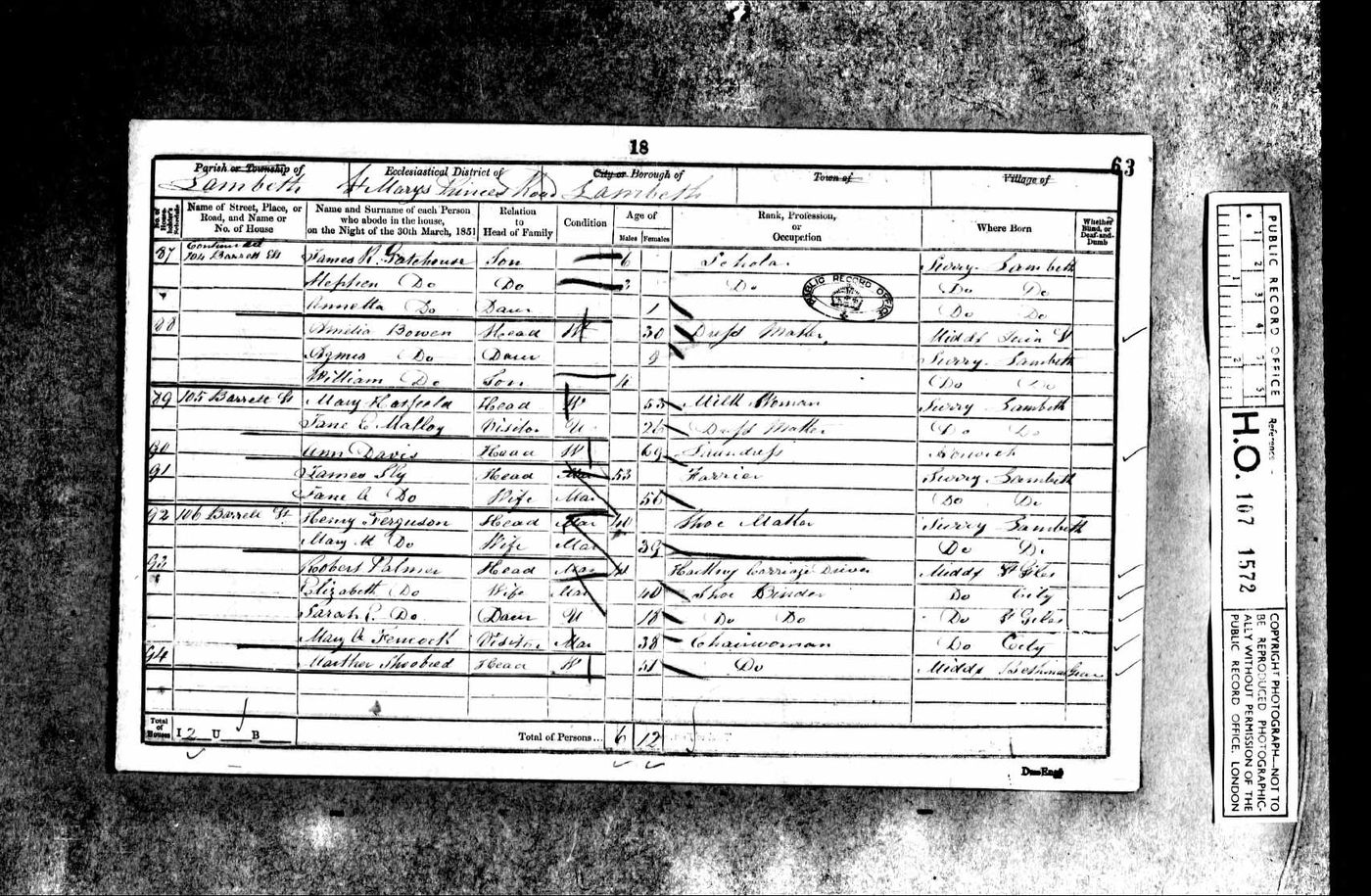
For some reason, Mary Ann Matilda is living with her sister Elizabeth and Brother-in-Law, Robert Palmer on the 1851 census in Barrett Street off Princes Road, Southwark instead of with her husband, John Fencock. There is a John Fencock as a rate payer in Barrett Street in 1811 until 1824. Quite possibly, John Fencock died in 1851 in Lambeth (Death Ref: Lambeth 1851 - 2nd Qtr (4 - 196) or Pancras 1862 1st Qtr (1b-117) and Mary Ann remained in Lambeth and then re-married to John Brunt, a butler on the 10th June, 1872. Marriage Ref: St. Saviour 1872 - 2nd Qtr (1d - 88)
Barrett Street became Vauxhall Street in the early 1900s.
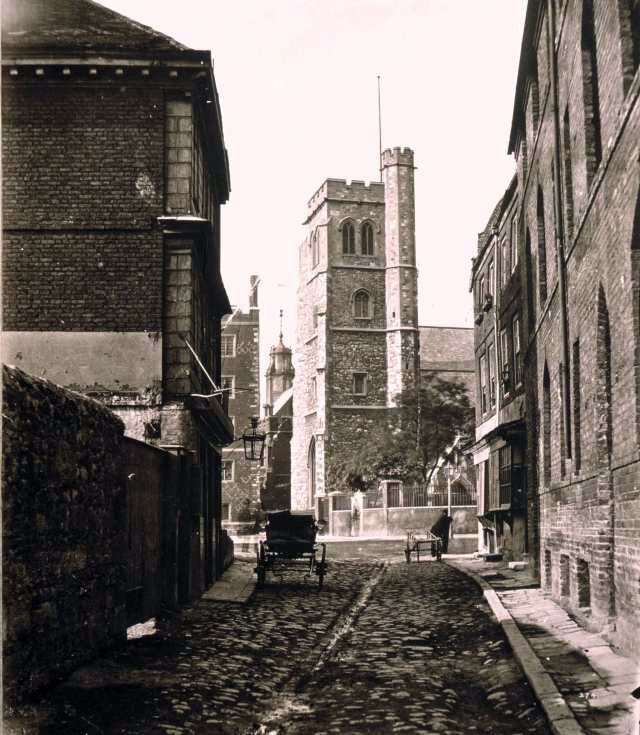
Lambeth in the 1860s
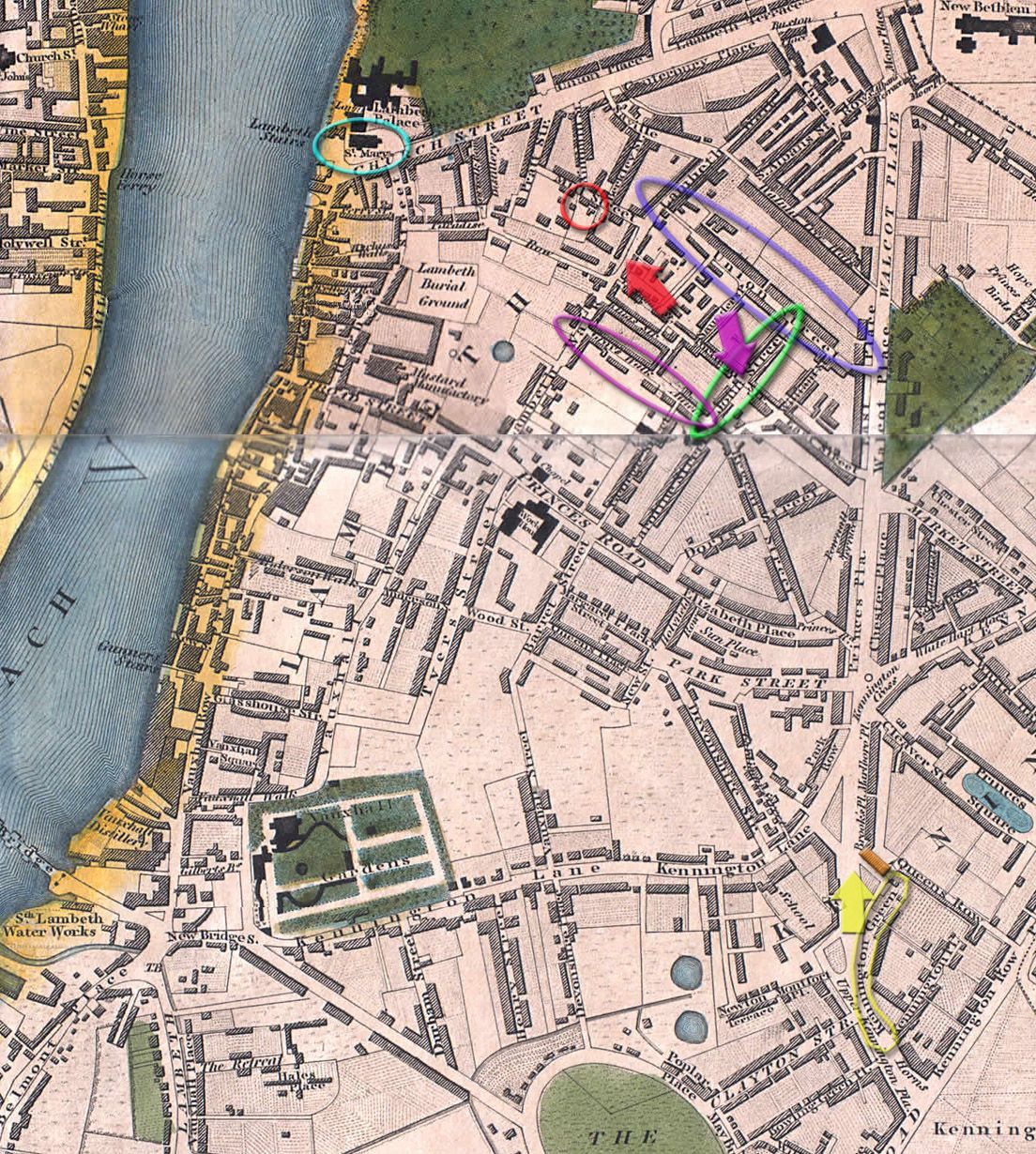
Barrett Street off Princes Road, Lambeth where Robert Palmer and Elizabeth Barrand were living with Mary Ann Fencock in 1851 and this is also near the street (Princes Court) where Mary Barraud (nee Turpin) died in 1821 after her marriage to William Pether. (see page 30) Mary Barraud was the Great Grandmother of both Mary Ann Fencock (nee Barrand) and also Elizabeth Palmer (nee Barrand)
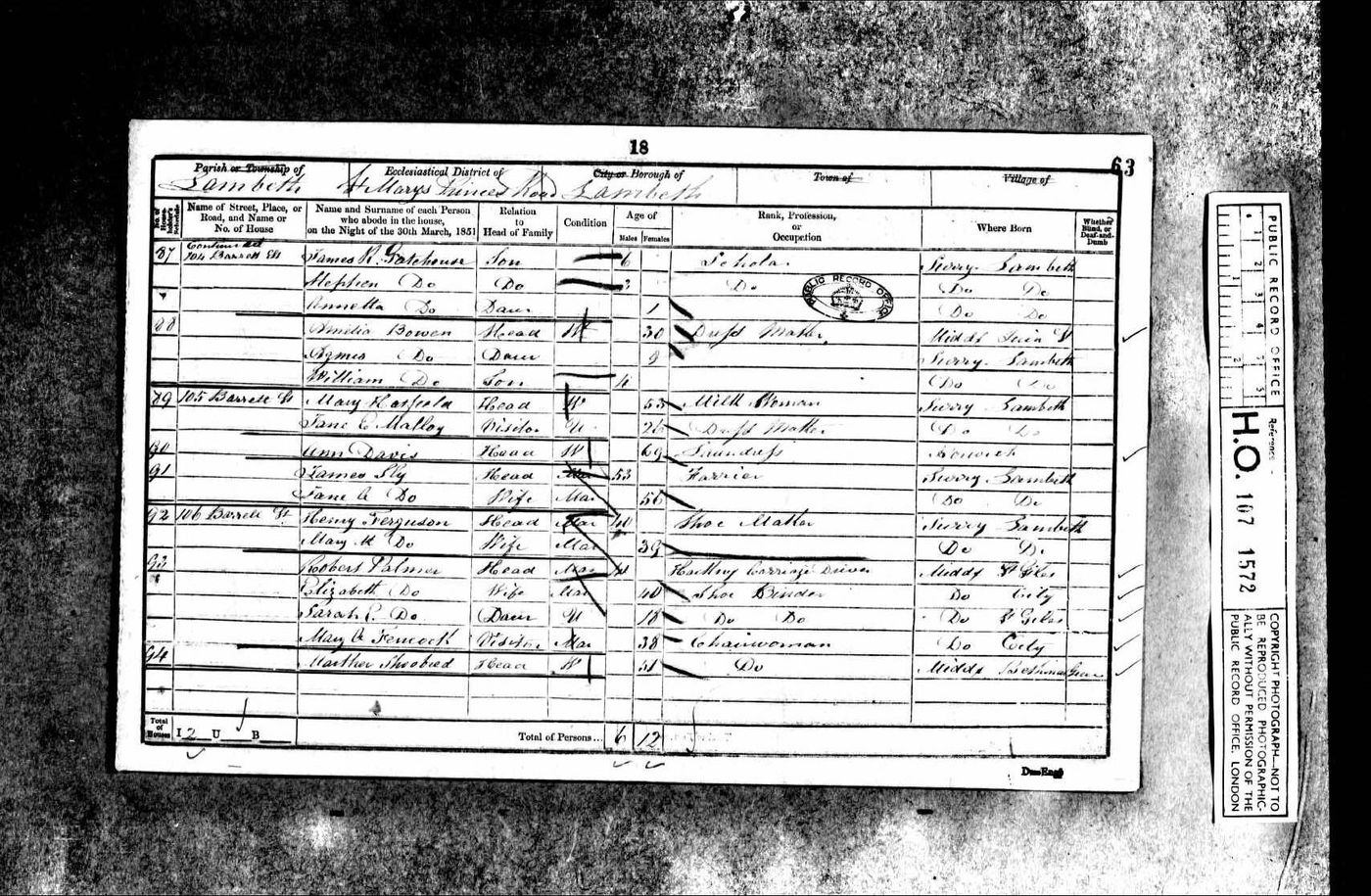
1851 Census, living with sister, Elizabeth Palmer in Barrett Street, off Princes Road, Lambeth.
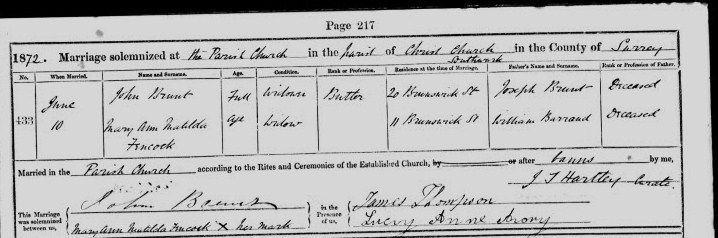
Marriage Certificate of Mary Ann Fencock to John Brunt
JOHN BRUNT Male
Marriages:
Spouse: MARY ANN MATILDA FENCOCK
Marriage: 10 JUN 1872 Christ Church, Southwark, London, England
Source Information:
Batch No.: Dates: Source Call No.: Type: Printout Call No.: Type:
M020701 1843 - 1855 0384912 Film NONE
John Brunt was born in 1817 in Holborn, the son of Joseph Brunt, a gentleman's servant and Mary Stephenson, and they were married in Hackney in 1810. They had 4 further children.
We are sure that we have the right Mary Ann Matilda Fencock (nee Barrand) as she was the witness to her cousin, Susan Barrand’s marriage in 1844 and signs her name as Mary Ann Fencock. There are no definite signs of any children born to Mary Ann Matilda Fencock (Barrand) although the census is confusing. In the 1861 census, at 3, Stanmore Place, Marylebone, there is mention of John Brunt aged 41 (born in 1820) and also a Mary Ann Brunt (his wife) aged 46 (born in 1815). There are also 2 children shown, a John A. Brunt, born in 1852 and George J. Brunt, born in 1854 (so these must have been born to John Brunt and his previous wife) as Mary Ann Matilda did not marry John Brunt until 1872.
It appears that John Brunt married Mary Ann Myhill on the 18th July, 1843. In 1841, Mary Ann Myhill was employed as a servant, aged 30 and living at Upper Gower Street in St. Pancras. Also, at the same house (Upper Gower Street) in 1861 living with John Brunt and Mary Ann are 2 other people with the surname Palmer, a Jane Palmer, born in 1828 and an Anne Palmer, born in 1829. Are they any relation to Robert Palmer, the husband of Elizabeth Barrand? In the 1861 census, Mary Ann Brunt (Myhill) is shown as being born in Catfield in Norfolk, so that rules out the possibility that Mary Ann Matilda Barrand was living with John Brunt at that time. It would seem that Mary Ann (nee Myhill) died between 1861 and 1871. It is possible therefore that the Mary Ann Fencock (Barrand) was actually living with John Brunt as his wife before their marriage in 1872, and I can find no record of Mary Ann Matilda Fencock on the 1861 or 1871 census. Certainly, John Brunt was a widower as shown on the marriage certificate to Mary Ann Fencock in 1872, and is also shown as a widower on the 1871 census where he is living at 9, Crown Street, St. Giles before his marriage to Mary Ann Barrand. In the 1861 census, at No 2, Stanmore Place (next door to John Brunt) is a William Brunt, age 48 and born in St. Pancras, his wife Elizabeth, aged 36 and 2 children. This is John Brunt's brother William.
John Brunt and Mary Ann are shown on the 1881 census but John died in 1881 (3rd Qtr) at the age of 62. I cannot find any positive death record for Mary Ann Brunt and she does not show on the 1891 census.
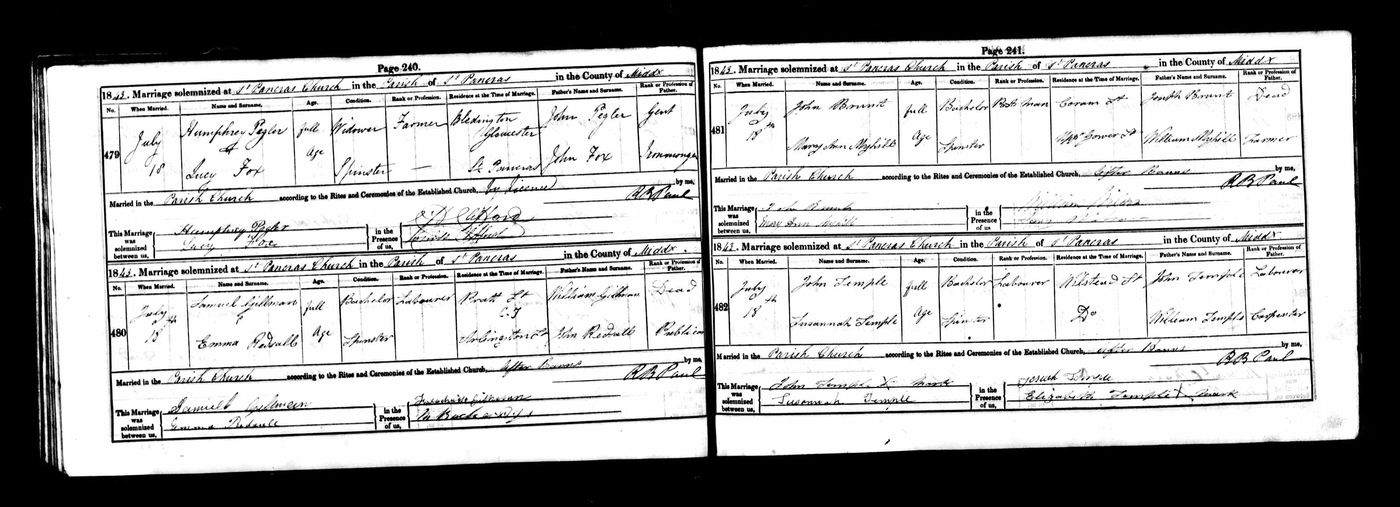
Marriage certificate of John Brunt and Mary Ann Myhill
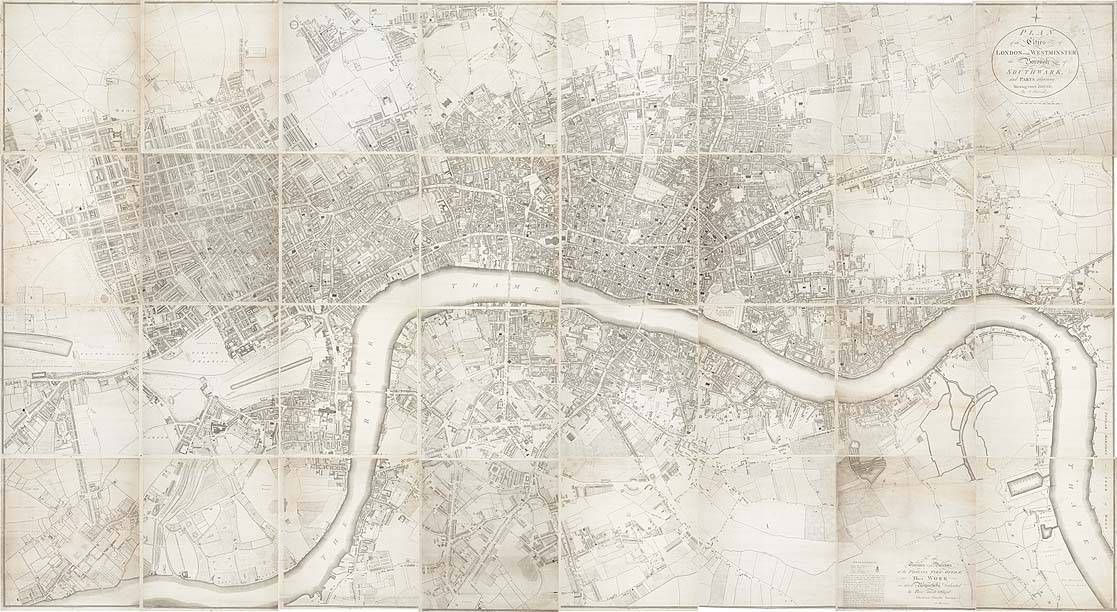
Lambeth where Mary Ann Lived in 1851. Brunswick Street Southwark where she lived when she was married to John Brunt.
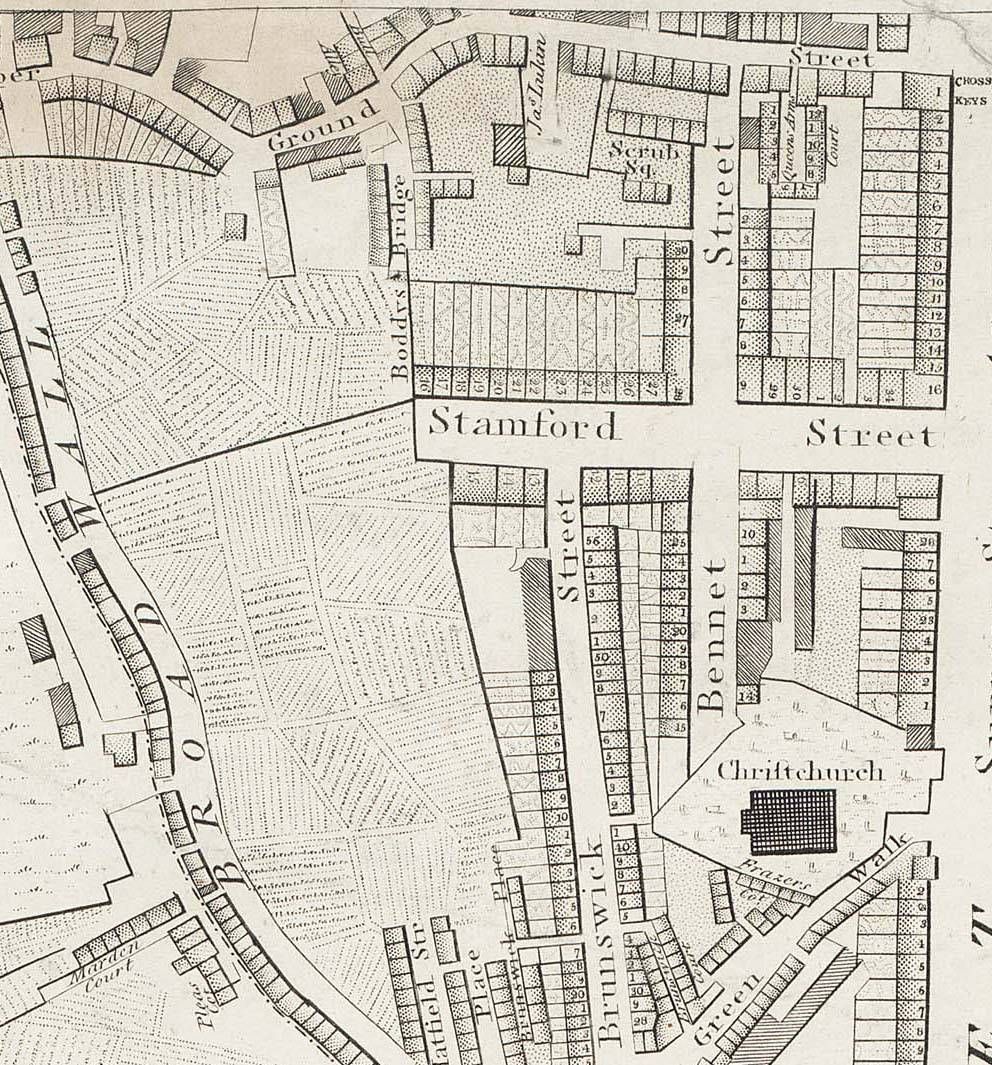
Brunswick Street Southwark 1881, John Brunt Lived at No: 20 Mary Ann lived at No:11.
1881 Census – John Brunt and Mary Ann Barrand
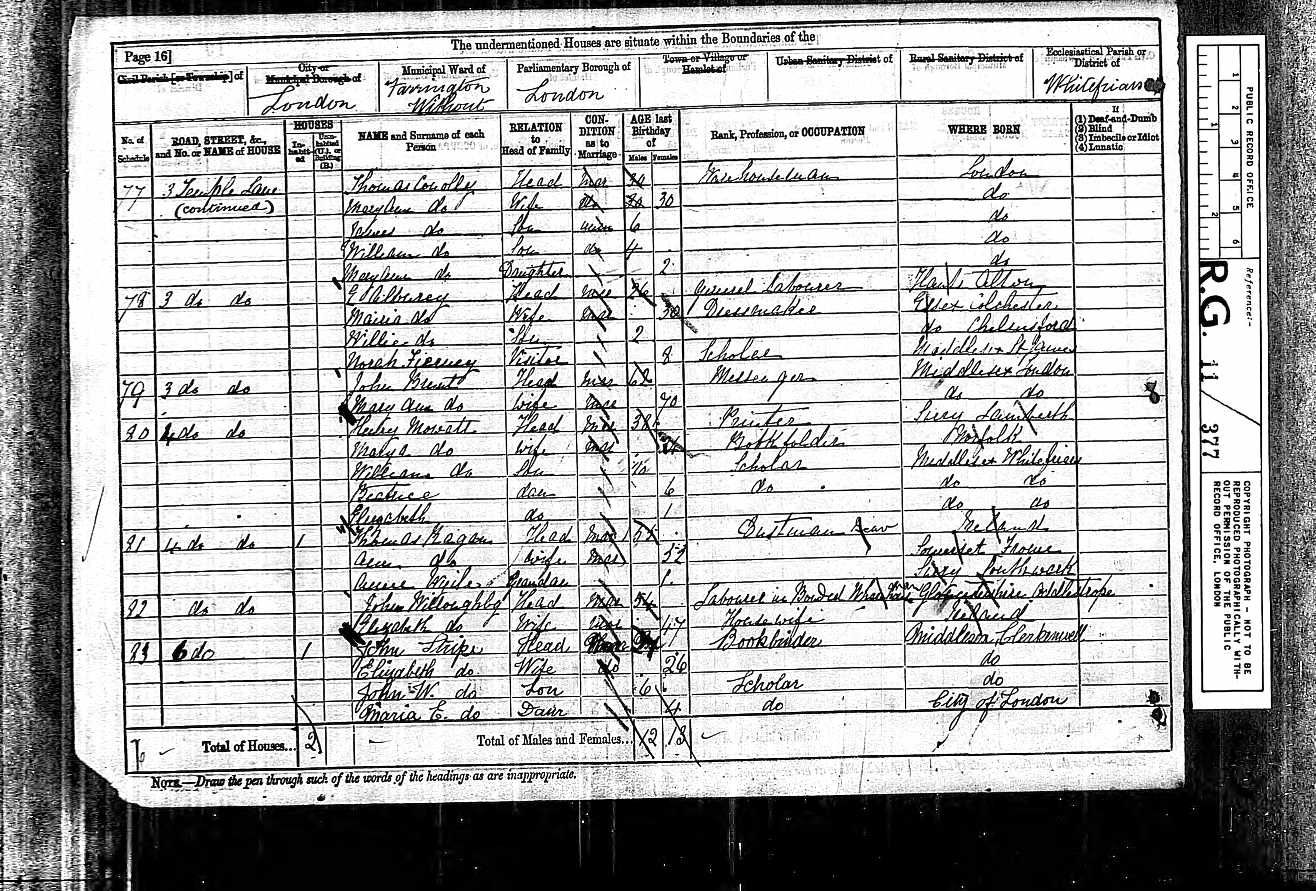
Temple Lane, Farringdon. John Brunt and Mary Ann Barrand lived here in 1881
Elizabeth was the next child of William Barrand and Alice Young, born in 1811, but no records exist of her birth or baptism. She married Robert Palmer, a coachman on the 2nd of March, 1846 in St. Anne’s Church, Soho. Robert was aged 36 at the time of the marriage and Elizabeth was aged 35. Marriage Ref: Strand 1846 - 1st Qtr (1 - 357)
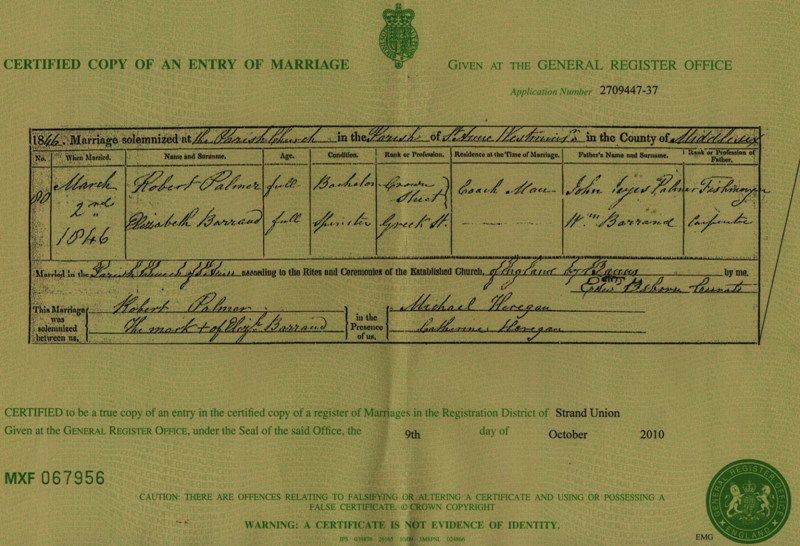
Marriage Certificate of Elizabeth Barrand and Robert Palmer
ELIZABETH BARRAND Female
Event(s):
Marriages:
Spouse: ROBERT PALMER
Marriage: 02 MAR 1846 Saint Anne Soho, Westminster, London, England
Source Information:
Batch No.: Dates: Source Call No.: Type: Printout Call No.: Type:
M062361 1837 - 1849 0918600 Film NONE
IGI Record of the marriage – Elizabeth Barrand and Robert Palmer
| John b 04/11/1752 d 1830 - 1840 Frances bc 1753 d 14/02/1831 = c 1778 William Potter b 1750 d 1818 Thomas bc 1755 d 1810 = 22/06/1781 Susan Cook bc 1752 d 1822 James b 1756 d 1756 Mary b ? d ? = 20/05/1783 John Jones Sarah b 1761 d 1833 James Mather b 1761 d 1823 Mary Turpin b 1732 d 1821 John Barraud b 1728 d c 1765 Re-married in 1772 to William Pether = 12/12/1772 William b 1760 = 29/05/1803 Margaret Callow b 1764 d 1837 = 04/03/1783 = 27/11/1752 Elizabeth b 1763 d 1827 Thomas b 1783 d 1836 Peter Cook b 1785 d 1839 Elizabeth b 1787 Ann b 1789 d in infancy John b 1791 d 1871 Joseph b 1793 d 1839 Eliza Cook b 1795 = 11/11/1804 Sarah Eliz. Took b 1780 d 1852 = 05/09/1810 Eliz. Corry b 1784 d 1837 = 15/11/1812 John Stead b 1778 d ? Ann Routeledge b 1795 d 1857 = 27/03/1827 Eleanor Page b 1795 d 1845 = 24/08/1815 James Able b 1779 d 1849 William b 1782 d 1835 = 06/04/1804 Alice Young b 1774 d 1833 = 29/11/1813 William b 1805 d 1807 Peter Cook b 1806 d ? Ann Maria b 1807 d 1807 ? Mary Ann Matilda b 1807 d c 1885 Elizabeth b 1811 d c 1851 William Cook b 1813 d 1813 | |||||||||||
The marriage certificate of 1846 gives Elizabeth Barrand’s address as Greek Street, in the Parish of St. Anne’s, Westminster, and Robert Palmer’s address as Crown Street. It may be of interest to note that John Brunt, Mary Ann Barrand's 2nd husband also lived in Crown Street. Elizabeth' Barrands father is shown as William Barrand, a carpenter and Robert Palmer’s father is noted as John Seyes Palmer, a fishmonger and his mother was most probably Lydia Marshall. Richard Palmer's father was in fact baptised as just John Sayes, born as an illigitimate son of Susannah Sayes in 1781, and baptised on the 2nd May, 1781 in St. Andrews Church, London. His mother, Susannah was born in 1767 and died in 1827 and was buried on the 27th August, 1827. It is most probable that John Sayes was adopted by the Palmer family at some time.
Robert Palmer was born on the 27th May, 1809 and baptised on the 25th June, 1809 in St. Giles, London. One strange fact however, is that Robert Palmer is shown as a bachelor on the marriage certificate, but it seems he may have been previously married. There is a daughter called Sarah, born in 1833 (according to the 1851 census), and she is shown on the 1851 census as aged 18. It is of course possible that the daughter is Elizabeth’s and they had been living together or, that Elizabeth perhaps had a daughter before her marriage to Robert Palmer but clearly, the name has been recorded as Sarah Palmer on the 1851 census. The census shows that both Robert Palmer and Sarah were from St. Giles in London, while Elizabeth Palmer (nee Barrand) is recorded as from “The City”. The most logical senario from the records is that Robert Palmer married a Sarah Miller on the 5th March, 1832 in St. Martin in the Fields and they had Sarah, their daughter in 1833 (?). The only record I can find is a Sarah Palmer's baptism in March, 1837 with parents Robert Palmer and Sarah and the birth date is unclear. The address shown is London Street, Marylebone. As it is before April 1837, no record of the birth will be found on the BMD registers. It would appear that Sarah Miller, Robert's wife died in May 1837 as there are burial records to show that Sarah Palmer's address is shown as Crown Street, the same address as Robert's address on his marriage certificate to Elizabeth Barrand. There are also records of Edwin and Alfred Palmer living at 10, Crown Street in the 1841 census and it is therefore most probable that they are brothers of Robert Palmer. I cannot find any record on the 1841 census for Robert Palmer or Sarah Palmer (daughter) and certainly looking at the full 1841 census for Greek Street where they lived in 1846 there is no mention of a Robert Palmer. Elizabeth Barrand however is found in Upper Copenhagen Street in Islington (but transcribed as Barrowish). The 1851 census shows Robert Palmer aged 41, Elizabeth Barrand, aged 40, a daughter, Sarah Palmer, aged 18 and also living with them is Mary Ann Matilda Fencock (nee Barrand). Elizabeth is shown as a shoe binder as is the daughter, Sarah. I have not followed up Elizabeth Palmer’s (nee Barrand) life since 1851. She may well have died, as there is no record of her or Robert since 1851. Sarah however, it appears moved to Cambridgeshire as she is shown on the census for 1861 as a boarder in March (Cambridgeshire) and still working as a shoe binder.
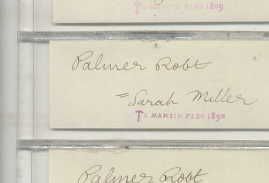
Pallots record of marriage of Robert Palmer and Sarah Miller.
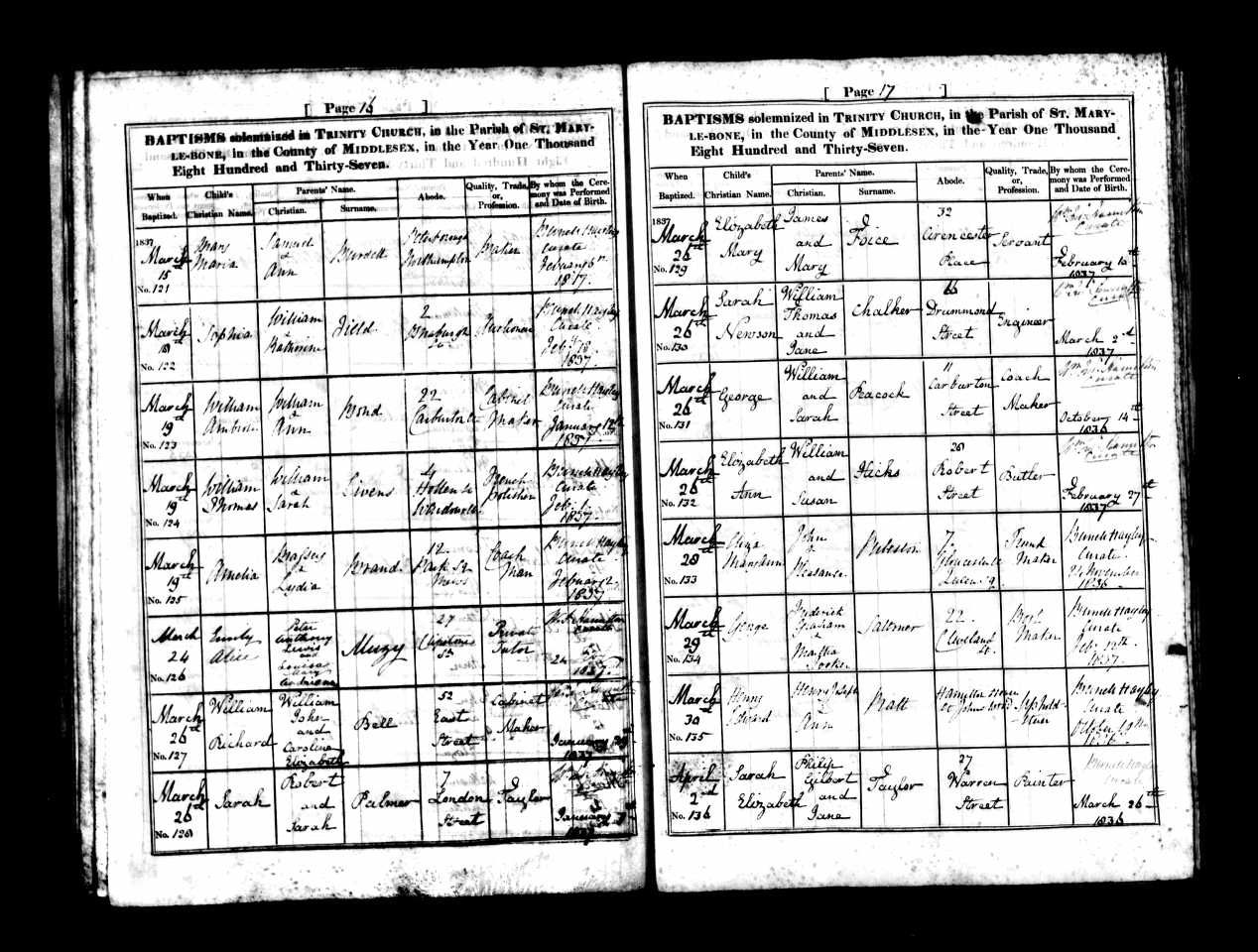
Baptism record of Sarah Palmer born in January, 1837 (?) and baptised 26th March, 1837.
Their address is shown as 7 London Street, and Robert’s occupation is as a tailor.
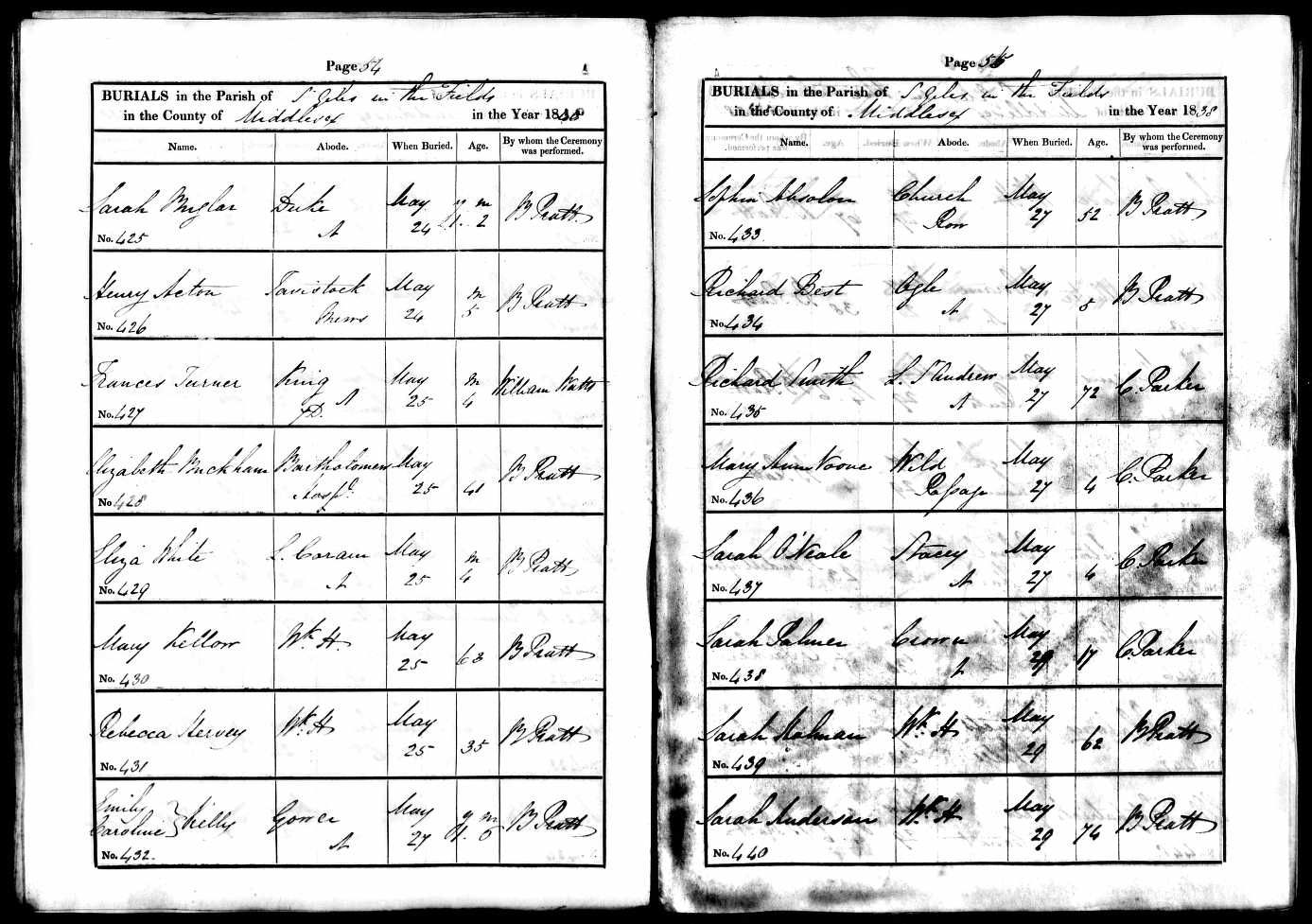
Death record of Sarah Palmer from Crown Street in 1837. (The age cannot be correct at just 17)
Soho Square King St. (Frances Barraud) Greek Street Crown St 7-Dials (Barrauds + Barrands) Clare Market
Greek Street is a street in Soho, London, leading south from Soho Square to Shaftesbury Avenue. Originally called Hogs Lane, the street is thought to have been known by its present name since 1679. It is thought to take its name from a Greek Church, which was built in 1677 in adjacent Crown Street. Most of the Greeks of London, however, were poor and obscure, mainly sailors who served on the merchant ships that plied between England and the eastern Mediterranean. In 1677 a church was opened for their use on the edge of the city in Soho, the site still being remembered in the name 'Greek Street'. The Greek Church was taken over by the French Protestants for their worship.
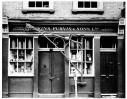 | 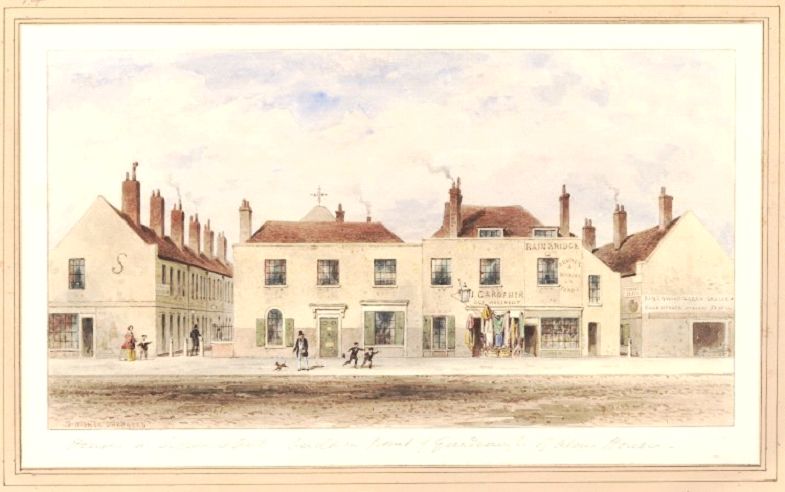 | |||||||||||
| Greek Street 1842 | Crown Street, near Soho Square. 1854 | |||||||||||
British Museum
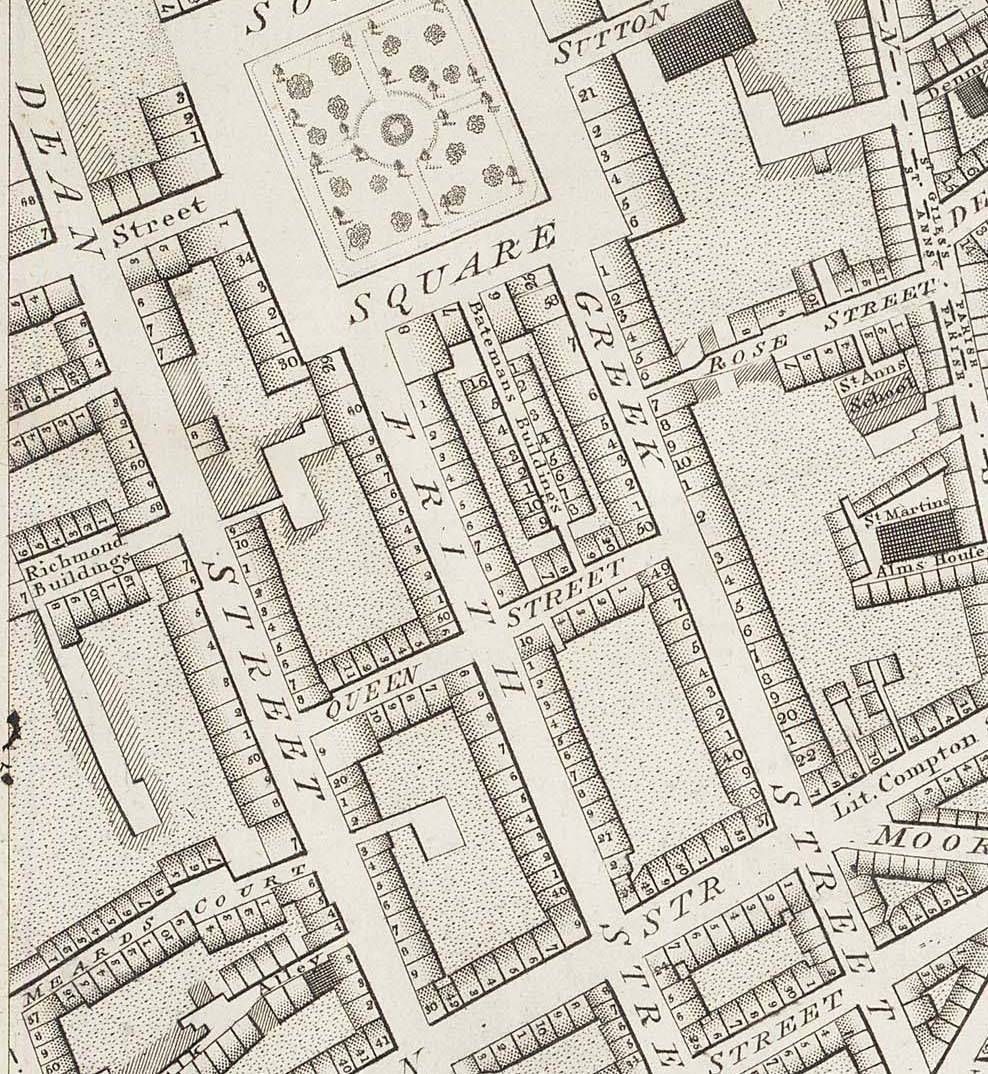
Greek Street where Elizabeth Barrand lived Crown Street where Robert Palmer lived
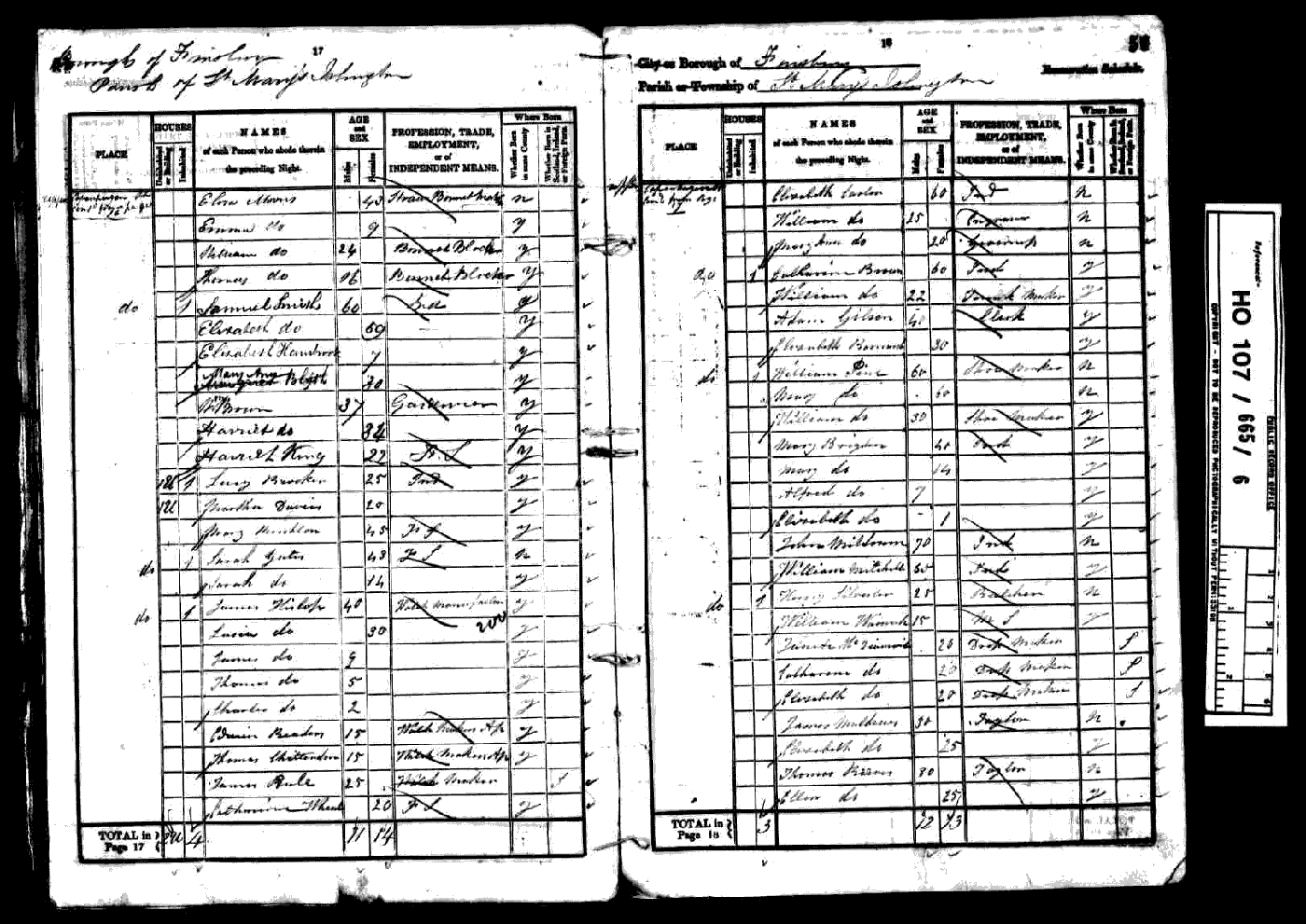
1841 Census showing Elizabeth Barrand at Copenhagen Street
1851 census of Robert Palmer, Elizabeth, his wife, Sarah his daughter & Mary Ann Fencock
William Cook Barrand was the sixth and last child of William Barrand and Alice Young and was born in 1813 and baptised on the 7th March, 1813. He died in 1813 also.
WILLIAM COOK BARRAND Male
Event(s):
Christening: 07 MAR 1813 Saint Clement Danes, Westminster, London, England
Parents:
Father: WILLIAM BARRAND
Mother: ALICE (Alicia) YOUNG
Source Information:
Batch No.: Dates: Source Call No.: Type: Printout Call No.: Type:
C041601 1813 - 1849 0574269 Film 6903794 Film
The IGI Record of the baptism of William Cook Barrand
| John b 04/11/1752 d 1830 - 1840 Frances bc 1753 d 14/02/1831 = c 1778 William Potter b 1750 d 1818 Thomas bc 1755 d 1810 = 22/06/1781 Susan Cook bc 1752 d 1822 James b 1756 d 1756 Mary b ? d ? = 20/05/1783 John Jones Sarah b 1761 d 1833 James Mather b 1761 d 1823 Mary Turpin b 1732 d 1821 John Barraud b 1728 d c 1765 Re-married in 1772 to William Pether = 12/12/1772 William b 1760 = 29/05/1803 Margaret Callow b 1764 d 1837 = 04/03/1783 = 27/11/1752 Elizabeth b 1763 d 1827 Thomas b 1783 d 1836 Peter Cook b 1785 d 1839 Elizabeth b 1787 Ann b 1789 d in infancy John b 1791 d 1871 Joseph b 1793 d 1839 Eliza Cook b 1795 = 11/11/1804 Sarah Eliz. Took b 1780 d 1852 = 05/09/1810 Eliz. Corry b 1784 d 1837 = 15/11/1812 John Stead b 1778 d ? Ann Routeledge b 1795 d 1857 = 27/03/1827 Eleanor Page b 1795 d 1845 = 24/08/1815 James Able b 1779 d 1849 William b 1782 d 1835 = 06/04/1804 Alice Young b 1774 d 1833 = 29/11/1813 William b 1805 d 1807 Peter Cook b 1806 d ? Ann Maria b 1807 d 1807 ? Mary Ann Matilda b 1807 d c 1885 Elizabeth b 1811 d c 1851 William Cook b 1813 d 1813 | |||||||||||
From the rent records and Tax Assessment records, William Barrand and Alice Young lived in Bennett Street in the Westminster area of London in 1818, and then in Vine Street by 1828 until 1831. It is also known that Alice paid poor rates in 1830.
Alice Young, William Barrand’s wife died in April, 1833 at 6, Sheffield Street, St. Clement Dane at the age of 59, and the records show she was born about 1774. No 6, Sheffield Street was a well known local marine store shop abutting on a passage leading to the White Lion Public House and it would appear that Alice Barrand was the owner of the business at the time of her death. The premises were leased on a yearly basis, and following Alice's death in April 1833, the lease was re-sold in December 1833 for £8 for the following year. By 1839, 6 Sheffield Street was a Rag and Bone warehouse, and a board used to be exhibited outside which said “Bring your bones and fat to black Sall”. There are accounts of the shop in 1839 in the Northern Star, Reading Mercury, Leeds Times, Northern Liberator and Leicestershire Mercury. Sheffield Street is shown on the map and is situated near to Clare Market.
William Barrand died in Westminster Hospital in 1835 and was buried on the 22nd July, 1835 also in Westminster at the age of 57, making his Date of Birth approximately 1778. (IGI ref: Batch B02082-6) (Film - 530360)
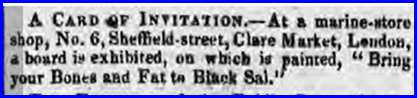
Northern Star and Leeds General Advertiser 02 March 1839
Wm Barrand
| Name: | Wm Barrand |
| Event Type: | Tax Assessment |
| Event Place: | Westminster, Middlesex, England |
| Event Date: | 1818 |
| Address: | Bennett Street |
| Note: | Poor Rate V. 620-628 1818-1820 |
England, Westminster Rate Books
Wm Barrand
England, Westminster Rate Books
| Name: | Wm Barrand |
| Event Type: | Tax Assessment |
| Event Place: | , St Margaret, Westminster, Middlesex, England |
| Event Date: | 1831 |
| Address: | Vine Street |
| Note: | Paving & Lighting Rates 1826-1830 |
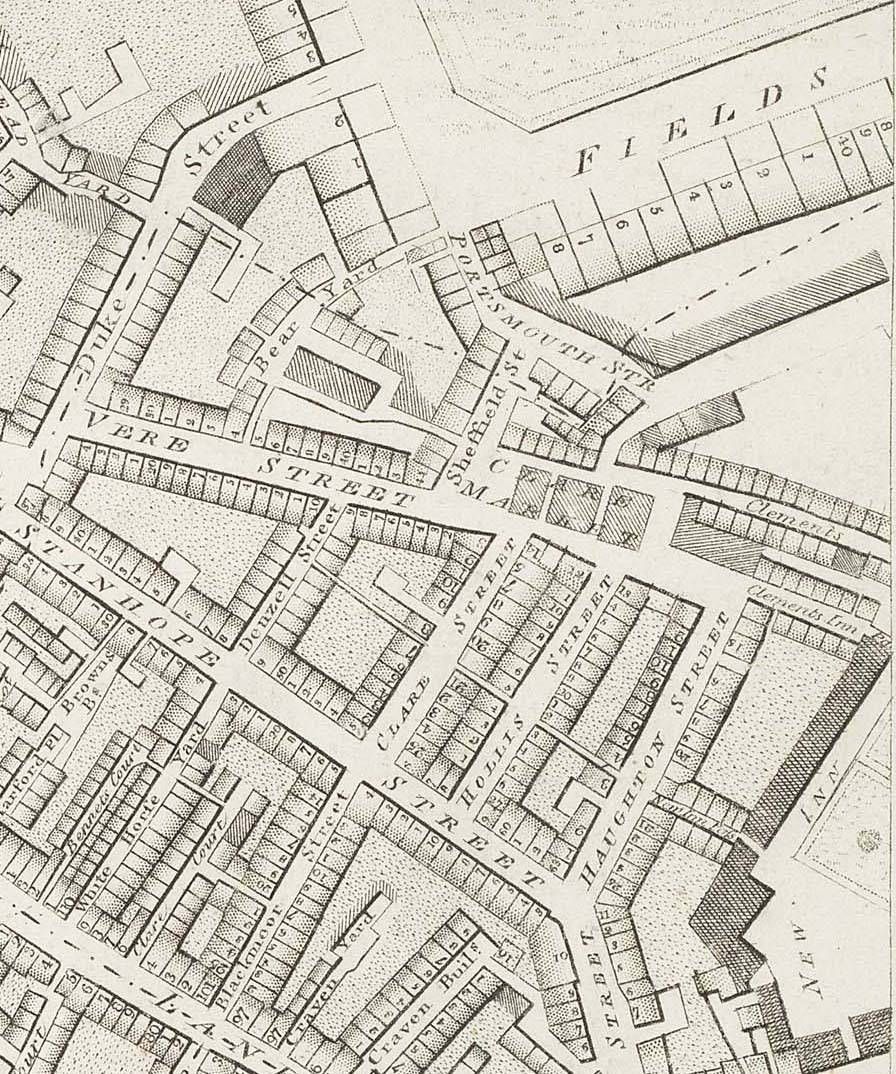
Stanhope Street 6, Sheffield Street Clare Market
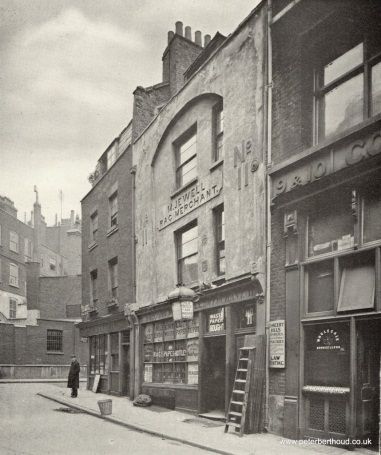
Sheffield Street showing numbers 9, 10 and 11 – Vere Street is at the corner.
Extract from a walk through The Parish of St. Clement Danes Streets, &c.
Cross over Stanhope Street, and the Tallow Chandlers, with the other jetting out House, and then the path runs down the South side of Duke Street, unto the House where the Parish Stone Mark is set up; and from this House it crosses the Houses into Bear Yard, and so into Sheffield Street next the Oyl Shop which is at the corner of Lincoln's-Inn-Fields in Sheffield Street near Clare Market. “The Oyl shop was at the Corner of Lincoln's-Inn-Fields, near the New Market or at the corner of Lincoln's-Inn-Fields in Sheffield Street near Clare Market”
It is perhaps a coincidence that there were 2 Barrands from Lincolnshire living in Stanhope Street, but I cannot find any ancestral connection between them and with the London Barrands.
Of Stanhope Street, in spite of its grand name, we have no interesting memories to record. (British History online)
Letter to Newspaper 1842 on the waste of man-power in Clare Market:
Sir:
It appears to me that first, a wheel-barrow full of rubble is brought and placed on the board by one man. He is a member of the Rubble Wheeler's Union. Having completed his task, he removes himself and his barrow to one side, and looks on while the other operations proceed.
A member of the Sand Shovellers Union comes upon the scene, shovels some sand upon the heap, and retires to assist the rubble wheeler to look on. It is now the turn of a member of the League of Operative Cement Fetchers, who delicately adds the due proportion of cement, and resumes his seat on a cement sack. The heap on the mixing board now requires to be sprinkled with water, and the member of the Battersea branch of the Amalgamated Water Sprinklers' Society rises from a pile of bricks, and comes forward with a half gallon suburban garden watering can, and does the sprinkling with the easy air of one who has thoroughly mastered the art after which he retires with the can until such time as there may come another opportunity of useful-ness. Then comes the time for which the mixers have been waiting.
So as to prevent their getting in one another's way, they take it strictly in turn to shovel. The senior member of the executive of the Union leads off, handling his shovel with the nice manner of a gourmet with a toothpick. In a few rounds the operation of turning over and mixing is complete. The heap of what was previously rubble, sand, and cement, has now become ballast and therefore can no longer be handled by any but members of the Amalgamated Ballast Heavers' Trade Association.
Parish Records Collection - burial
First name(s): Alice
Last name: BARRAND
Date of burial: 24 April 1833
Place of burial: St Clement Dane
Age at death: 59
Approximate year of birth: 1774
Address at death: 6, Sheffield St
Record source: City of London Burials
Transcript of the burial of Alice Barrand (Nee Young)
Name: William Barrand
Record Type: Burial
Estimated Death Date: abt 1835
Burial Date: 22 Jul 1835
Age: about 57 +/-
Estimated Birth Year: abt 1778
Parish or Poor Law Union: Westminster St John the Evangelist
Borough: Westminster
County: Middlesex
Transcript of the burial of William Barrand
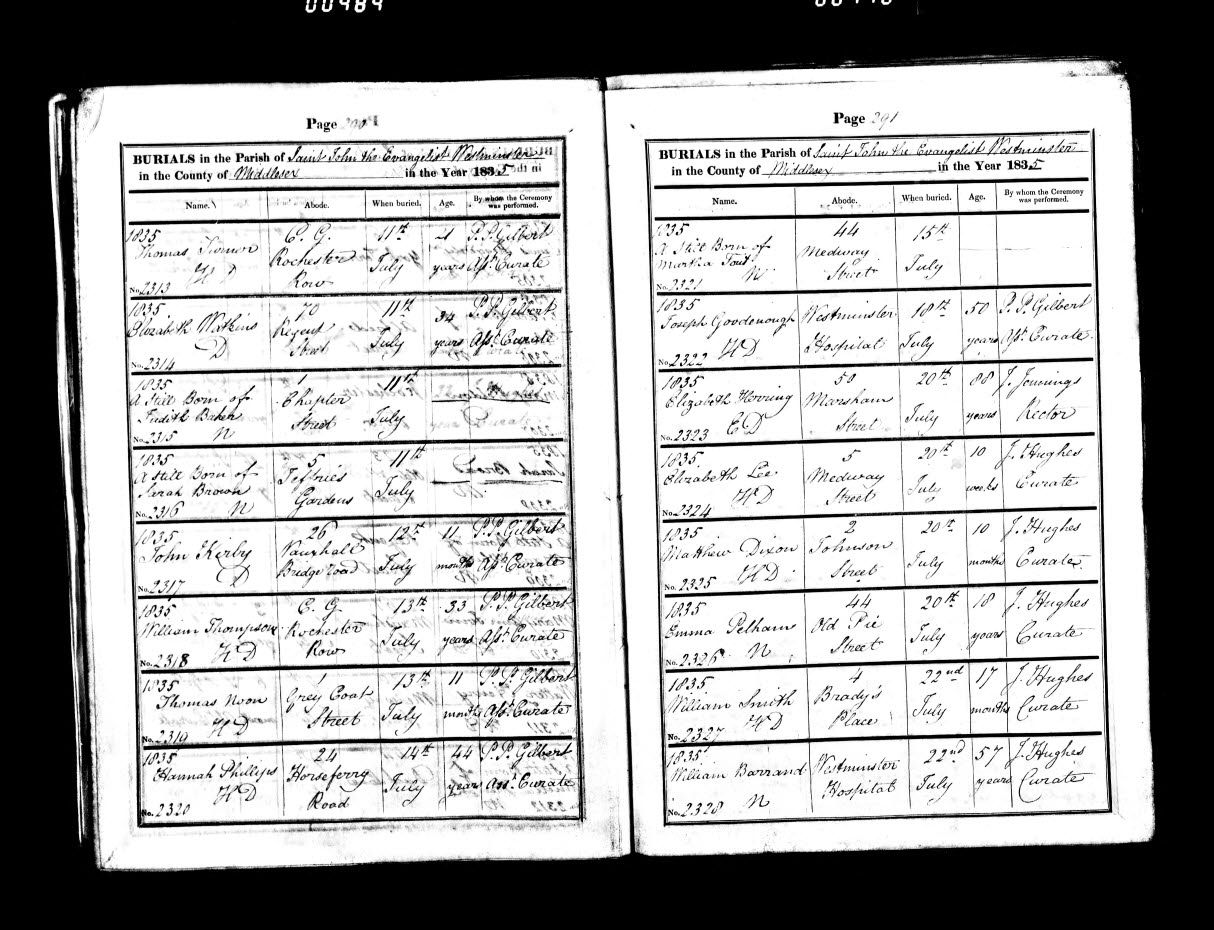
Parish record of the burial of William Barrand 1835

Parish record of the burial of Alice Barrand
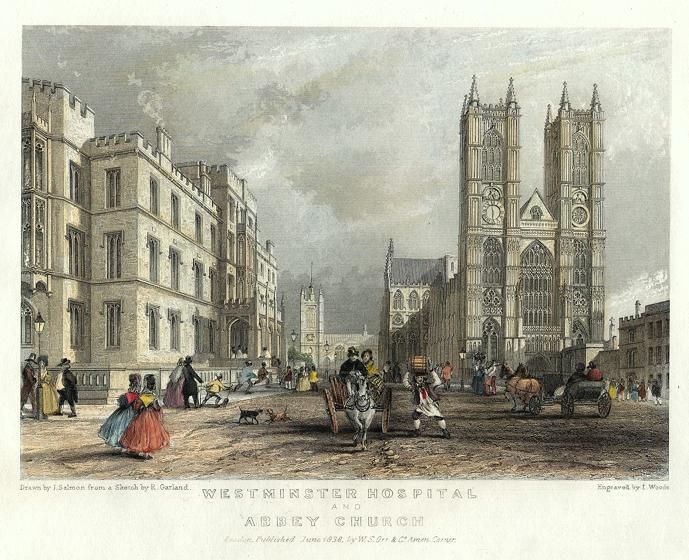
"Westminster Hospital and Abbey Church" a picture by J.Salmon & R.Garland, Woods Views in London .., 1837.